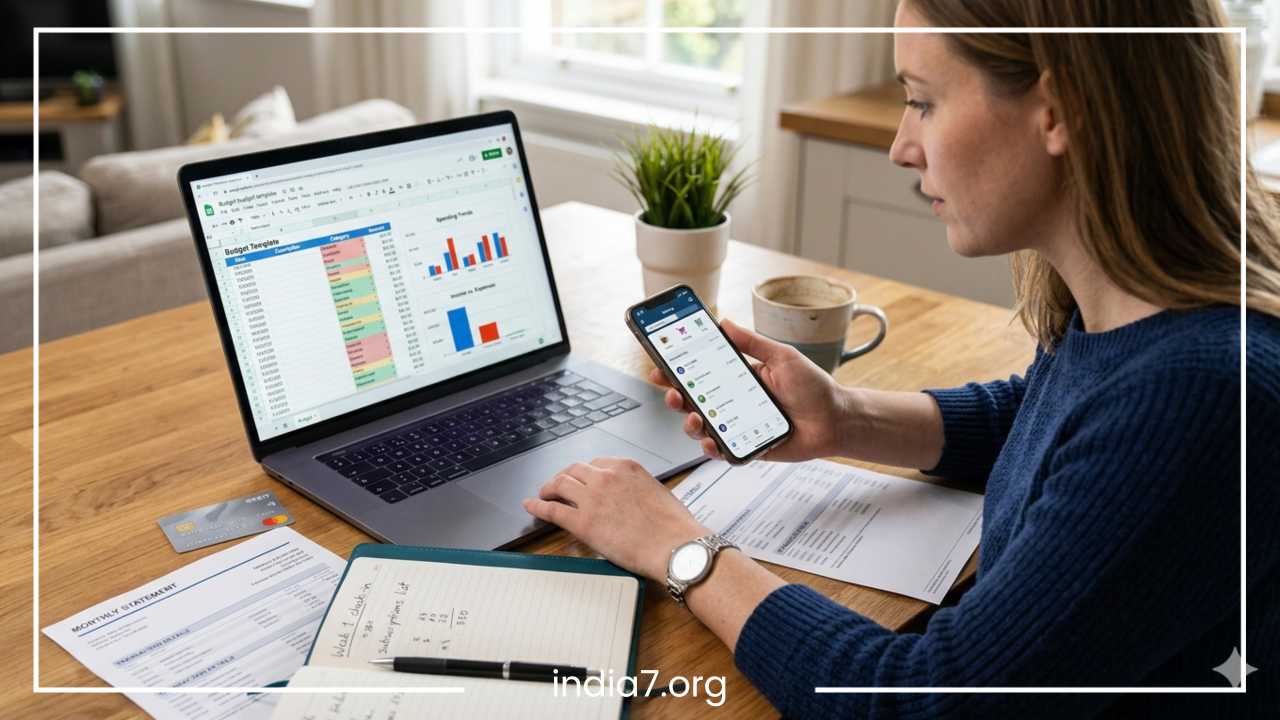
Best Ways to Manage Personal Finances Online
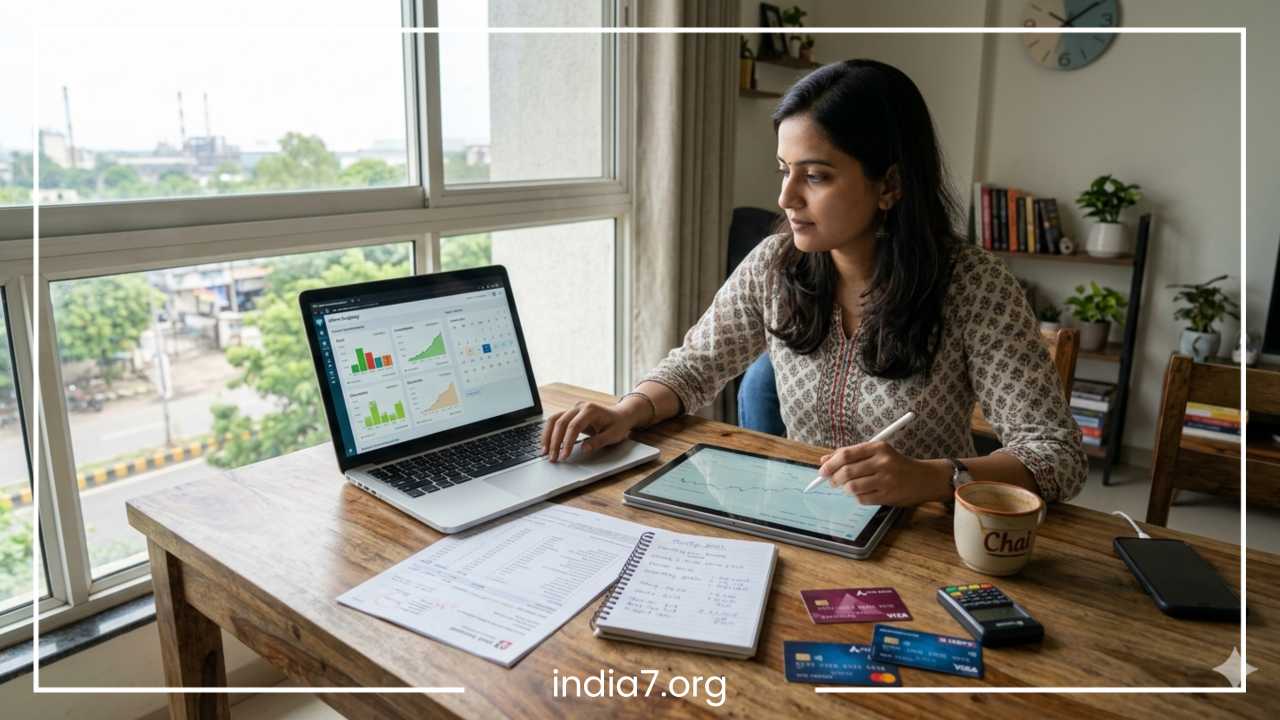
Best Ways to Manage Personal Finances Online: Tips and Tools for Smart Money Management
The digital revolution has fundamentally altered how we interact with our money. Gone are the days of balancing physical checkbooks, waiting for paper statements to arrive in the mail, or visiting a local bank branch to transfer funds between accounts. Today, the power of a full-scale financial institution sits right in our pockets. Managing personal finances online is no longer just a convenience; it is a necessity for anyone looking to build long-term wealth, maintain transparency in their spending, and secure their financial future.
In the modern age, the speed of commerce has increased, and with it, the complexity of managing one’s personal economy. However, technology has also provided the antidote to this complexity. Online tools have democratized financial management, making sophisticated budgeting, real-time expense tracking, and global investing accessible to everyone, regardless of their starting capital. By leveraging the right digital platforms, individuals can move from a reactive state—wondering where their money went at the end of the month—to a proactive state where every dollar is assigned a purpose.
Read: Make Smart Investments with a Tax Deferred Annuity
Digital financial management offers unparalleled advantages: automation, precision, and instant accessibility. Whether you are looking to pay off debt, save for a home, or build a retirement portfolio, the online landscape provides a suite of specialized tools designed to streamline these processes. The shift toward a cashless society and the rise of digital-first banking mean that our financial “footprint” is now almost entirely electronic. This creates a massive opportunity for data-driven decision-making.
This article will provide an exhaustive guide to navigating the world of online personal finance. We will explore the best tools for budgeting, the nuances of digital banking, the rise of robo-advisors for investing, and the essential security measures you must take to protect your digital assets. We will also delve into the psychology of digital spending and how to maintain discipline when your entire net worth is just a set of numbers on a glass screen. By the end of this guide, you will have a clear roadmap for mastering your money in the digital realm.
Read: Why Carefulness Is Essential Before Buying Dinar?
Understanding Personal Finances
Before diving into specific apps and platforms, it is essential to understand the core components of personal finance. At its heart, financial management is the process of balancing five key pillars: income, expenses, savings, debt, and investments. Without a firm grasp of these fundamentals, even the most sophisticated app is merely a high-tech distraction.
The Five Pillars
-
Income: This is the foundation—the total amount of money you bring in from salary, side hustles, dividends, or passive sources. Online management allows you to track multiple income streams simultaneously, which is vital in a “gig economy” where many people no longer rely on a single paycheck.
-
Expenses: These are your outflows, categorized into fixed costs (rent, insurance, subscriptions) and variable costs (dining out, entertainment, impulse buys). Digital tracking excels here by revealing the “hidden” leaks in your wallet.
-
Savings: The portion of income set aside for emergencies or short-term goals. Online banking makes “invisible” saving possible through automated transfers.
-
Debt: Liabilities that must be managed, such as credit card balances, student loans, or mortgages. The digital world provides calculators and payoff trackers that visualize the long-term impact of interest.
-
Investments: Assets purchased with the expectation that they will generate income or appreciate over time. Online brokerages have lowered the barrier to entry, allowing for fractional share buying and instant diversification.
The Importance of Financial Literacy
Financial literacy is the ability to understand how these pillars interact. In the digital age, this literacy must include “digital literacy.” You need to know not just what a stock is, but how an interface might be designed to encourage risky behavior (gamification). You need to understand not just what a budget is, but how “buy now, pay later” services can distort your perception of debt.
Common challenges in managing money online often stem from the “frictionless” nature of transactions. When you swipe a card or tap a phone, the psychological “pain of paying” is diminished compared to handing over physical cash. This “digital drift” can lead to a slow accumulation of small expenses that eventually swamp your budget. Another challenge is data fragmentation; having accounts across four different banks and three investment platforms can make it difficult to see your true net worth. Digital tools are designed to bridge these gaps, but the user must provide the direction and the discipline.
Read: Private Student Loan Consolidation – A tool for Easing Debt Burdens
Online Budgeting Tools
Budgeting is the roadmap for your financial journey. Without a budget, you are effectively traveling without a GPS. In the online world, budgeting has evolved from static spreadsheets to dynamic, living systems that sync with your bank accounts in real-time.
The Philosophy of Digital Budgeting
Modern budgeting isn’t about restriction; it is about prioritization. It allows you to align your spending with your values. If you value travel, your budget should reflect a high allocation for your vacation fund and perhaps a lower allocation for dining out. Online tools provide the transparency needed to make these trade-offs consciously.
Popular Budgeting Tools and Apps
-
Mint: As one of the pioneers in the space, Mint is excellent for aggregation. It connects to almost every financial institution, pulling in transactions and automatically categorizing them. Its greatest strength is the dashboard, which provides a “bird’s eye view” of your finances. You can see your credit score, your investment performance, and your monthly spending all in one place. It is particularly useful for beginners who want to see where their money is going without a high degree of manual effort.
-
YNAB (You Need A Budget): YNAB is more than an app; it is a methodology. Based on the four rules—Give Every Dollar a Job, Embrace Your True Expenses, Age Your Money, and Reach for Your Goals—it requires users to be proactive. Unlike Mint, which looks at what you did spend, YNAB focuses on what you will spend. It is a paid service, but many enthusiasts swear by its ability to break the paycheck-to-paycheck cycle. It forces you to deal with the money you have now, rather than forecasting future income.
-
PocketGuard: This tool is designed for the user who wants simplicity above all else. Its primary feature is the “In My Pocket” calculation, which shows you exactly how much spendable cash you have left for the day or month after all your bills, goals, and committed spending are accounted for. It is the digital equivalent of checking your wallet before you walk into a store.
Tips for Effective Use
To make these tools work, you must link all your accounts—checking, savings, and credit cards. Partial data leads to a partial (and often misleading) financial picture. Once linked, set realistic goals. Instead of a vague goal like “save more,” set a digital target for “Emergency Fund: $5,000.”
One of the most important habits is the “weekly review.” Digital tools automate the data entry, but they cannot automate the reflection. Spend 15 minutes every Sunday reviewing the categories. Did the app mislabel a grocery trip as “entertainment”? Correct it. Did you go over budget on “hobbies”? Adjust your “dining out” category to compensate. This active management is what leads to financial change.
Pros and Cons of Digital Apps
The pros are undeniable: automation, real-time updates, and beautiful data visualizations that make it easy to spot trends like a rising utility bill or a forgotten subscription. However, the cons include potential security risks and “subscription fatigue.” Some users also find that automatic categorization isn’t always accurate, requiring a level of manual oversight that can be frustrating for those expecting a “set it and forget it” solution.
Tracking Expenses and Bills Online
Tracking expenses is the granular side of budgeting. While a budget is a plan, tracking is the audit of that plan. Online banking apps and dedicated trackers allow for a level of detail that was previously impossible for the average consumer.
The Power of Automatic Categorization
Most modern banking apps now include built-in spending insights. They use machine learning to recognize recurring merchants and categorize your transactions. This allows you to see at a glance if your “Coffee Shop” habit is actually costing you $200 a month. By seeing the cumulative effect of small daily choices, you can make more informed decisions about your lifestyle.
Features to Look For
When choosing a tracking tool, look for:
-
Customizable Alerts: Get a notification if a transaction exceeds a certain amount.
-
Bill Reminders: Avoid late fees by having your app notify you three days before a credit card or utility bill is due.
-
Subscription Management: Many apps now scan your transactions for recurring payments, helping you identify and cancel that streaming service you haven’t watched in six months.
Example Tools for Advanced Tracking
-
Personal Capital (now Empower): While it has robust investment tracking, its daily expense tracking is excellent for those who want to see how their daily spending impacts their long-term wealth. It provides a more sophisticated analysis of your cash flow.
-
Tiller Money: For those who still love spreadsheets but hate manual entry, Tiller automatically feeds your bank transactions into Google Sheets or Microsoft Excel. This provides the ultimate customization of a spreadsheet with the convenience of automation. You can build your own formulas and charts to track exactly what matters to you.
The primary benefit of online tracking is the reduction of “financial fog.” When you know exactly where every dollar is, you reduce the anxiety associated with money. This clarity allows you to spot overspending early in the month, giving you time to adjust before you hit a deficit.
Online Banking and Payment Solutions
The shift from traditional “brick-and-mortar” banking to digital-first banking has changed the cost structure of personal finance. Online banks often have lower overhead, which translates to fewer fees and higher interest rates for customers.
Digital Banking vs. Traditional Banking
Digital-first banks (often called “neobanks”) like Chime, Ally, or Varo offer seamless mobile experiences. They often include features like “early payday” (accessing your direct deposit up to two days early) and automatic round-ups for savings. Traditional banks have largely caught up with robust apps, but online-only banks often lead in user interface design and fee transparency.
The main trade-off is the lack of physical branches. If your financial life involves frequently depositing large amounts of cash or needing in-person services like a safe deposit box or a notary, a hybrid approach—keeping a small account at a local credit union while using an online bank for your primary checking—is often the best strategy.
Tools for Managing Multiple Accounts
In the digital age, we often use different “buckets” for different purposes.
-
Revolut and Wise: Excellent for those who travel or work internationally. They allow you to hold and exchange multiple currencies at the “real” exchange rate, avoiding the heavy markups charged by traditional banks.
-
PayPal and Venmo: These have become the standard for peer-to-peer (P2P) payments. Whether you are splitting a dinner bill or paying a freelancer, these platforms make the movement of money instantaneous.
-
Apple Pay and Google Pay: These digital wallets provide a layer of security by using “tokenization.” When you pay at a terminal, the merchant never actually sees your credit card number, reducing the risk of your data being stolen in a retail breach.
Security and Fraud Prevention
As your financial life moves online, you must become your own “Chief Security Officer.”
-
Two-Factor Authentication (2FA): This is non-negotiable. Use an authenticator app (like Google Authenticator or Authy) rather than SMS, as SIM-swapping is a common tactic used by hackers.
-
Unique Passwords: Use a password manager to ensure every financial site has a long, complex, and unique password.
-
Public Wi-Fi Risks: Never check your bank account on public Wi-Fi without a Virtual Private Network (VPN). Public networks are easily intercepted by “Man-in-the-Middle” attacks.
Saving and Investing Online
Technology has made the transition from a “saver” to an “investor” remarkably easy. Automation is the most powerful tool in this category. By removing the “human element” (and the temptation to spend), you can ensure your future self is taken care of.
High-Yield Online Savings Accounts (HYSA)
Traditional savings accounts at “big box” banks often offer negligible interest rates. Online banks, however, frequently offer High-Yield Savings Accounts with rates that can be 10 to 20 times higher than the national average. Because they don’t have to pay for physical buildings and thousands of tellers, they pass those savings on to you. Using an online HYSA for your emergency fund is a “quick win” that requires almost no effort but yields tangible results.
The Rise of Robo-Advisors
For those who find the stock market intimidating or don’t have the time to research individual companies, robo-advisors like Betterment and Wealthfront are revolutionary.
-
How they work: You fill out a questionnaire about your age, income, goals, and risk tolerance. The algorithm then builds a diversified portfolio of low-cost Exchange-Traded Funds (ETFs).
-
Tax-Loss Harvesting: This is a sophisticated strategy previously only available to the wealthy. Robo-advisors can automatically sell “losing” investments to offset capital gains taxes, potentially saving you thousands of dollars over time.
-
Automatic Rebalancing: If one part of your portfolio (like stocks) grows faster than another (like bonds), the robo-advisor will automatically sell some stocks and buy bonds to keep your risk level consistent.
Stock Trading and Self-Directed Investing
If you prefer a hands-on approach, platforms like Fidelity, Charles Schwab, and Vanguard have modernized their interfaces to compete with “disruptor” apps like Robinhood.
-
Fractional Shares: You no longer need $3,000 to buy one share of an expensive tech stock. Most online brokers now allow you to buy “slices” of stocks for as little as $1.
-
Zero Commissions: Buying and selling stocks and ETFs is now free on almost all major platforms, removing a significant barrier to building a portfolio.
Goal-Based Saving Apps
Apps like Qapital and Digit use behavioral science to help you save.
-
Triggers: You can set “If This, Then That” rules. For example: “If I spend money at a fast-food place, save $10 toward my ‘Health’ fund.”
-
Round-ups: Every time you spend $3.45, the app rounds it up to $4.00 and puts the $0.55 in a savings account. It feels like “found money” because the amounts are so small you don’t notice them leaving your checking account.
Risk Management and Diversification
The ease of online investing can lead to “over-trading.” Because you can buy a stock with two taps on your phone, it can start to feel like a game. It is crucial to remember that investing is about the long term. Online tools make it easy to see your “asset allocation”—the mix of stocks, bonds, real estate, and cash you own. Use this data to ensure you aren’t over-exposed to any one sector. A diversified portfolio is your best defense against market volatility.
Managing Debt and Loans Digitally
Debt is often the biggest hurdle to financial freedom. Managing it online allows you to see the “total cost” of your debt, including the interest that accumulates every day. This transparency can be a powerful motivator to pay it off faster.
Tracking and Paying Off Debts
Most lenders (student loans, mortgages, auto loans) have mobile apps that allow you to make extra payments with a single click. Seeing the “Interest Paid” figure for the year can be a wake-up call that encourages more aggressive repayment.
Specialized Debt Management Tools
-
Undebt.it: This is a powerful, free (with a premium version) web-based tool for planning debt payoff. You enter your balances, interest rates, and minimum payments. It then allows you to compare the “Snowball” vs. “Avalanche” methods.
-
Tally: This app is designed specifically for credit card debt. For qualified users, it provides a lower-interest line of credit to pay off high-interest cards, and then it manages the payments to ensure you never miss a due date.
-
Credit Karma: While known for credit scores, it also provides a clear overview of all your outstanding liabilities. It can suggest consolidation loans or balance transfer cards that might save you interest.
Strategies for Success
-
The Snowball Method: Focus on paying off the smallest balance first while making minimum payments on the rest. This provides “quick wins” that keep you motivated.
-
The Avalanche Method: Focus on the debt with the highest interest rate. This is mathematically the most efficient way to save money on interest.
Online debt calculators can show you the exact date you will be debt-free based on your current payments. Adjusting that payment by just $50 a month in the calculator can often show you that you’ll be debt-free months or even years earlier—a powerful digital incentive.
Credit Score Monitoring Online
Your credit score is a digital representation of your financial trustworthiness. It affects your ability to get a mortgage, rent an apartment, get a car loan, and sometimes even get a job. In the past, accessing your credit report was a cumbersome process. Now, it is instantaneous and free.
Free Monitoring Tools
-
Credit Karma: Provides weekly updates to your TransUnion and Equifax scores. It breaks down the “Factors” affecting your score: payment history, credit utilization, age of credit, total accounts, and hard inquiries.
-
Experian App: Offers your Experian score for free and includes “Experian Boost,” which allows you to count utility, phone, and even some streaming service payments toward your credit history.
-
MyChase / Capital One Eno: Many banks now include credit monitoring as a standard feature within their mobile apps.
Improving Your Score Digitally
The most effective way to use these tools is to monitor your credit utilization. Most experts recommend keeping this below 30% (and ideally below 10%). Online apps allow you to see your utilization across all cards in one place. If you see a card creeping up, you can pay it down before the statement closes to keep your score high.
Furthermore, monitoring your credit online is the best way to catch identity theft. If a new account appears that you didn’t open, or an address changes that you didn’t authorize, you can dispute it through the app immediately.
Security and Privacy Considerations
The convenience of having your financial life in the cloud comes with significant risks. Cybercriminals are constantly evolving their tactics to gain access to financial data.
The Threat Landscape
-
Phishing: You receive an email or text that looks like it’s from your bank, saying your account has been locked. It provides a link to a fake login page designed to steal your credentials.
-
Social Engineering: Someone calls pretending to be from a “fraud department” and asks you to “verify” your identity by giving them a 2FA code that was just sent to your phone. (Never do this—banks will never ask for a code).
-
Data Breaches: Even if you do everything right, a company you use might be hacked.
Best Practices for Digital Safety
-
Use a VPN: Especially on public Wi-Fi. It creates a “tunnel” that prevents others on the network from seeing your traffic.
-
Audit App Permissions: Periodically check which third-party apps have access to your bank accounts. If you stop using an old budgeting tool, go into your bank’s “Security” settings and revoke its access.
-
Encrypted Email: If you communicate sensitive financial documents (like tax returns or loan applications), use encrypted email services or password-protected PDFs.
-
Review Privacy Policies: Many “free” apps make money by selling aggregated data to advertisers. If you value your privacy, you might prefer to use a paid app (like YNAB) where the business model is a subscription rather than data harvesting.
Tips for Staying Disciplined Online
Managing money online is easy; staying disciplined is the hard part. The internet is a 24/7 shopping mall, and “Buy Now” buttons are everywhere.
Scheduling Financial Check-ins
Treat your finances like a business. Schedule a “Monthly Review” on your digital calendar. During this time, look at your net worth trend, check your progress toward your savings goals, and adjust your budget for the upcoming month. This keeps your financial goals “top of mind.”
Fighting Digital Impulse Spending
-
The 24-Hour Rule: If you see something you want to buy online, put it in the cart but don’t check out for 24 hours. Most of the time, the “itch” to buy will pass.
-
Unsubscribe from Marketing Emails: Digital retailers are masters of “scarcity” (e.g., “Only 2 left! Sale ends in 1 hour!”). Remove the temptation by unsubscribing from store newsletters.
-
Remove Saved Card Details: If you have to manually type in your credit card number every time you buy something, you are much less likely to make an impulse purchase.
Future of Online Personal Finance
The landscape of personal finance continues to move toward more automation and more intelligence.
Artificial Intelligence (AI) and Machine Learning
We are entering an era where your banking app won’t just tell you what you spent; it will predict what you will spend. AI-powered assistants will be able to say, “Based on your current spending, you won’t be able to pay your full credit card bill this month unless you cut back on entertainment now.”
Decentralized Finance (DeFi)
While still in its early stages, DeFi is attempting to rebuild the financial system without traditional banks. Using blockchain technology, it allows for peer-to-peer lending and borrowing. As this matures, it may provide new ways for individuals to manage their wealth outside of the traditional banking infrastructure.
Total Integration
In the future, we will see even more “seamlessness.” Your smart home might communicate with your energy provider and your bank to automatically optimize your utility bill and pay it using the highest-interest-bearing account you own. The goal of all these technologies is to reduce “financial friction” and help you make the most of every dollar.
Final Thoughts
Managing your personal finances online is one of the most empowering habits you can develop in the modern world. By centralizing your data, automating your savings, and monitoring your progress in real-time, you take the guesswork out of your financial life. The tools mentioned—from Mint and YNAB to Betterment and Credit Karma—are powerful allies, but they are only as effective as the person using them.
The transition from traditional methods to a fully digital financial ecosystem doesn’t have to happen overnight. The best way to start is small. Choose one area of your finances—perhaps tracking your spending or setting up an automated savings transfer—and master it. Once you see the benefits of clarity and the “magic” of compound interest working through an online brokerage, you will naturally want to integrate more tools.
The path to financial freedom is no longer paved with paper ledgers and manual calculations; it is built with bits, bytes, and smart digital choices. By embracing these online tools and maintaining a disciplined, security-conscious approach, you can turn your financial goals from distant dreams into a digital reality that grows every day.