Top Ways to Invest Spare Change Automatically
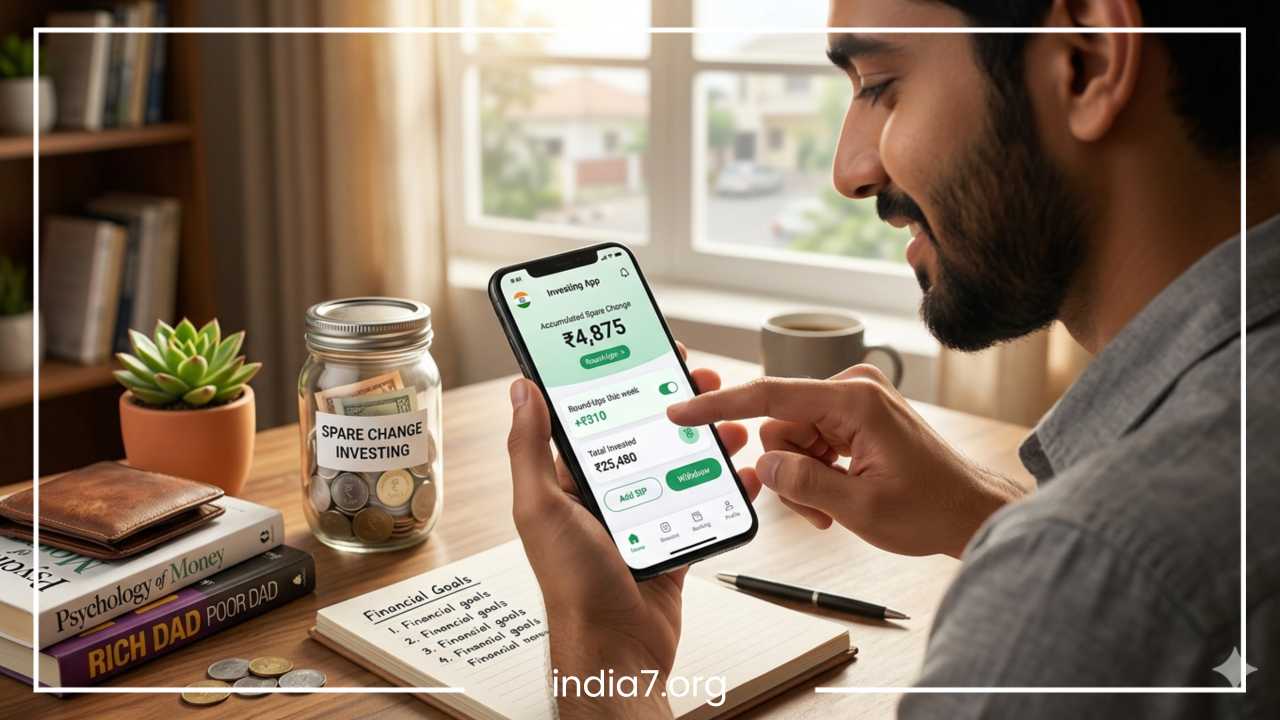
Top Ways to Invest Spare Change Automatically | Best Micro-Investing Apps
The biggest hurdle to investing is rarely a lack of interest; it is the perception of a high barrier to entry. For decades, the world of finance felt like an exclusive club reserved for those with thousands of dollars in disposable income and a deep understanding of market mechanics. Many people wait for a windfall—a bonus, a tax refund, or a raise—before they feel they have enough to justify opening an investment account.
However, the most powerful tool in wealth creation is not the size of the initial deposit, but the consistency of the habit. This is where the concept of invisible investing comes into play. By automating the process of investing spare change, you remove the psychological friction of parting with large sums of money. You are building wealth in the background of your life, often without even noticing the impact on your daily spending power.
Imagine rounding up a daily coffee purchase from 185 to 200 and investing that 15. On its own, it seems insignificant. But when applied to every transaction you make—groceries, fuel, subscriptions, and dining—those small increments aggregate into a substantial force. This strategy leverages the psychological phenomenon of “loss aversion” by making the “loss” of capital so small it bypasses our mental defenses, while the long-term gain remains mathematically significant.
Read: Stop Debt Harassment by Legal Action
What Is Micro-Investing?
Micro-investing is a financial strategy that allows individuals to save and invest small sums of money, often less than 100 at a time, into diversified portfolios. Historically, the stock market was inaccessible to the average person due to high brokerage commissions and the requirement to purchase full shares. If a single share of a major tech company costs 3,000, an investor with only 500 was effectively locked out.
Micro-investing apps have disrupted this model by leveraging technology to aggregate small amounts from thousands of users, allowing for fractional ownership of assets. This means you can own 0.01% of a high-performing stock rather than waiting until you can afford the whole thing.
The core philosophy of micro-investing is to lower the “activation energy” required to become an investor. By focusing on round-ups, recurring small deposits, and fractional investing, these platforms turn everyday consumers into asset owners. It differs from traditional investing primarily in its point of entry. While traditional brokerage accounts might focus on asset allocation and tax-loss harvesting for large portfolios, micro-investing focuses on capital accumulation and habit formation for the masses.
Read: Mobile Credit Card Processing Transforming Businesses
How Spare Change Investing Works
The magic of spare change investing lies in its friction-less execution. The goal is to make the act of investing as effortless as the act of spending. Most modern micro-investing platforms operate through several specific mechanisms that ensure your money is working for you around the clock.
The Round-Up Mechanism
This is the flagship feature of the micro-investing movement. Once you link your bank account or credit card to an app, the software monitors your transaction history. When you make a purchase, the app identifies the “gap” between the purchase price and the next whole number.
For example:
-
Morning Coffee: 142.50 (Round-up: 7.50)
-
Grocery Bill: 991.00 (Round-up: 9.00)
-
Fuel: 2,450.20 (Round-up: 49.80)
Once these accumulated round-ups reach a certain threshold—usually 100 or 500—the app triggers a transfer from your checking account to your investment account. This “batching” method ensures that bank transfer fees (if any) are minimized while keeping the investment flow steady.
Automated Transfers and SIPs
Beyond round-ups, most platforms offer automated daily, weekly, or monthly transfers. This is a digital version of the “pay yourself first” principle. By scheduling a 50 transfer every Monday, you ensure that your investment goals are met before you have the chance to spend that money on non-essentials. In the Indian context, this is often executed through a Systematic Investment Plan (SIP), which has become the gold standard for disciplined wealth creation.
Cashback and Found Money
Some apps partner with retailers to offer “cashback investing.” If you shop at a partner brand using your linked card, the brand contributes a percentage of your purchase price directly into your investment account. This is essentially a rebate that grows over time. Instead of receiving a 50 discount that gets lost in your wallet, that 50 is put into an index fund where it can compound.
Pros and Cons of the Model
While the automation is a massive advantage, it is important to look at the full picture.
Pros:
-
Behavioral Discipline: It forces a saving habit on those who lack the willpower to do it manually.
-
Dollar-Cost Averaging: Because you are buying small amounts constantly, you naturally buy more shares when prices are low and fewer when prices are high.
-
Low Barrier: You can start with literally the change in your pocket.
Cons:
-
Fee Ratios: Fixed monthly fees can be predatory for very small balances. If an app charges 50 a month and you only have 500 invested, your “expense ratio” is 10%, which is unsustainable.
-
The Illusion of Progress: While 10 a day is great, it shouldn’t replace a dedicated retirement plan. Some users fall into the trap of thinking their round-ups are “enough,” leading to under-saving in the long run.
Read: Importance Of Travel Medical Insurance
Best Micro-Investing Apps
The market for micro-investing has exploded globally, with different players catering to various regions and asset classes. Selecting the right app involves balancing fee structures with the types of assets you wish to own.
Global Market Leaders
Acorns
Acorns is widely considered the pioneer of the round-up model. It offers a highly curated experience where users choose from five diversified portfolios ranging from conservative to aggressive. These portfolios are composed of ETFs (Exchange Traded Funds) managed by industry giants like Vanguard and BlackRock.
-
Key Features: Round-ups, “Found Money,” and automated rebalancing.
-
Best For: Pure beginners who want a “set it and forget it” experience.
Stash
Stash takes an educational approach. Instead of just picking a risk level, Stash allows users to choose from themed ETFs such as “Clean Energy,” “Data Defenders,” or “American Innovators.” This helps investors feel a personal connection to their holdings.
-
Key Features: Fractional shares, curated investment themes, and a Stash Stock-Back card.
-
Best For: Those who want to learn about sector-based investing while starting small.
Robinhood
While primarily known as a trading platform, Robinhood’s introduction of fractional shares and recurring investment options makes it a powerful tool for micro-investing. You can set a rule to buy 10 worth of a specific stock every day.
-
Best For: Active investors who want to pick specific companies rather than broad portfolios.
India-Focused Apps
The Indian market has seen a massive surge in micro-investing, driven by the UPI revolution and a growing middle class.
Groww
Groww has become a household name due to its simplicity. It removed the complex jargon associated with the stock market and focused on a user-friendly interface.
-
Key Features: Direct Mutual Funds (which save you on commission), easy SIP setups, and fractional US stocks.
-
Minimum Investment: As low as 100 for many mutual fund SIPs.
-
Best For: Users looking for a long-term, low-cost mutual fund strategy.
Zerodha (Coin)
Zerodha is the largest broker in India. Their Coin app allows for seamless SIPs in direct mutual funds. While they don’t focus on “round-ups” in the traditional sense, their automation tools are the most robust in the industry.
-
Best For: Serious investors who want a consolidated view of their stocks, bonds, and funds.
Paytm Money
Leveraging its massive payment ecosystem, Paytm Money offers micro-investments in mutual funds and digital gold.
-
Key Features: Investing in gold for as little as 1.
-
Best For: Users who want to diversify into gold without the hassle of physical storage.
Crypto Micro-Investing
For those with a higher risk appetite, micro-investing has moved into the digital asset space.
Coinbase and Binance
Both platforms offer “Recurring Buy” features. You can set your account to buy 500 worth of Bitcoin or Ethereum every week. This helps mitigate the extreme volatility of crypto by spreading the purchase price over time, a strategy known as “stacking sats” (Satoshi, the smallest unit of Bitcoin).
Comparison of Popular Platforms
| App | Primary Asset | Fee Structure | Ideal User |
| Acorns | Managed ETFs | Flat Monthly Fee | Hands-off beginners |
| Stash | Themed ETFs | Flat Monthly Fee | Educational/Thematic |
| Groww | Mutual Funds | Zero Commission | Long-term SIP holders |
| Robinhood | Stocks/Crypto | Zero Commission | Active Stock Pickers |
| Paytm Money | Funds/Gold | Low/Transparent | Diversified beginners |
Benefits of Investing Spare Change
The advantages of micro-investing extend far beyond the balance in your brokerage account. It fundamentally changes your relationship with money and consumption.
1. Building Habits Without Pain
Most people fail at saving because they treat it as a sacrifice. They try to save a large lump sum at the end of the month, only to find they have spent it on lifestyle inflation. Micro-investing removes the pain of saving by taking such small amounts that you don’t feel the loss in your daily budget. It turns saving from a “decision” into a “background process.”
2. The Power of Time and Compounding
Time is the most important variable in the wealth equation. By starting small today rather than waiting five years to start big, you give your money more time to compound. Compounding is the process where your investment earnings are reinvested to generate their own earnings. Over 20 or 30 years, the “interest on interest” becomes much larger than the original amount you contributed.
3. Psychological De-risking
Investing can be scary. Seeing a 100,000 portfolio drop by 10% (10,000) can cause panic selling. However, seeing a 1,000 portfolio drop by 10% (100) is much easier to stomach. Micro-investing allows you to get used to market fluctuations with small amounts of money, building the “emotional calluses” needed to manage larger sums later in life.
4. Financial Inclusion
Micro-investing is the ultimate equalizer. It doesn’t matter if you are a high-earning executive or a student working a part-time job; the tools to participate in the growth of the global economy are now the same for everyone. It bridges the wealth gap by providing entry-level access to the same assets that the wealthy use to grow their fortunes.
Risks and Limitations
While micro-investing is an excellent entry point, it is not a financial panacea. It is vital to understand its limitations to avoid a false sense of security.
The Fee Percentage Trap
As mentioned earlier, flat fees are the enemy of small accounts. If an app charges 1 per month, and you have 100 invested, you are paying a 12% annual fee. No investment in the world can consistently beat a 12% fee. If you are using a flat-fee app, you must aim to get your balance above a certain threshold (usually 5,000 to 10,000) as quickly as possible to bring your effective fee percentage down to a reasonable level.
Market Volatility and Loss
Small amounts are still subject to market risk. If the global economy enters a recession, your micro-investing account will decrease in value. Beginners often mistake these apps for “savings accounts” with guaranteed returns. They are not. They are “investment accounts,” and the principal value can fluctuate.
Over-Simplification
Some apps simplify investing so much that users don’t actually understand what they own. If you don’t know why your portfolio is going up or down, you are more likely to make an emotional mistake. It is important to use these apps as a stepping stone to further financial education.
How to Choose the Right App
With the market saturated with fintech options, choosing the right platform depends on your specific goals, your location, and your level of interest. Use the following framework to make an informed decision:
-
Asset Preference: Do you want to own pieces of famous companies (stocks), diversified baskets (ETFs/Mutual Funds), or digital assets (Crypto)? If you want a mix, look for a platform that offers multi-asset support.
-
Fee Structure Analysis: Calculate your expected monthly investment. If you plan to invest 1,000 a month, a 50 flat fee is 5%. If you find an app with a 0.5% variable fee, that would only cost you 5. Choose the math that favors your wallet.
-
Automation Features: Does the app offer round-ups, or only recurring deposits? If you have an irregular income (like a freelancer), round-ups are often better because they scale with your spending.
-
Exit Strategy: How easy is it to get your money out? Look for apps that offer high liquidity and don’t charge “exit loads” or withdrawal fees after a certain period.
-
Regulatory Standing: Ensure the app is registered with relevant authorities like the SEC (USA), FCA (UK), or SEBI (India). Never invest through an app that doesn’t have a clear regulatory trail.
Tips to Maximize Micro-Investing Returns
To turn your spare change into a meaningful nest egg, you need to be strategic. Here is how to move from a “casual saver” to a “wealth builder”:
1. The Multiplier Effect
Many round-up apps allow you to 2x, 3x, or even 10x your round-ups. If a purchase generates a 5 round-up, a 3x multiplier turns that into 15. This is one of the most effective ways to accelerate your portfolio growth without significantly changing your lifestyle. If you find you have extra cash at the end of the month, bumping up your multiplier is a seamless way to invest it.
2. Reinvest Your Dividends
Many stocks and funds pay dividends, which are distributions of a company’s profits to its shareholders. For a micro-investor, these dividends might only be a few cents or a few dollars at first. However, if you set your account to “DRIP” (Dividend Reinvestment Plan), those small amounts are used to buy more shares. Over time, this creates a snowball effect where you own more shares, which pay more dividends, which buy even more shares.
3. The “Windfall Rule”
Whenever you receive an unexpected amount of money—a birthday gift, a small bonus, or a refund—make it a habit to put 50% of it into your micro-investing app immediately. Since you weren’t expecting the money, you won’t feel the “loss” of it, but it will provide a massive boost to your compound interest curve.
4. Transition to SIPs
While round-ups are great for catching the “leaks” in your budget, Systematic Investment Plans (SIPs) provide the foundation. As you get more comfortable with the app, set a fixed amount to be deducted on the day you receive your paycheck. This ensures your most important financial goal is funded first.
5. Review and Rebalance
Even though these apps are automated, you should check in once a quarter. Has your risk tolerance changed? Are the fees still competitive? Is there a new asset class (like an International Tech ETF) you want to add? Stay engaged with your money without obsessing over daily price movements.
Real-Life Example: The Path to 10 Lakhs
Let’s look at a practical scenario to see how small numbers transform over a long horizon. Consider a young professional who starts micro-investing with the following setup:
-
Average Round-ups: 1,500 per month (about 50 per day).
-
Recurring SIP: 3,500 per month.
-
Total Monthly Investment: 5,000.
If they keep this up for 10 years, assuming a conservative 12% average annual return (common in diversified equity portfolios over long periods):
-
Year 3: The balance is approximately 2.1 Lakhs.
-
Year 7: The balance grows to approximately 6.5 Lakhs.
-
Year 10: The balance reaches approximately 11.5 Lakhs.
The investor only contributed 6 Lakhs of their own money over those ten years. The other 5.5 Lakhs came from market growth and compounding. Most importantly, because the 5,000 was taken in small bites and automated transfers, the investor likely never had to make a “hard” decision to save. The wealth was built invisibly.
Expanding Your Strategy Beyond Spare Change
Once you have mastered the art of micro-investing, you should view it as a gateway to a more comprehensive financial life. Micro-investing is like a “starter kit”—it gets you into the game, but eventually, you may want to play on a bigger field.
Graduating to Direct Equities
After a year of using a micro-investing app, you will likely have a basic understanding of market cycles. You might feel ready to buy individual stocks of companies you use and love. Most micro-apps now offer this, but you may want to move a portion of your funds to a full-service broker to access more advanced tools like limit orders, options (for hedging), and deeper fundamental research.
Building an Emergency Fund
Micro-investing is for growth, but everyone needs a “safety net.” Before you get too aggressive with your multipliers, ensure you have 3 to 6 months of expenses in a liquid savings account or a liquid mutual fund. Some micro-investing apps now offer “Smart Savings” or “Cash” accounts that pay higher interest than traditional banks, making them a good place to stash your emergency cash.
Tax Planning
In many regions, micro-investing happens in “taxable” accounts. As your balance grows, you should investigate tax-advantaged accounts (like the 80C options in India or IRAs in the US). Using these can save you a significant amount of money in the long run by shielding your gains from the taxman.
The Philosophy of “Enough”
The ultimate goal of investing spare change is to reach a point of financial peace. In a world that constantly encourages us to spend and “upgrade” our lives, micro-investing is a quiet rebellion. It is the practice of taking the excess—the “spare” parts of our economic life—and planting them like seeds.
You don’t need to be a math genius or a Wall Street trader to succeed. You simply need to be consistent. The apps listed here are tools, but the real engine of wealth is your mindset. By choosing to automate your investments, you are acknowledging that your future self is worth more than a momentary impulse purchase.
Whether you start with a single rupee or a hundred dollars, the act of starting is what matters. The best investment you can make is the one that you actually start today. Turn your phone into a wealth-building machine, link your cards, and let the power of the markets turn your digital pocket change into a lasting legacy.
Frequently Asked Questions About Micro-Investing
Are micro-investing apps safe for beginners in India and the US?
Safety is a primary concern when linking bank accounts to any third-party software. In the United States, reputable apps like Acorns and Stash are members of the SIPC (Securities Investor Protection Corporation), which protects the securities and cash in your brokerage account up to 500,000 should the brokerage firm fail. In India, platforms like Groww and Zerodha are regulated by SEBI (Securities and Exchange Board of India), and your holdings are typically stored in a demat account with national depositories like NSDL or CDSL. This ensures that even if the app’s interface ceases to exist, your underlying assets remain secure in your name.
Can you really build significant wealth by just investing spare change?
While “spare change” sounds small, the secret lies in the transition from micro-investing to a broader financial strategy. Round-ups act as a gateway. If you rely solely on the small change generated by transactions, you will build a modest safety net but not a full retirement fund. However, because these apps make the process “invisible,” users often find they can afford to increase their contributions. By combining round-ups with a dedicated monthly SIP (Systematic Investment Plan), the small daily increments serve as a powerful supplement that can add lakhs to your portfolio over a decade through the power of compounding.
How do micro-investing fees affect small account balances?
This is a critical detail for a micro-investor to understand. Many apps charge a flat monthly subscription fee (e.g., 100 per month). If your total investment is only 1,000, that fee represents 10% of your capital every month—a rate that will quickly deplete your savings. To make micro-investing worth it, you should aim to grow your balance to a point where the fee is less than 1% of your total assets annually. If you are starting with very small amounts, look for apps that charge a percentage of assets rather than a flat monthly fee until your balance grows larger.
What is the best micro-investing app for students with no income?
For students, the best apps are those with zero account-opening fees and low minimum investment requirements. In India, Groww is often preferred because it does not charge a subscription fee for direct mutual fund investments. In the US, apps like Cash App allow for fractional stock purchases with as little as 1, making it possible to own a piece of a major tech company with the price of a coffee. The goal for a student should not be high immediate returns, but rather mastering the “plumbing” of the financial system and building the habit of regular contribution.
Is micro-investing in cryptocurrency better than stocks?
This depends entirely on your risk tolerance. Cryptocurrency is significantly more volatile than a diversified basket of stocks or an ETF. While “rounding up” into Bitcoin can lead to dramatic gains during a bull market, it can also lead to a 50% drop in your portfolio value in a matter of weeks. A balanced approach often involves using micro-investing for “boring” assets like index funds for 90% of your change, while using the remaining 10% for high-risk, high-reward assets like crypto or individual growth stocks.
How do I withdraw money from a spare change app?
Withdrawal processes vary but generally follow a standard path. Because these apps invest your money in actual market assets (stocks or funds), the app must sell those assets before it can send you the cash. This typically takes 2 to 3 business days (known as T+2 settlement). Once the sale is settled, the funds are transferred back to your linked bank account via ACH or UPI. It is important to remember that selling your investments may trigger capital gains tax, so it is often best to leave the money invested for at least a year to benefit from lower tax rates.