Best Banks for Unlimited Transactions
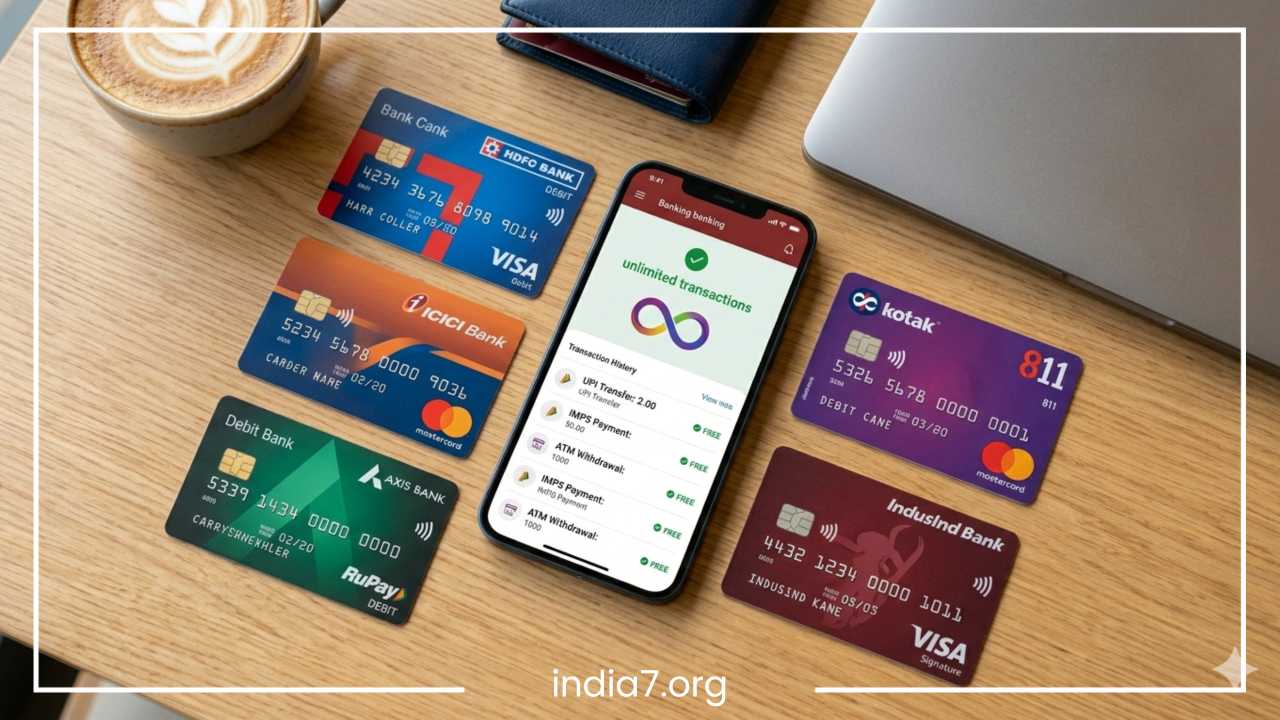
Best Banks for Unlimited Transactions: Top Choices
In an era where digital payments have become the backbone of daily commerce, the need for a banking partner that supports high-frequency activity is paramount. Whether you are a freelancer receiving multiple small payments, a small business owner managing daily vendor transfers, or an individual who prefers the convenience of UPI for every minor purchase, the constraints of traditional banking can often feel restrictive. Transaction caps, hidden fees, and processing delays are not just inconveniences; they are hurdles to financial fluidity.
The rise of digital banking has revolutionized how we perceive “unlimited” access. Gone are the days when banking was restricted to physical branch visits and limited cheque leaves. Today, the focus has shifted toward UPI, IMPS, NEFT, and RTGS. However, many users still face the frustration of failed payments due to server downtime or unexpected charges after exceeding a monthly quota of “free” transfers. Choosing a bank that offers truly unlimited digital transactions, combined with zero or low fees and a reliable mobile application, is essential for maintaining a seamless financial lifestyle.
This article provides a comprehensive comparison of the top banking institutions that prioritize high-volume users. We evaluate these banks based on their digital transfer capabilities, ATM access, fee structures, and overall app reliability to help you identify the best fit for your specific needs, whether you are a student, a high-frequency trader, or a growing business.
Read: Shop For Dental Insurance
What Does Unlimited Transactions Actually Mean?
Before selecting a bank, it is vital to understand that “unlimited” is often categorized by the channel of the transaction. A bank might offer unlimited digital transfers but place strict caps on physical cash withdrawals or deposits. Understanding these distinctions ensures you are not caught off guard by service fees.
Digital Transactions
Digital transactions encompass the majority of modern banking activity. This includes:
-
UPI (Unified Payments Interface): The most common method for peer-to-peer and merchant payments. It is instantaneous and operates 24/7.
-
NEFT (National Electronic Funds Transfer): Used for large-scale transfers, usually processed in half-hourly batches. It is now available 24/7 for most banks.
-
RTGS (Real Time Gross Settlement): Reserved for high-value immediate transfers (usually above 2 Lakhs).
-
IMPS (Immediate Payment Service): An instant interbank electronic fund transfer service that was the precursor to the UPI boom.
Most leading banks now offer free NEFT and RTGS through online channels, but IMPS charges can vary significantly. A truly “unlimited” digital bank should ideally waive charges across all these platforms to facilitate fluid money movement.
ATM Transactions
While the world is moving toward digital, cash remains necessary for various offline sectors. Most banks offer a set number of free monthly withdrawals (usually 3 to 5) at their own ATMs and partner ATMs, especially in metro cities. Beyond this, a fee is typically applied per withdrawal. Some premium or specific savings accounts, however, offer truly unlimited free ATM withdrawals at any bank’s machine, which is a significant advantage for those who travel frequently or operate in cash-heavy environments.
Current Account Transactions
For business owners, “unlimited” refers more to the volume of cash deposits and the value of transactions. Current accounts are designed to handle much higher frequencies than savings accounts. However, they usually require a higher Minimum Average Balance (MAB). The “unlimited” aspect here often relates to the lack of a ceiling on the number of inward and outward cheques or digital transfers, providing the “breathing room” a growing enterprise requires.
Savings Account Limits
Savings accounts are technically governed by “Fair Usage Policies.” Even if a bank claims unlimited transactions, they monitor for patterns that suggest commercial use in a personal account. For standard personal use, however, the best banks ensure that you are not penalized for making 50 or 100 UPI transfers in a single month.
Read: Teenage Drivers and Insurance, How to Cut Rates
Key Factors to Consider Before Choosing a Bank
Selecting a banking partner is a long-term commitment. To ensure your account facilitates rather than hinders your transactions, keep these factors in mind.
Zero Charges on Transfers
The primary goal for a high-volume user is to avoid “death by a thousand cuts.” Small fees for IMPS or SMS alerts can add up to thousands over a year. Look for banks that offer free digital transfers as a standard feature of their digital or premium accounts.
UPI Reliability
Not all UPI engines are created equal. Some banks suffer from frequent server maintenance or low transaction success rates during peak hours. A bank with a robust technical infrastructure ensures that your transactions actually go through when you need them to, avoiding the awkwardness of a failed payment at a checkout counter.
Mobile Banking Experience
Since most transactions occur via smartphones, the app’s quality is non-negotiable. It should be intuitive, secure, and fast. Features like biometric login, easy beneficiary management, and integrated wealth management tools add significant value.
ATM Network
A bank might offer unlimited free withdrawals, but if their ATM network is sparse, you may spend more on fuel finding a machine than you would have on transaction fees. Look for banks with a wide geographic presence or those that offer free withdrawals at any bank’s ATM.
Minimum Balance Requirement
There is often a trade-off between transaction limits and the minimum balance. Zero-balance accounts are excellent for students and freelancers, while premium accounts with high balance requirements often unlock the truly “unlimited” features like free doorstep banking and personalized support.
Transaction Limits
While the number of transactions might be unlimited, the amount per day is often capped by regulation or bank policy (e.g., 1 Lakh or 2 Lakh per day for UPI). Ensure the daily limit aligns with your spending or business needs.
Read: Tax Debt Settlement: Tips to Deal With IRS
Best Banks for Unlimited Transactions
This section dives into the specific institutions that have established themselves as leaders in high-volume banking.
IDFC FIRST Bank
IDFC FIRST Bank has gained significant traction by positioning itself as a customer-centric, digital-first institution. It is one of the few banks that emphasizes “Zero Fee” banking for many of its services, making it a disruptor in the private banking space.
-
Unlimited ATM Withdrawals: On specific savings account variants (typically those requiring a 25,000 or higher balance), the bank offers unlimited free ATM withdrawals at any bank across the country.
-
Free Digital Transfers: IMPS, NEFT, and RTGS are generally free when done through their mobile app or internet banking. This is a massive draw for those who find IMPS charges at other banks annoying.
-
High Interest Rates: They often offer competitive interest rates on savings accounts, which is a bonus for those keeping a higher balance to unlock unlimited features.
-
App Experience: Their mobile application is highly rated for its clean interface and ease of use, making it a favorite for digital natives who want to avoid cluttered menus.
Pros:
-
Truly zero-fee structure for many common services like chequebooks and SMS alerts.
-
Excellent customer service and modern app interface.
-
Transparent policies regarding “hidden” charges.
Cons:
-
The most attractive features are often tied to higher balance tiers (10k, 25k, or 1L).
-
Branch network, while growing rapidly, is not as extensive as older public sector banks.
Kotak Mahindra Bank (Kotak 811)
The Kotak 811 account was a pioneer in the digital zero-balance space in India. It remains a top choice for those who want a paperless experience without the burden of maintaining a high monthly balance.
-
Digital-First Banking: The 811 account can be opened in minutes via a video-KYC process, making it highly accessible.
-
Unlimited Online Transfers: For the digital-only 811 variant, NEFT and RTGS are usually free through the app.
-
Student and Freelancer Friendly: Because it offers a zero-balance account variant, it is highly accessible for those just starting their financial journey or those with fluctuating incomes.
-
Virtual Debit Card: Users get a free virtual debit card for online transactions, further reducing the cost of banking.
Pros:
-
No minimum balance requirement for the basic 811 account.
-
High success rates for UPI transactions.
-
Very easy onboarding process with minimal documentation.
Cons:
-
Charges apply for physical debit cards and physical chequebooks.
-
Higher fees for branch-based transactions compared to digital ones.
HDFC Bank
As one of the largest private sector banks in India, HDFC is a powerhouse for those who need a reliable and widespread banking network combined with premium services.
-
Business Banking Excellence: HDFC is widely regarded as one of the best for current accounts, offering various tiers that cater to small shops and large corporations alike with high cash handling limits.
-
Premium Savings Accounts: Their “Preferred” and “Imperia” programs offer dedicated relationship managers and significantly higher transaction limits.
-
Reliability: Their systems are designed to handle massive volumes, making them a safe bet for salaried professionals with high transaction needs.
-
Mobile App: The app is functional and packed with features, providing a one-stop-shop for loans, credit cards, and investments.
Pros:
-
Massive ATM and branch network across India.
-
High trust factor and reliable backend systems.
-
Integrated ecosystem for loans, insurance, and investments.
Cons:
-
Strict minimum balance requirements that can be high for premium tiers.
-
Can be aggressive with cross-selling products like insurance and loans.
ICICI Bank
ICICI Bank is often at the forefront of digital innovation in the banking sector. Their iMobile app is frequently cited as one of the best and most comprehensive in the industry.
-
iMobile Experience: The app offers over 350 services, allowing for almost any transaction to be completed without a branch visit.
-
Smooth UPI Integration: ICICI’s UPI infrastructure is robust, often used as the backend for many third-party payment apps, ensuring high uptime.
-
Business-Friendly Features: Their InstaBIZ platform is tailor-made for business owners who need to manage high volumes of invoices and payments on the go.
-
Convenience: Offers features like “Cardless Cash Withdrawal” and “Anywhere Banking,” allowing you to transact across any branch seamlessly.
Pros:
-
Exceptionally fast and feature-rich mobile app.
-
Strong presence in both urban and rural areas.
-
Great for tech-savvy users who want control over every setting.
Cons:
-
Customer service can sometimes be heavily automated, making it difficult to reach a human for complex issues.
-
Charges for non-digital (branch) transactions can be relatively high.
Axis Bank
Axis Bank offers a well-rounded digital experience, particularly for those looking for specialized accounts that reward high transaction volumes and online spending.
-
Digital Savings Accounts: Their “ASAP” accounts offer a quick digital setup with competitive digital transfer limits.
-
Current Account Variety: They provide a wide range of current accounts with varying cash deposit limits, suitable for different scales of business operations.
-
Partnerships: Axis often partners with e-commerce platforms and food delivery services, providing cashback and benefits that appeal to high-frequency online shoppers.
Pros:
-
Innovative digital products and sleek card designs.
-
Good rewards program on debit cards and credit cards.
-
Flexible current account options for growing businesses.
Cons:
-
Higher fees for falling below the minimum balance compared to some peers.
-
Mobile app can occasionally experience lag during high-traffic salary days.
SBI (State Bank of India)
For many, the reliability of a public sector bank is irreplaceable. SBI handles the highest volume of transactions in the country and has improved its digital game significantly.
-
YONO App: A comprehensive digital platform that covers everything from banking to shopping and investments. It is surprisingly robust for a public sector app.
-
Massive ATM Network: SBI has the largest ATM network in India, ensuring you can find a machine even in the most remote areas.
-
Low Cost: Generally, SBI’s charges are among the lowest in the industry, making it ideal for the general population.
-
Stability: As a “Too Big to Fail” institution, it offers a level of security and peace of mind that is unmatched.
Pros:
-
Most extensive branch and ATM reach in the country.
-
Very low service charges for common banking activities.
-
Reliable for government-linked payments, subsidies, and pension schemes.
Cons:
-
Servers can occasionally struggle under the sheer weight of national transaction volumes.
-
Branch queues can be very long, and in-person service can be slow.
IndusInd Bank
IndusInd Bank targets the premium and high-net-worth segment, offering highly customizable banking experiences and high transaction flexibility.
-
Free Digital Transfers: Many of their account variants offer free IMPS, NEFT, and RTGS as a standard feature without extra hurdles.
-
Choice of Account Number: They allow users to choose their own account number (like a birth date or phone number), which is a unique touch.
-
High Transaction Limits: Their accounts are specifically designed for users who move large sums of money frequently and require higher daily limits.
Pros:
-
Highly personalized service and relationship management.
-
Flexible and high-limit digital banking options.
-
Excellent for premium users who want a “boutique” banking feel.
Cons:
-
Minimum balance requirements can be quite high for the best-performing accounts.
-
Smaller branch footprint compared to the “Big Three” private banks.
Best Banks by User Type
Choosing the “best” bank depends entirely on who is using it. Here is a breakdown based on user profiles:
Best for Students
-
Kotak 811: For its zero-balance feature and easy digital setup.
-
SBI Insta Plus: For low charges and accessibility regardless of where the university is located.
Best for Freelancers
-
IDFC FIRST Bank: For the zero-fee banking and competitive interest on parked funds.
-
ICICI Bank: For the powerful iMobile app that simplifies tracking multiple incoming payments from clients.
Best for Small Businesses
-
HDFC Bank: Their current account ecosystem is mature and provides excellent credit facilities.
-
Axis Bank: For the variety of cash deposit and withdrawal limits available for retail businesses.
Best Zero Balance Option
-
Kotak 811: The most straightforward and widely used zero-balance digital account.
-
SBI: Their basic savings bank deposit account is a reliable no-frills option for safe-keeping money.
Best for Heavy UPI Users
-
ICICI Bank: For its consistently high transaction success rate and server stability.
-
IDFC FIRST: For the seamless integration and lack of “per-transaction” SMS fees that can clutter a statement.
Comparison Table
| Bank | Zero Balance Available | Free IMPS/NEFT/RTGS | ATM Benefits | Best For |
| IDFC FIRST | Yes (Select accounts) | Yes (Online) | Unlimited (Select tiers) | Zero-fee seekers |
| Kotak 811 | Yes | Yes (Digital) | Standard free limits | Students & Beginners |
| HDFC Bank | No (Standard) | Yes (Online) | Widespread network | Professionals & Business |
| ICICI Bank | No (Standard) | Yes (Online) | Feature-rich app | Tech-savvy users |
| Axis Bank | No (Standard) | Yes (Online) | Good rewards | Online shoppers |
| SBI | Yes | Yes (Online) | Largest network | Mass accessibility |
| IndusInd | No (Standard) | Yes (Online) | Premium limits | High-value users |
Hidden Charges and Limitations to Watch Out For
Even when a bank advertises “unlimited” features, the fine print often contains clauses that can result in unexpected costs if you aren’t careful.
Non-Maintenance Penalties
If your account is not a zero-balance variant, failing to maintain the Minimum Average Balance (MAB) can lead to significant monthly fines. These fines are often tiered; the further you fall below the required limit, the higher the penalty.
Debit Card and SMS Fees
Many banks charge an annual fee for debit cards, ranging from 150 to 750 depending on the card’s perks (lounge access, insurance, etc.). Additionally, while some banks have waived SMS alert charges, others still charge a quarterly fee that can feel unnecessary in a digital age.
Cash Deposit Limits
In savings accounts, there is almost always a limit on the amount or frequency of cash deposits at branches or CRMs (Cash Recycler Machines). Exceeding these often incurs a fee per 1,000 deposited. This is a key area where “unlimited” digital does not equal “unlimited” cash.
Branch Transaction Fees
To encourage digital banking and reduce operational costs, many institutions now charge for “manual” transactions conducted at the branch, such as cash withdrawals or requesting a physical statement, after a certain number of free visits per month.
International Transaction Fees
If you use your debit card for international websites or while traveling abroad, be wary of the “Markup Fee.” This is typically a percentage (2% to 3.5%) added to the currency conversion rate, which can make overseas spending expensive.
Are Unlimited Transaction Accounts Really Unlimited?
It is important to clarify that “unlimited” usually refers to the absence of per-transaction service fees, not the absence of all regulation or common-sense limits. Banks operate under the supervision of central regulators, which impose certain “Fair Usage Policies.”
If a personal savings account shows thousands of small transactions daily, the bank’s anti-fraud and anti-money laundering systems may flag it. This is because personal accounts are not intended for high-frequency commercial use. If you are running a retail shop or a high-volume consultancy, a Current Account is the appropriate vehicle. Current accounts are designed for higher throughput and offer the legal and operational framework to handle business volumes without the risk of account freezes.
Furthermore, the UPI network itself often has a daily limit (usually 10 to 20 transactions or a specific monetary cap like 1 Lakh) regardless of which bank you use. This is a network-level restriction designed to prevent spam, fraud, and system overload. When looking for an unlimited bank, you are essentially looking for one that removes its own internal barriers and fees, allowing you to utilize the full extent of the national payment networks without being “taxed” by your own bank.
Strategies for Managing High Transaction Volumes
To make the most of an unlimited transaction account, consider these practical strategies:
Separate Your Accounts
Use one account specifically for high-frequency digital spending (UPI, small transfers) and another for long-term savings. This keeps your main savings statement clean and makes it easier to track your daily expenses.
Leverage Virtual Cards
Whenever possible, use a virtual debit card for online transactions. It is often free, more secure (as it can be frozen instantly), and prevents physical card wear and tear.
Monitor Monthly Statements
Even with “unlimited” accounts, check your monthly statement for any small recurring charges. Sometimes banks opt you into “value-added services” like insurance or specialized alerts that carry a fee.
Use the Right Channel
While IMPS is instant, it sometimes carries a fee. If the transfer isn’t urgent, NEFT is usually free across almost all banks and is now nearly as fast during working hours.
Final Thoughts
The ideal bank for you is the one that aligns with your specific financial behavior. If you value a sleek digital interface and want to avoid all “small” fees that usually clutter a bank account, IDFC FIRST Bank or ICICI Bank are exceptional choices. Their commitment to digital infrastructure ensures that your money moves as fast as you do.
For those who need a no-strings-attached account with zero balance requirements—perhaps students or those just starting their careers—Kotak 811 remains the market leader in convenience and ease of use.
If your needs are more traditional, or if you require a massive physical infrastructure for cash handling and government services, SBI is the most reliable and cost-effective option. For established professionals and business owners who need high-touch service and premium credit facilities, the robust systems of HDFC Bank provide the stability and scale needed to manage large-scale finances effectively.
Ultimately, “unlimited” banking is about peace of mind. It is about knowing that when you tap to pay, send a transfer to a vendor, or withdraw cash in an emergency, your bank is acting as a facilitator, not a gatekeeper. By choosing one of these top-tier institutions, you can ensure that your financial life remains as fluid, dynamic, and unrestricted as the modern economy demands. The best bank is not just the one with the most branches, but the one that understands your need for constant, frictionless access to your own capital.
Frequently Asked Questions (FAQ)
Which bank is best for unlimited UPI transactions without hidden charges?
For users who rely heavily on UPI for daily micro-payments, ICICI Bank and IDFC FIRST Bank are top contenders. While UPI itself is a free service regulated by the NPCI, these banks offer high server uptime and do not typically levy internal “SMS alert” fees for every transaction, provided you meet their basic account requirements.
Can I get an unlimited transaction account with zero balance?
Yes, the Kotak 811 account is the most popular option for a zero-balance digital account that allows for unlimited online transfers via NEFT and RTGS. SBI Insta Plus is another reliable public sector alternative that offers zero-balance facilities with very low service charges.
Are there any banks that offer unlimited free ATM withdrawals at any bank’s ATM?
IDFC FIRST Bank is widely recognized for offering unlimited free ATM withdrawals at any bank’s ATM across India, provided you maintain a specific savings account variant (usually the 25,000 or 1 Lakh average monthly balance tier). This is a significant benefit for frequent travelers who do not want to be restricted to a single bank’s network.
What are the best current accounts for small businesses with high transaction volumes?
For small businesses and retail shops, HDFC Bank and Axis Bank offer specialized current accounts. These accounts provide high limits for monthly cash deposits and unlimited digital inward and outward payments, ensuring that your business operations are never throttled by banking caps.
Is there a limit on the number of NEFT and RTGS transfers per day?
Most private and public sector banks have removed the limit on the number of NEFT and RTGS transactions you can perform in a day through digital channels. However, there is usually a cumulative monetary limit per day (often ranging from 10 Lakh to 50 Lakh for standard accounts) for security purposes.
Why do some banks charge for IMPS but not for NEFT?
NEFT is managed by the RBI and has been made free for online savings account holders to promote digital payments. IMPS, however, is managed by the NPCI and offers “real-time” settlement 24/7. Some banks still charge a small fee for IMPS to cover the infrastructure costs of instant settlement, while others, like IDFC FIRST, offer it for free as a competitive advantage.
How do I avoid “Fair Usage Policy” flags on my savings account?
To avoid being flagged for excessive use, ensure that your personal savings account is not being used for business purposes. If you are receiving 50+ payments a day from different sources, it is safer to switch to a Current Account. For genuine personal use, even 100-150 transactions a month are typically well within the “Fair Usage” limits of major private banks.
Do digital-only banks provide the same transaction limits as traditional banks?
Digital-only accounts, like Kotak 811 or Airtel Payments Bank, often have lower initial limits until full Video-KYC is completed. Once you are a fully verified customer, their digital transaction limits are usually at par with traditional savings accounts offered by institutions like ICICI or HDFC.