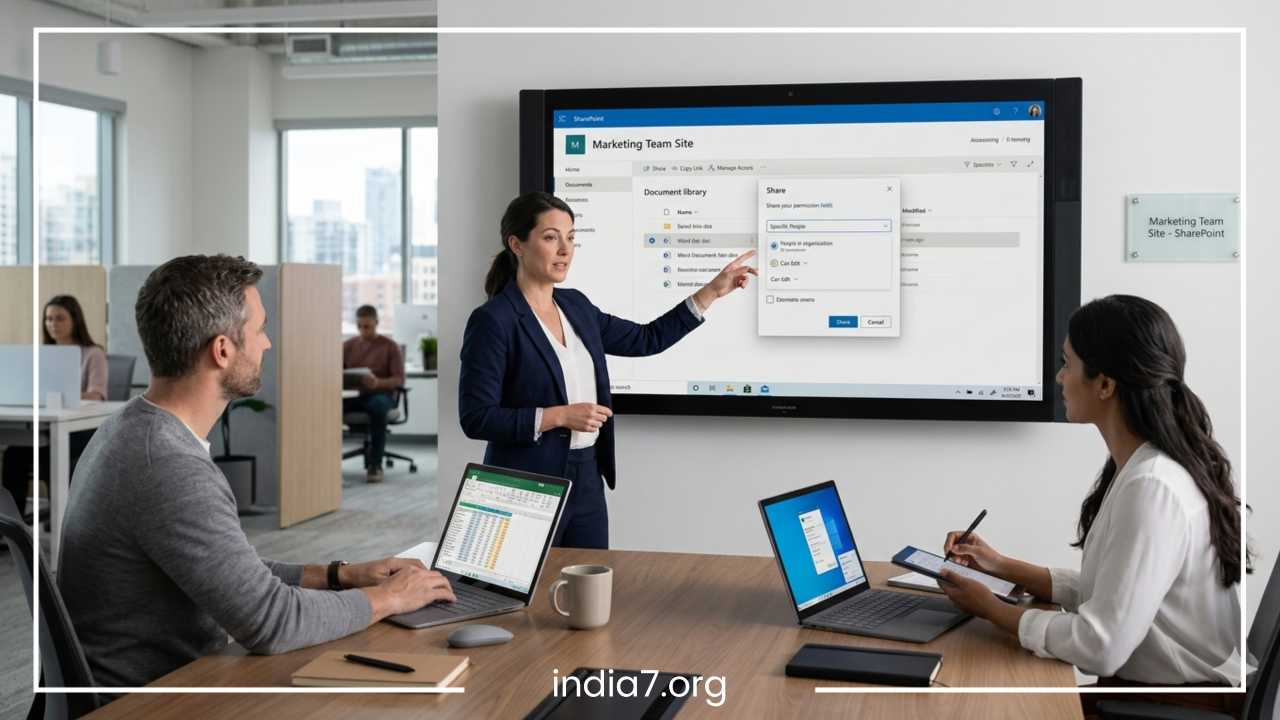
Top Strategies for Securing SharePoint Sites

Top Strategies for Securing SharePoint Sites | Best Practices
The digital workspace has undergone a seismic shift, moving from localized file servers to expansive, interconnected cloud ecosystems. At the heart of this transformation is Microsoft SharePoint, a platform that serves as the connective tissue for document management, intranet communication, and team collaboration. However, the very features that make SharePoint powerful—its ease of sharing, deep integration with Microsoft 365, and accessibility from any device—also present significant security challenges.
In an era where data is an organization’s most valuable currency, securing SharePoint is not merely an IT task; it is a fundamental requirement for business continuity and risk management. A single misconfigured site can expose intellectual property, violate privacy regulations like GDPR or HIPAA, and damage a brand’s reputation beyond repair. This guide provides a deep dive into the strategies necessary to build a resilient, secure SharePoint environment that balances robust protection with the fluid collaboration today’s workforce demands.
Read: How to Choose a New Career?
Understanding SharePoint Security Architecture
To secure a building, you must first understand its blueprints. SharePoint security is built on a sophisticated architecture that integrates identity, container-level permissions, and inherited rights.
The Granular Permissions Hierarchy
Security in SharePoint is designed as a waterfall. Understanding how this flow works is essential for preventing “permission leakage.”
-
The Tenant Level: This is the top-level container. Settings applied here (such as external sharing restrictions) act as a global “safety valve” for every site in the organization.
-
Site Collections and Sites: These are the primary administrative boundaries. Security settings at this level dictate who can enter the “building.”
-
Document Libraries and Lists: These are the “rooms” within the building. You can secure a library to ensure only specific teams can see the files within it.
-
Folders and Items: These are the “cabinets” and “files.” While SharePoint allows for unique permissions at the individual file level, doing so frequently can lead to a fragmented security model that is nearly impossible to audit.
Modern SharePoint and Microsoft 365 Groups
The shift from “Classic” to “Modern” SharePoint introduced the Microsoft 365 Group. In the past, SharePoint permissions were isolated. Today, when you create a Team in Microsoft Teams, a SharePoint site is automatically provisioned. The security of that site is tied to the Group membership. This means that an owner of a Team is automatically an owner of the SharePoint site. Administrators must recognize that managing SharePoint security now requires managing Microsoft 365 Group membership.
Read: Start a Business With No Investment
Implement Strong Access Control Policies
The foundation of SharePoint security is controlling who can enter and what they can do once inside. Access control should never be static; it must be dynamic and governed by strict principles.
The Principle of Least Privilege (PoLP)
The most effective way to minimize risk is to ensure that users have the absolute minimum access necessary to complete their tasks.
-
Read vs. Contribute: Many users only need to consume information. By default, grant “Read” access. Only upgrade to “Contribute” or “Edit” if the user’s role specifically requires file modification.
-
The Danger of “Full Control”: Users with “Full Control” can delete sites, change security settings, and invite others. This role should be reserved for a handful of trained Site Collection Administrators.
-
Breaking Inheritance Wisely: Only break permission inheritance when absolutely necessary. Instead of breaking inheritance at the file level, consider moving sensitive files to a separate, restricted library.
Transitioning to Group-Based Management
Managing individual user permissions is the primary cause of “permission sprawl.” When an employee changes departments, their old permissions often remain active because IT cannot find every individual file they were granted access to.
-
Active Directory Integration: Use Azure AD (Entra ID) Security Groups to manage access. If a user is moved from “Marketing” to “Sales” in your directory, their access to the Marketing SharePoint site should automatically revoke as they are removed from the Marketing group.
-
Nested Groups: Be cautious with nesting groups (putting one group inside another), as this can obscure who truly has access to a site during a security audit.
Read: How to Be the Perfect Boss
Use Microsoft 365 Groups and Azure AD Effectively
Identity is the new perimeter. In a cloud-first world, the firewall is less important than the identity provider.
Dynamic Membership Rules
To scale security, utilize Dynamic Groups in Azure AD. You can create rules based on user metadata—such as department, job title, or office location. For example, a “Finance-All” SharePoint site can be set to automatically add any user whose “Department” attribute equals “Finance.” This ensures that the moment a person is offboarded or moved, their access is updated in real-time without human intervention.
Administrative Units and Scoped Roles
In large global organizations, you may not want a single IT admin to have power over every SharePoint site. Administrative Units allow you to segment your tenant. You can appoint a “Regional Admin” for the European branch who has full control over European SharePoint sites but cannot see or modify the North American sites. This limits the “blast radius” if an administrative account is compromised.
Enable Multi-Factor Authentication (MFA)
If you implement only one strategy from this guide, let it be Multi-Factor Authentication.
Why Passwords Fail
Passwords are the weakest link in the security chain. They are easily phished, guessed via brute force, or bought on the dark web after third-party breaches. MFA adds a second layer—something the user has (a phone) or something the user is (biometrics)—making stolen passwords useless on their own.
Conditional Access: The Intelligent Gatekeeper
MFA should not be a “blunt instrument” that annoys users every five minutes. Use Conditional Access (CA) to create a frictionless yet secure experience.
-
Trusted Locations: You might choose not to require MFA when a user is on a known corporate network but require it the moment they log in from a coffee shop.
-
Device Health: You can set a policy that says: “Only allow access to the ‘Legal’ SharePoint site if the device is corporate-managed and has a current antivirus status.”
-
Impossible Travel: If a user logs in from New York and then ten minutes later from London, CA can automatically block access and flag the account for investigation.
Secure External Sharing
SharePoint’s power lies in collaboration, but external sharing is often where data leaks occur. Organizations must move away from the “all or nothing” approach to external access.
Managing Guest Access
When you share with an external user, you should always prefer Authenticated Guest Access. This requires the recipient to verify their identity via a one-time passcode or by logging in with their own Microsoft/Google account.
-
The Risk of “Anyone” Links: Anonymous links (Anyone with the link can view) are the most dangerous. They can be forwarded, indexed by search engines, or stumbled upon by unauthorized parties. These should be disabled for any site containing sensitive data.
Domain Restrictions and Whitelisting
If your organization primarily collaborates with a few specific partners, use Domain Whitelisting. You can configure SharePoint to only allow sharing with specific domains (e.g., @partner-company.com). This prevents employees from accidentally sending sensitive data to personal Gmail or Outlook accounts.
Expiration and “View-Only” Restrictions
-
Mandatory Expiration: Set a global policy that all external sharing links expire after 14 or 30 days. This ensures that access is a temporary privilege, not a permanent right.
-
Block Download: For highly sensitive documents, use the “Block Download” feature. This allows the external partner to view and comment on the document in a web browser but prevents them from saving a copy to their local machine where your security controls no longer apply.
Data Protection with Sensitivity Labels and DLP
While access control prevents the wrong people from getting in, Data Loss Prevention (DLP) and Sensitivity Labels protect the data itself, regardless of where it goes.
Implementing Sensitivity Labels
Sensitivity Labels (part of Microsoft Purview) allow you to classify data based on its importance.
-
Public: No encryption, available to everyone.
-
Internal: Available to all employees; no external sharing.
-
Confidential: Encrypted; only specific departments can open, even if the file is moved out of SharePoint.
-
Highly Confidential: Encrypted, with “Do Not Forward” and “No Print” permissions attached to the metadata.
The beauty of labels is that the protection travels with the file. If an employee downloads a “Confidential” Excel sheet and puts it on a USB drive, the file remains encrypted and requires an authorized login to open.
Data Loss Prevention (DLP) Policies
DLP acts as an automated “customs agent” for your data. You can create policies that scan for specific patterns, such as:
-
Credit card numbers
-
Passport numbers
-
Specific project keywords (e.g., “Project X”)
When a user attempts to upload a document containing 500 social security numbers to a public-facing SharePoint site, the DLP policy can automatically block the upload, notify the user of the policy violation, and alert the security team.
Monitor Activity and Audit Logs
A secure system is a monitored system. You cannot defend what you cannot see.
The Importance of the Unified Audit Log
SharePoint logs every significant action. Security professionals should focus on these specific activities:
-
SiteAdminAllowedToShareExternally: Changes to sharing settings are high-value targets for auditors.
-
FileDownloaded: A high volume of downloads by a single user in a short timeframe is a classic indicator of data exfiltration.
-
SharingRevoked: Monitoring when access is removed helps ensure that “cleanup” policies are being followed.
Using Microsoft Sentinel for Advanced Analytics
For larger enterprises, piping SharePoint logs into a SIEM (Security Information and Event Management) tool like Microsoft Sentinel allows for “cross-signal” analysis. For example, if a user downloads an unusual number of files from SharePoint and then logs into an unauthorized cloud storage site, Sentinel can correlate these two events and flag a potential insider threat.
Regular Security Audits and Governance
Security decays over time if not maintained. Governance is the process of ensuring your security standards are consistently met.
The “Site Owner” Accountability Model
IT cannot possibly know who should have access to every folder in a 10,000-person company. The responsibility must be decentralized to Site Owners.
-
Self-Service Reviews: Implement a process where Site Owners receive a quarterly report of all users who have access to their site. They must “certify” that these users still require access. If they don’t respond, access for non-standard users is automatically revoked.
Managing Site Sprawl
Every “dead” SharePoint site is a liability. It contains old data that isn’t being monitored.
-
Lifecycle Policies: Use Microsoft 365 group expiration policies. If a site hasn’t seen activity in 180 days, the owner is asked if it can be deleted. If they don’t answer, the site is archived and eventually removed.
Protect Against Common Threats
SharePoint is a frequent target for specific types of cyberattacks. Understanding these vectors allows you to build specific defenses.
Ransomware and Versioning
Ransomware often targets synced folders. If a user’s laptop is hit, the OneDrive sync client may faithfully upload the encrypted versions of files to SharePoint.
-
The Versioning Safety Net: SharePoint keeps a history of file versions. In the event of a ransomware attack, you don’t necessarily need to pay a ransom or restore from a tape backup. You can use the “Restore a library” feature to roll back all files to a specific timestamp before the infection occurred.
Phishing via SharePoint Notifications
A common tactic involves an attacker “sharing” a file from a compromised Microsoft 365 account. The victim receives a genuine email from no-reply@sharepointonline.com, which bypasses many spam filters. The “shared” document then contains a link to a fake login page.
-
Solution: Train users to never enter credentials on a page reached via a link. Also, use Microsoft Defender for Office 365 to scan “internal” sharing links for malicious redirects.
Backup and Disaster Recovery
There is a common misconception that “the cloud doesn’t need backups.” While Microsoft guarantees the availability of the service, they do not guarantee the retention of your data against accidental or malicious deletion.
Retention vs. Backup
-
Retention Policies: These keep a copy of every version of a file for a set period (e.g., 7 years) for legal compliance.
-
Backup: A true backup is an “air-gapped” or separate copy of the data. If a global admin’s account is compromised and they delete the entire SharePoint tenant, retention policies within that tenant might also be deleted. A third-party backup solution ensures you have a recovery path even in the worst-case scenario.
User Training and Security Awareness
Technology can only go so far. The “human firewall” is often the most difficult to patch but the most important to maintain.
The “Share with Care” Campaign
Educate users on the implications of their actions. Many users share with “Everyone” because it is the easiest way to ensure their colleagues can see a file. They don’t realize that “Everyone” includes every contractor, intern, and executive in the company.
-
Contextual Training: Use “Policy Tips” in SharePoint. When a user tries to share a sensitive file, a small banner appears saying: “This file contains sensitive data. Are you sure you want to share it externally?” This “just-in-time” education is far more effective than an annual 60-minute training video.
Identifying Social Engineering
Attackers often use the names of high-level executives to pressure SharePoint owners into granting access. Train Site Owners to verify requests through a secondary channel (like a quick Teams chat or phone call) before changing permissions on sensitive folders.
Advanced Security Best Practices: The Zero Trust Model
The “Zero Trust” model operates on the assumption that the network is already compromised. It follows three principles: Verify explicitly, Use least privileged access, and Assume breach.
Information Barriers
In industries like investment banking or legal services, you may have “Conflict of Interest” requirements. Information Barriers prevent specific groups of users from communicating or collaborating in SharePoint. For example, the “Mergers and Acquisitions” team can be blocked from ever being added to a site owned by the “Public Trading” team.
Scoped Search Results
Security also involves what people don’t see. Ensure that “Search” is security-trimmed. If a user doesn’t have permissions to a document, it should not appear in their search results, even as a title. This prevents “data discovery” by unauthorized users who might see a sensitive filename (e.g., “Layoff_List_2024.xlsx”) and attempt to find a way to access it.
Secure API and Third-Party App Access
Many organizations plug third-party apps into SharePoint (e.g., workflow tools, signature apps). Review the “OAuth” permissions these apps request. Some apps ask for “Read/Write all files in all site collections.” This is a massive security hole. Always follow the principle of least privilege for application permissions, just as you do for human users.
Final Thoughts
Securing SharePoint is a multifaceted discipline that requires a blend of technical settings, strategic governance, and user education. In the modern threat landscape, relying on a “perimeter” is no longer viable. Instead, organizations must adopt a layered defense—securing the identity with MFA, the container with strict permissions, the data with sensitivity labels, and the environment with proactive monitoring.
A secure SharePoint environment is one that is “secure by design and by default.” It starts with disabling dangerous features like anonymous sharing at the tenant level and moves toward a model where every access request is verified and every sensitive document is encrypted.
By implementing these strategies, you do more than just check a compliance box. You create a “trusted” collaboration space where employees can innovate and share ideas freely, knowing that the organization’s most critical data assets are protected by a world-class security framework. Security should not be viewed as a roadblock to productivity, but as the foundation that makes sustainable, long-term digital collaboration possible.
SharePoint Security Quick Checklist
-
Identity: Is MFA enabled for 100% of your users? Are you using Conditional Access?
-
Global Settings: Is “Anyone” (anonymous) sharing disabled at the tenant level?
-
Groups: Are SharePoint permissions managed via AD Groups rather than individual names?
-
Classification: Have you deployed Sensitivity Labels for “Confidential” and “Internal” data?
-
DLP: Do you have active policies scanning for PII and financial data?
-
Governance: Do you have a process to delete or archive inactive sites?
-
Auditing: Are you receiving alerts for “Mass File Downloads” or “Permission Changes”?
-
Backup: Do you have a recovery plan that extends beyond the 93-day recycle bin?
-
Training: Have you run a phishing simulation or sharing-awareness session in the last six months?
Frequently Asked Questions
How can I secure SharePoint Online for external users and guests?
Securing SharePoint Online for external users involves a multi-layered approach starting at the Microsoft 365 Admin Center. First, you should restrict external sharing to “Existing Guests” or “Authenticated Users” rather than using “Anyone” links. To further harden security, implement Conditional Access policies that require guest users to perform Multi-Factor Authentication (MFA) and accept a Terms of Use agreement before gaining access to your site. Regularly auditing guest access via the Access Reviews feature in Azure AD ensures that external partners only retain access for the duration of their project.
What are the best practices for SharePoint permission management and hierarchy?
The most effective best practice for SharePoint permission management is to manage at the highest level possible and avoid breaking inheritance at the individual file level. Use Active Directory Security Groups instead of assigning permissions to individual users; this ensures that when an employee’s role changes in your directory, their SharePoint access updates automatically. Stick to the Principle of Least Privilege, granting users “Read” or “Contribute” access by default, and reserving “Full Control” for a maximum of two or three designated site owners to prevent unauthorized configuration changes.
How do I prevent data leaks in SharePoint using Data Loss Prevention (DLP)?
To prevent data leaks, you should configure Microsoft Purview Data Loss Prevention (DLP) policies specifically targeted at your SharePoint sites. These policies scan for sensitive information—such as credit card numbers, social security numbers, or custom keywords—and can automatically block the sharing of such files with anyone outside the organization. Combining DLP with Sensitivity Labels provides an extra layer of protection by encrypting the files themselves, ensuring that even if a document is downloaded or moved to an unmanaged device, it cannot be opened by unauthorized parties.
What is the difference between SharePoint site security and Microsoft 365 Group security?
SharePoint site security refers specifically to the permissions within the SharePoint site itself (Owners, Members, Visitors), while Microsoft 365 Group security is an identity-driven model that controls access across multiple applications simultaneously, including Teams, Planner, and Outlook. In a “Modern” SharePoint site, the two are usually linked; adding a member to the Microsoft 365 Group automatically grants them “Member” access to the associated SharePoint site. Understanding this link is crucial because an owner of a Team effectively becomes a site administrator for the linked SharePoint document library.
How can I protect SharePoint from ransomware and malicious file uploads?
Protection against ransomware in SharePoint is primarily handled through Versioning and Microsoft Defender for Office 365. SharePoint’s native versioning allows administrators to “roll back” an entire document library to a point in time before a ransomware infection occurred, effectively neutralizing the encryption. Additionally, enabling Safe Attachments for SharePoint, OneDrive, and Microsoft Teams ensures that every file uploaded is scanned for malicious code in a virtual sandbox, preventing users from opening or sharing infected documents.
Is third-party backup necessary for SharePoint Online security?
While Microsoft provides high availability and a 93-day recycle bin, a third-party backup solution is widely considered a best practice for comprehensive disaster recovery. Third-party backups provide “air-gapped” data protection, meaning your data is stored outside of your primary Microsoft tenant. This is vital for protecting against “Insider Threats”—such as a rogue administrator deleting your entire environment—or for meeting long-term regulatory compliance requirements that exceed Microsoft’s standard retention periods.