Top Ways to Monetize a YouTube Channel

Top Ways to Monetize a YouTube Channel | Proven Strategies for Creators
The digital landscape has undergone a seismic shift over the last decade, transforming from a space of casual content consumption into a robust global economy. At the heart of this revolution is YouTube, a platform that has evolved far beyond a simple video-sharing site to become a primary source of income for millions of creators worldwide. What began as a hobby for many has turned into a legitimate career path, offering financial independence, creative freedom, and the ability to reach a global audience from the comfort of a home studio.
The potential for monetization on YouTube is vast, but it is often misunderstood. While many people equate YouTube success solely with the “millions of views” required to earn a living from advertisements, the reality of modern content creation is far more nuanced. Today’s most successful creators do not rely on a single paycheck from Google; instead, they build diversified business ecosystems that leverage their influence across multiple revenue streams. Whether you are a tech reviewer, a lifestyle vlogger, an educator, or a gamer, the path to a sustainable income involves understanding the technical tools provided by the platform and the psychological drivers of your audience.
Read: How to Pick Different Categories for Your Business Blog
This article serves as a comprehensive guide to the various avenues available for turning a YouTube channel into a profitable venture. We will explore everything from the foundational YouTube Partner Program and ad revenue to advanced strategies like affiliate marketing, brand sponsorships, and digital product sales. By the end of this guide, you will have a clear roadmap for diversifying your income and building a resilient brand that can withstand changes in algorithms and market trends.
Read: The Business of Blogging
YouTube Partner Program & Ad Revenue
The YouTube Partner Program (YPP) is the traditional gateway to monetization. It is the first major milestone for most creators, representing the moment their content transitions from a passion project to a revenue-generating asset. However, gaining entry into this program requires meeting specific, rigorous eligibility requirements designed to ensure that channels are producing original, high-quality content that aligns with advertiser-friendly guidelines.
Eligibility and Requirements
Currently, the primary benchmarks for YPP eligibility include reaching 1,000 subscribers and accumulating 4,000 valid public watch hours within the past 12 months. Alternatively, creators can qualify by reaching 1,000 subscribers and gaining 10 million valid public Shorts views within 90 days. These metrics ensure that a creator has built a loyal, engaged audience before they begin displaying ads. Beyond the numbers, your channel must comply with YouTube’s monetization policies, which prohibit copyright infringement, repetitive content, and “low-effort” videos.
Understanding Ad Types
Once accepted into the program, you can enable various types of advertisements on your videos:
-
Display and Overlay Ads: These appear as banners on the side of the video or as a semi-transparent overlay at the bottom of the frame.
-
Skippable Video Ads: These allow viewers to skip the ad after five seconds. Creators are generally paid when a viewer watches at least 30 seconds or the entire ad.
-
Non-Skippable Video Ads: These must be watched before the video can be viewed. They are usually 15 to 20 seconds long.
-
Bumper Ads: Short, non-skippable ads of up to six seconds that play before a video starts.
Revenue Factors: CPM and RPM
How much you earn from ads is not a fixed rate per view. Instead, it is determined by CPM (Cost Per Mille), which is the amount advertisers pay for 1,000 ad impressions. Several factors influence your CPM:
-
Niche: Advertisers pay more to reach audiences interested in high-value topics. For example, the “Finance” and “Business” niches typically have much higher CPMs than “Comedy” or “Gaming” because the viewers are seen as potential high-value customers for banks and software companies.
-
Audience Location: Viewers in countries with higher purchasing power, such as the United States, United Kingdom, or Canada, command higher CPMs than viewers in emerging markets.
-
Seasonality: Ad spend typically peaks during the fourth quarter (Q4) due to the holiday shopping season and dips significantly in January.
Maximizing Ad Revenue
To optimize your ad earnings, focus on “Average View Duration.” The longer people stay on your video, the more ads YouTube can potentially serve. Videos longer than eight minutes allow for “mid-roll” ads, which can significantly increase the revenue per video compared to shorter clips that only feature pre-roll or post-roll advertisements.
Read: Marketing Dos and Don’ts for Business Bloggers
Channel Memberships & Super Chat
While ad revenue is passive, it can be volatile. To create more stability, YouTube has introduced features that allow fans to support creators directly. These “Fan Funding” tools—Channel Memberships and Super Chat—are essential for creators who have built a tight-knit community.
Channel Memberships
Channel Memberships allow your most loyal fans to pay a monthly recurring fee in exchange for exclusive perks. This creates a predictable monthly income that is less dependent on the whims of the algorithm. Creators can set multiple membership tiers, typically ranging from $0.99 to $99.99 per month.
Common perks offered include:
-
Loyalty Badges: Custom icons that appear next to a member’s name in comments and live chats.
-
Custom Emojis: Unique graphics members can use in chats.
-
Exclusive Content: Members-only videos, polls, or community posts.
-
Early Access: Letting members see new videos before the general public.
Super Chat and Super Stickers
If you frequently host live streams or “Premieres,” Super Chats and Super Stickers are powerful tools. During a live broadcast, viewers can pay to have their message highlighted in a bright color and pinned to the top of the chat feed for a specific duration. Super Stickers function similarly but allow fans to send animated graphics. This not only provides immediate financial support but also gamifies the live experience, encouraging more interaction between the creator and the audience.
Success Strategies
To succeed with these features, you must offer genuine value. It is not enough to simply ask for money; you must make your members feel like they are part of an “inner circle.” Creators who shout out new members by name during live streams or host monthly Q&A sessions specifically for members tend to see much higher retention rates. By treating your membership program as a premium club rather than a donation box, you foster a sense of belonging that drives long-term support.
Affiliate Marketing on YouTube
Affiliate marketing is one of the most accessible ways to monetize a channel, even before you qualify for the YouTube Partner Program. In this model, you recommend a product or service to your audience and include a unique “affiliate link” in your video description. When a viewer clicks that link and makes a purchase, you earn a commission at no extra cost to the viewer.
How to Integrate Links Effectively
The key to successful affiliate marketing on YouTube is organic integration. If a video feels like a prolonged commercial, viewers will likely click away. Instead, use the product as a tool to solve a problem or enhance a story.
-
Tutorials and “How-To” Videos: If you are teaching someone how to edit a video, you can link to the software you use.
-
Product Reviews: Honest, deep-dive reviews of gadgets, makeup, or books are perfect for affiliate links.
-
“What’s in My Bag/Desk” Videos: These allow you to list multiple items you use daily.
Transparency and Trust
Trust is the most valuable currency a creator possesses. Always disclose your affiliate relationships. Not only is this a legal requirement in many jurisdictions (such as FTC guidelines in the US), but it also builds credibility. A simple disclaimer like, “As an Amazon Associate, I earn from qualifying purchases,” or a verbal mention that links in the description help support the channel, goes a long way. If you recommend a poor product just for the commission, you risk losing your audience’s trust forever.
Top Niches for Affiliates
Tech, beauty, fitness, and home improvement are high-performing niches for affiliate marketing because they are centered around physical products. However, digital services like VPNs, online courses, and software-as-a-service (SaaS) products often offer much higher commission percentages—sometimes up to 30% or 50% of the sale price.
Selling Merchandise & Products
As your brand grows, your audience will likely want a tangible way to connect with you. Selling merchandise (merch) or your own branded products allows you to keep a much higher percentage of the profit compared to ad revenue or affiliate commissions.
The YouTube Merchandise Shelf
YouTube has partnered with platforms like Spring (formerly Teespring), Spreadshop, and Shopify to allow creators to showcase their official branded merchandise directly below their videos. This “Merch Shelf” reduces friction, making it easy for viewers to browse and buy without leaving the platform.
Physical vs. Digital Products
-
Physical Merch: This includes the staples like t-shirts, hoodies, hats, and mugs. The “print-on-demand” model is popular because it requires no upfront inventory cost; the product is only printed and shipped when a customer places an order.
-
Branded Products: Some creators go beyond basic merch to launch custom products, such as a signature coffee blend, a specific line of makeup, or custom-designed gaming peripherals.
-
Digital Products: For educators and specialists, digital products are highly lucrative. Ebooks, PDF guides, LUTs (for video editing), and presets (for photo editing) have zero shipping costs and 100% profit margins after platform fees.
Marketing Your Products
The most successful merch launches are tied to “inside jokes” or catchphrases unique to your community. When a viewer buys a shirt with a phrase only your subscribers understand, they aren’t just buying clothes; they are buying an identity and a signal of membership in your community. Use “calls to action” in your videos to remind viewers about your shop, and consider wearing your own merch in your videos to increase visibility.
Sponsored Content & Brand Deals
For many mid-to-large-scale creators, sponsorships are the single largest source of income. A brand deal involves a company paying you a flat fee to promote their product or service within your video.
How Sponsorships Work
There are three main types of integrations:
-
Dedicated Video: The entire video is focused on the brand (e.g., a full review of a new smartphone).
-
Integrated Shoutout: A 60-90 second segment in the middle of a video where the creator talks about the sponsor (often called “the mid-roll”).
-
Product Placement: The product is visible or used during the video without a formal verbal pitch.
Finding and Negotiating Deals
You don’t always have to wait for brands to email you. You can use influencer marketing platforms like FameBit, Grapevine, or AspireIQ to browse campaigns. Alternatively, you can reach out to brands directly with a professional media kit that outlines your audience demographics, engagement rates, and previous successful collaborations.
When negotiating, don’t just look at view counts. Highlight the “quality” of your audience. A channel with 10,000 highly engaged subscribers in a specific niche (like high-end woodworking) is often more valuable to a sponsor than a general entertainment channel with 100,000 subscribers.
Authenticity is Key
The “death” of a channel often comes from taking every sponsorship offered, regardless of fit. If a vegan cooking channel starts promoting a meat delivery service, the audience will feel alienated. Only partner with brands you actually use or believe in. Authentic endorsements lead to better results for the brand and higher longevity for your career.
Crowdfunding & Fan Support
Crowdfunding platforms allow creators to receive direct financial support from their audience outside of YouTube’s ecosystem. This is particularly useful for creators who produce “edgy” or niche content that might be frequently demonetized by YouTube’s automated systems.
Patreon, Ko-fi, and Buy Me a Coffee
-
Patreon: The industry leader for recurring monthly support. It allows you to create a tiered system similar to YouTube Memberships but with more flexibility. Many creators use Patreon to offer “Director’s Cuts,” private Discord servers, or monthly physical rewards like stickers or postcards.
-
Ko-fi and Buy Me a Coffee: These are better suited for one-time donations. They use the metaphor of “buying a coffee” for the creator, making the act of giving feel casual and low-pressure.
The Value of Predictable Income
The biggest advantage of fan support platforms is the “de-risking” of your business. If your YouTube channel is ever hacked, suspended, or hit by a major algorithm change, having a base of supporters on an external platform ensures you still have an income stream while you resolve the issue.
Incentivizing Supporters
To grow your Patreon or Ko-fi, you must provide exclusive value. Behind-the-scenes footage, early access to scripts, or the ability to vote on future video topics are excellent ways to make supporters feel like they are “executive producers” of your channel.
Licensing Content & Selling Rights
Every video you create is a piece of intellectual property. Sometimes, that property has value far beyond your own YouTube channel.
Licensing Viral Clips
If you capture a “viral” moment—such as a funny pet video, a breaking news event, or a spectacular fail—media outlets like CNN, ABC News, or popular “compilation” channels may want to use your footage. Instead of letting them use it for free, you can license it. Companies like Jukin Media or ViralHog act as agents for creators; they take your video, protect it from unauthorized use, and sell the rights to television shows and advertisers on your behalf.
Selling to Stock Footage Sites
If you are a high-quality cinematographer or drone pilot, your “B-roll” (extra footage) can be sold on stock sites like Pond5, Shutterstock, or Artgrid. Even if the footage wasn’t the main focus of your YouTube video, it could be exactly what a filmmaker or advertiser is looking for to complete their project. This turns your “scraps” into a source of passive income.
Protecting Your Rights
Always be wary of signing away your rights entirely. Most licensing deals should be “non-exclusive” or for a limited time. Ensure you read the fine print to understand whether you still own the original content and can keep it on your YouTube channel while it is being licensed elsewhere.
YouTube Shorts & Emerging Opportunities
The rise of short-form vertical video has changed the monetization landscape significantly. YouTube Shorts is no longer just a discovery tool; it is a full-fledged revenue generator.
Shorts Revenue Sharing
Unlike the old “Shorts Fund,” which paid out static bonuses, YouTube now shares ad revenue with Shorts creators similarly to long-form videos. The revenue from ads appearing between videos in the Shorts Feed is pooled and distributed based on view share and music usage. While the payout per 1,000 views is currently lower than long-form content, the sheer volume of views possible on Shorts can make it a significant income stream.
Emerging Trends: Live Shopping
YouTube is heavily investing in “Social Commerce.” This allows creators to tag products in their live streams or Shorts, allowing viewers to buy products in real-time. This “Live Shopping” model has already seen massive success in international markets and is becoming a standard feature for creators who do product demonstrations or unboxings.
Early Adoption
Being an early adopter of new features—like “Hype” for small creators or new interactive stickers—often gives you an advantage in the algorithm. YouTube wants these features to succeed, so they frequently give a “reach boost” to creators who use them.
Tips for Maximizing Overall YouTube Revenue
Earning a significant income on YouTube is less about hitting a “jackpot” and more about managing a portfolio of small wins. Here are the core principles for maximizing your earnings:
Diversification is Mandatory
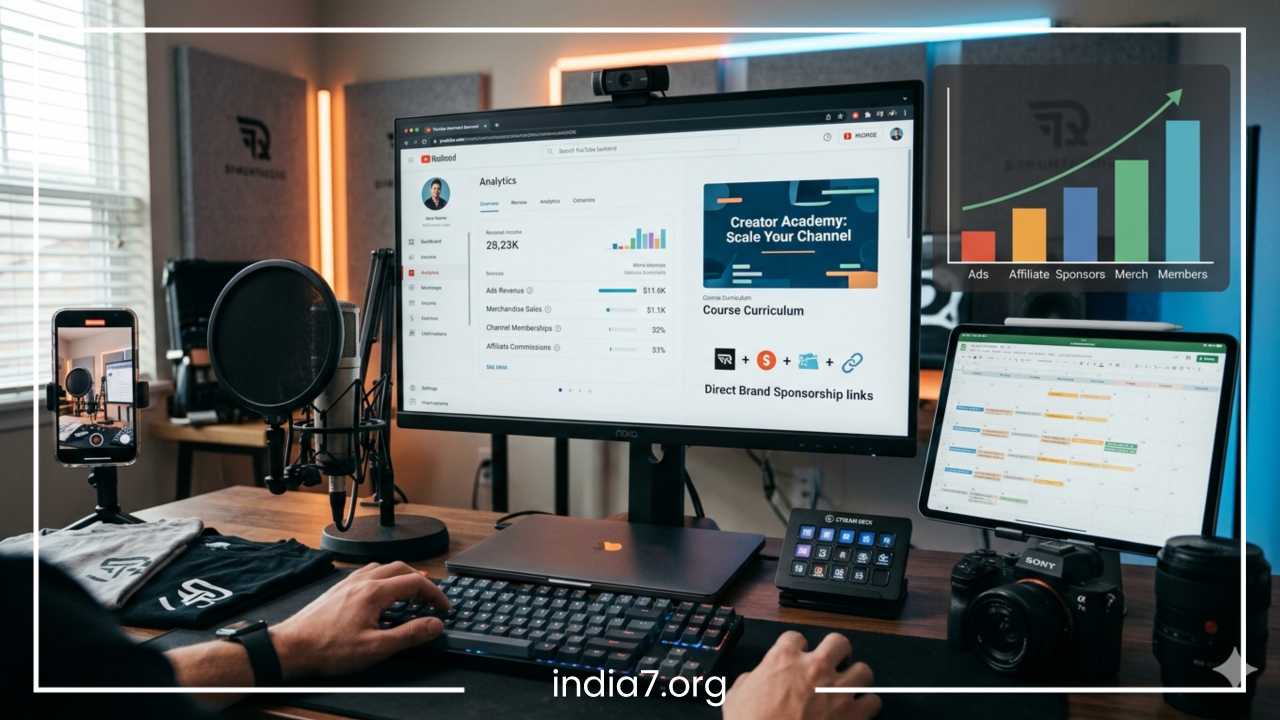
Never rely 100% on ad revenue. The “Adpocalypse” events of the past have shown that ad rates can plummet overnight. Aim for a healthy mix where no single source (Ads, Affiliates, or Sponsors) accounts for more than 40% of your total income.
Analyze the Data
Use YouTube Analytics not just to track views, but to track “Revenue per Mille” (RPM). RPM shows you how much you earned per 1,000 views after YouTube’s cut and across all monetization features. If your RPM is low, it might be time to look for better-paying affiliate products or higher-tier sponsors.
Quality and Consistency
High production value and a consistent schedule build authority. Brands are more likely to work with creators who upload regularly and maintain a professional aesthetic. Moreover, consistent uploading gives the algorithm more data points to find the right audience for your monetization efforts.
Final Thoughts
Monetizing a YouTube channel is a marathon, not a sprint. While the dream of “going viral” and getting rich overnight is enticing, the creators who build lasting careers are those who treat their channel like a business from day one. By combining the passive income of ad revenue with the active income of sponsorships and the community-driven revenue of memberships and merch, you create a stable financial foundation.
There has never been a better time to be a creator. The tools available today allow you to bypass traditional media gatekeepers and build a direct relationship with your audience. Whether you are just starting out with your first 100 subscribers or you are looking to scale a massive channel, the strategies outlined here are proven paths to success.
Your next step is simple: pick one monetization method that feels most natural for your content—perhaps setting up an affiliate link for a tool you use every day—and implement it in your next video. Start small, stay consistent, and watch your creative passion turn into a thriving business.