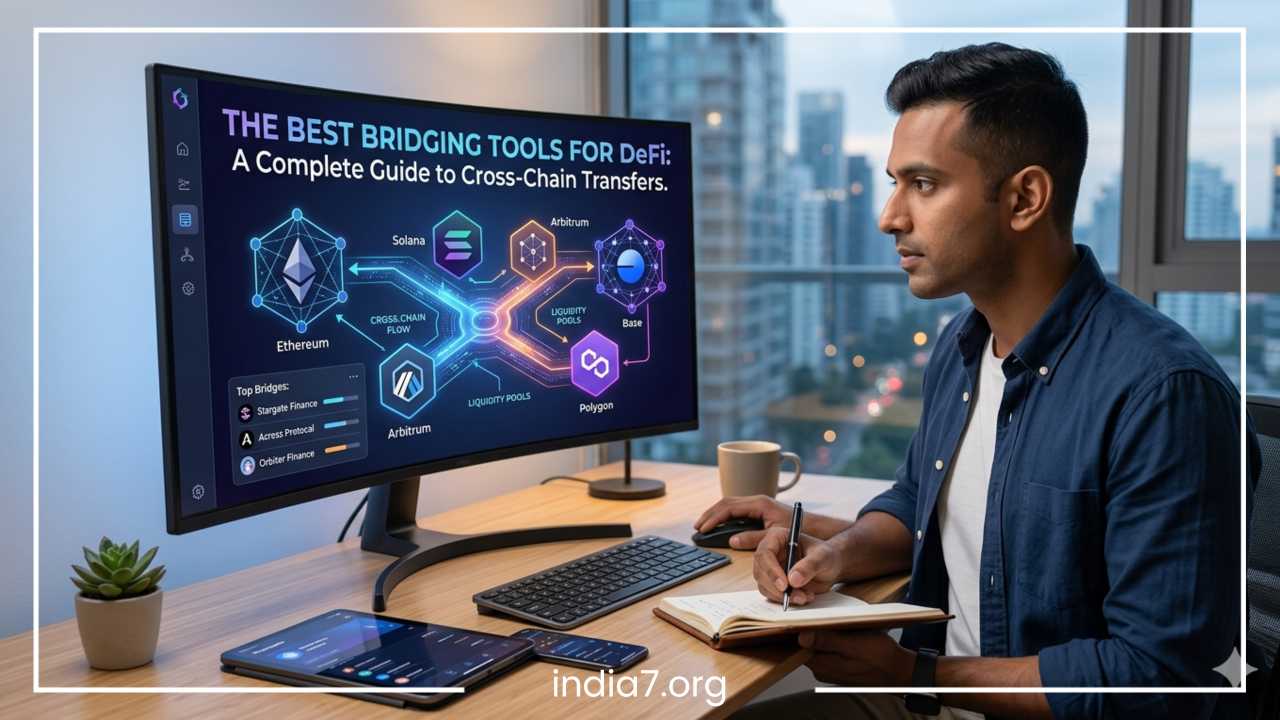
Best Cross-Chain Bridging Tools
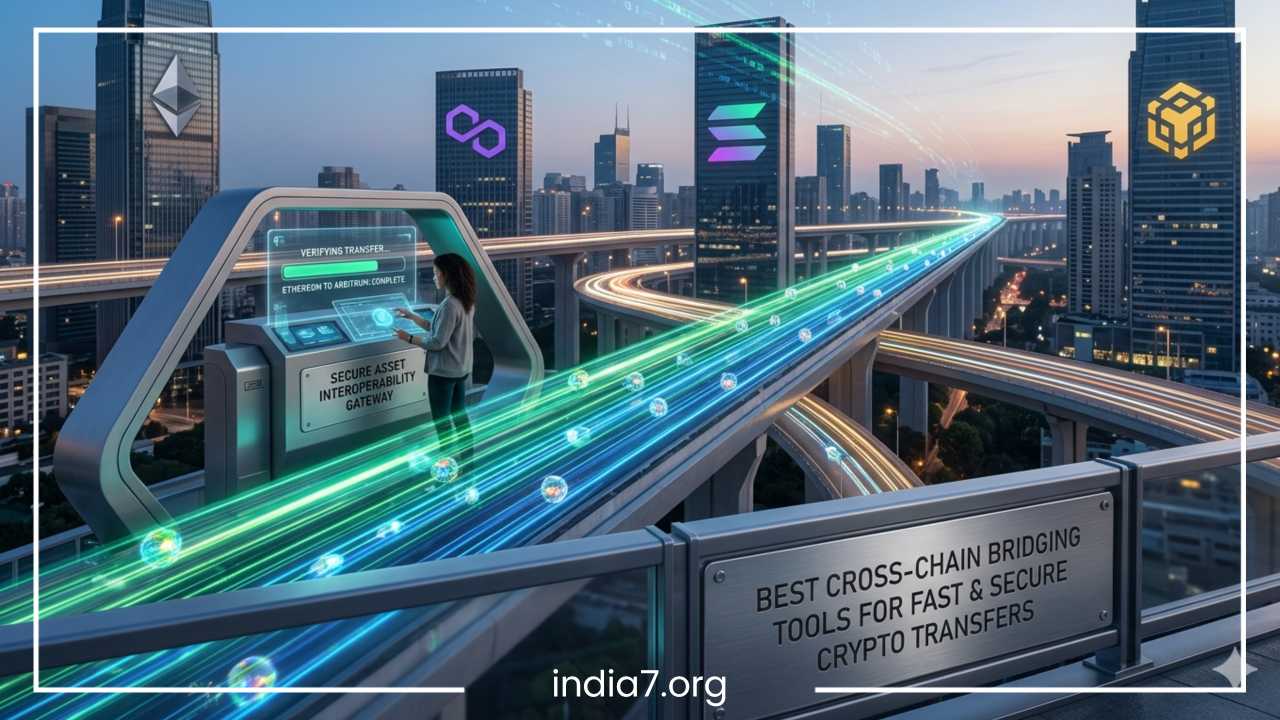
Best Cross-Chain Bridging Tools for Fast & Secure Crypto Transfers
The blockchain landscape has undergone a monumental shift from a single, dominant network into a sprawling ecosystem of interconnected, independent networks. In the earlier days of cryptocurrency, decentralized activity was concentrated almost entirely on the Ethereum mainnet. However, as user demand surged, Ethereum encountered massive challenges with network congestion and exorbitant gas fees. This bottleneck paved the way for the rise of a diverse multi-chain ecosystem. Today, billions of dollars in capital flow across alternate Layer-1 networks like Solana, Avalanche, and BNB Chain, alongside highly efficient Ethereum Layer-2 scaling solutions such as Arbitrum, Polygon, Optimism, and Base.
While this expansion has brought unprecedented scalability, lower costs, and specialized environments for decentralized applications, it has also fragmented global crypto liquidity. Blockchains are isolated environments by design. An asset residing on Ethereum cannot natively communicate with or move to Solana because they utilize entirely different consensus mechanisms, smart contract languages, and data structures. This isolation introduces the core reason why users need to move assets between blockchains: capital efficiency. To participate in high-yield decentralized finance protocols, mint non-fungible tokens on vibrant alternative marketplaces, or interact with fast-paced blockchain gaming applications, market participants must possess a reliable means of cross-chain transfer.
Cross-chain bridges solve this exact structural friction. A crypto bridge acts as a primary infrastructural highway that securely transports value and data across separate ledger architectures. By eliminating isolation, these tools empower users to position their assets wherever capital efficiency is maximized. However, moving assets across networks is not without friction. In a fast-moving market, the quality of a blockchain bridge is determined by three core pillars: speed, transaction costs, and security. Users demand near-instant execution to capture volatile market opportunities without waiting hours for block confirmations. Simultaneously, transaction costs must remain low enough to justify the transfer, especially for retail users. Most importantly, security stands as the definitive foundation of cross-chain infrastructure. Because bridges concentrate massive amounts of capital within smart contracts, they represent high-value targets. Choosing the correct tool requires balancing optimal transaction performance with robust protective mechanics.
Read: Why Are Long Term Insurance Plans Preferred By Most People?
What Is a Cross-Chain Bridge?
A cross-chain bridge is a specialized protocol that enables the transfer of digital assets and arbitrary data from one independent blockchain network to another. To understand how blockchain interoperability works, it is important to realize that tokens are never truly “sent” through a digital pipeline from one chain to another. Because a blockchain ledger is an immutable record tied to its specific network, a token native to Ethereum cannot physically leave the Ethereum state engine. Instead, interoperability protocols achieve cross-chain movement by synchronizing the state between the source chain and the destination chain using specialized smart contracts or consensus groups.
The most traditional method for executing this transfer is the lock-and-mint mechanism. When a user wants to bridge crypto assets from a source network to a destination network, they deposit their native assets into a designated bridge smart contract on the source chain. Once the contract confirms receipt of the tokens, those assets are securely locked in place. The bridge protocol then transmits a cryptographic proof of this deposit to the destination chain. Upon validation of this proof, a matching smart contract on the destination network generates an equivalent amount of wrapped assets. These wrapped assets act as a synthetic claim ticket representing the locked native collateral. When a user wishes to return to the original network, they send the wrapped assets back to the destination contract, where they are permanently burned. This triggers an unlock signal back to the source chain, releasing the original native assets to the user’s wallet.
A common example of this system is moving Ether from the Ethereum mainnet to Arbitrum. A user locks their native Ether into the L1 bridge contract. Almost immediately, the Arbitrum network recognizes the locked balance and mints an identical quantity of wrapped Ether on its own ledger, allowing the user to transact with L2 speeds and costs.
Beyond the lock-and-mint framework, many modern protocols utilize liquidity-based bridges. Instead of creating synthetic wrapped tokens, these platforms maintain deep, pre-funded liquidity pools of native assets across multiple networks. When a user deposits an asset into the source pool, the bridge simply instructs its destination pool to release the corresponding native asset directly to the user’s destination address. This completely bypasses the security risks and capital inefficiencies associated with wrapped assets.
Bridges are fundamentally categorized into two operational frameworks: custodial and non-custodial. Custodial bridges rely on a centralized entity, consortium, or trusted third party to manage the locked collateral. Users depositing funds into a custodial bridge surrender control of their private keys, trusting that the central operator will maintain the asset backing and secure the network. Conversely, non-custodial bridges operate programmatically via automated smart contracts. These are often referred to as trustless bridges because they eliminate human intermediaries. Security in a trustless bridge is enforced purely by cryptographic verification, mathematical proofs, and decentralized validator networks, ensuring that users always retain sovereign ownership over their digital assets throughout the transaction lifecycle.
Read: How to Save On Costs and Efforts on Payroll Processing
Why Cross-Chain Bridges Matter in Crypto
The primary driver behind the adoption of cross-chain bridges is the massive expansion of the decentralized finance landscape. Yield opportunities, lending protocols, and liquidity mining incentives are no longer concentrated in a single arena. At any given moment, a new decentralized application on an alternative network might offer superior capital efficiency or novel financial primitives. Cross-chain infrastructure allows capital to remain highly fluid, moving seamlessly to where it can earn the highest return. Without bridges, the DeFi ecosystem would consist of completely isolated pockets of capital, stifling innovation and limiting market efficiency.
Another critical factor is the pursuit of lower transaction costs and faster processing speeds. While Ethereum remains the gold standard for institutional security and settlement, its layer-one architecture can become prohibitively expensive during periods of high market activity. By leveraging bridges, everyday crypto users can easily migrate their capital to layer-two rollups or high-throughput layer-one chains where gas fees cost mere fractions of a cent and settlement is achieved in seconds. This democratization of access ensures that smaller retail participants can actively engage with DeFi, trade assets, and interact with smart contracts without seeing their principal balances consumed by network fees.
Real-world use cases vividly demonstrate this operational necessity. For instance, a trader holding stablecoins on Ethereum might look to execute a series of high-frequency token swaps. Rather than paying substantial mainnet gas fees for every single trade, they can use an interoperability protocol to bridge their assets to Polygon. On Polygon, they can access deep liquidity and perform dozens of transactions for a total cost of less than a penny.
Similarly, blockchain gaming applications often require thousands of microtransactions for in-game assets, character upgrades, and virtual economies. A user can bridge their capital from a slower layer-one ecosystem over to Solana, where sub-second finality and massive throughput provide a seamless, console-like gaming experience.
Furthermore, yield farmers frequently navigate between networks to capture localized market dynamics, such as bridging capital to Arbitrum to deposit assets into advanced decentralized perpetual exchanges that offer highly competitive, real-time yields. Ultimately, bridges transform the entire blockchain space from a collection of fragmented ecosystems into a unified, frictionless global market.
Read: Best Ways to Financially Prepare for Retirement
Portal Token Bridge
The Portal Token Bridge is a prominent interoperability protocol built directly on top of the Wormhole message-passing ecosystem. Wormhole does not operate as a traditional bridge itself; instead, it serves as a foundational consensus layer that observes and verifies state changes across multiple distinct ledger architectures. The Portal Bridge serves as the primary application interface utilizing this architecture, specializing in high-speed asset transfers across a massive array of diverse networks. By leveraging Wormhole’s decentralized network of node operators—known as Guardians—Portal provides comprehensive asset portability across entirely different virtual machine environments, including EVM, Move, and Solana’s SVM.
A primary strength of the Portal Token Bridge is its deep integration within the Solana ecosystem, serving as a vital bridge connecting Solana with Ethereum and various layer-two scaling solutions. When assets are transferred via Portal, the protocol utilizes a lock-and-mint methodology. For example, when moving tokens from Ethereum to Solana, the native assets are secured within an Ethereum smart contract, and the Wormhole Guardian network verifies the transaction data. Once consensus is reached, a corresponding wrapped asset is minted on Solana. Beyond standard fungible tokens, Portal stands out for its comprehensive native cross-chain NFT bridging capabilities, allowing creators and collectors to transport unique digital collectibles across distinct chains without losing their underlying metadata or provenance.
Pros
-
Broad multi-chain support spanning over twenty major Layer-1 and Layer-2 blockchains.
-
Highly trusted infrastructure for moving large volumes of capital directly between Solana and EVM chains.
-
Fully supports the cross-chain migration of non-fungible tokens.
Cons
-
The lock-and-mint architecture introduces wrapped asset dependencies, which carry systemic risk if the underlying smart contracts are compromised.
-
Suffered a major historical exploit in the past, though the core protocol has since undergone extensive security overhauls, rigorous code audits, and institutional hardening.
Best Use Case
The Portal Token Bridge is best suited for advanced traders, developers, and NFT collectors who require high-speed, direct asset migration between the Solana ecosystem and major Ethereum-compatible networks.
Stargate Finance
Stargate Finance is a liquidity-centric cross-chain bridge built completely upon LayerZero’s omnichain messaging technology. Historically, cross-chain bridges suffered from what is known as the bridging trilemma, which states that a protocol can only possess two of the following three attributes: immediate guaranteed finality, unified liquidity, and the use of native assets. Stargate Finance successfully resolves this architectural challenge by utilizing an innovative delta consensus algorithm. This algorithm allows Stargate to manage unified liquidity pools across multiple chains while simultaneously ensuring that any transaction initiated on a source chain has a mathematically guaranteed allocation of capital waiting for it on the destination chain.
What sets Stargate Finance apart is its total rejection of wrapped assets. When a user interacts with Stargate, they are performing native asset transfers. If a user transfers USDC from Ethereum, they receive native USDC on the destination chain, such as BNB Chain or Avalanche. This completely removes the smart contract vulnerabilities inherent to holding synthetic, wrapped tokens.
Furthermore, Stargate features incredibly deep liquidity pools, which are actively incentivized through its native governance token, STG. This immense liquidity ensures that users experience extremely low slippage, even when moving large institutional volumes of capital across networks. Its seamless developer interface also allows other DeFi applications to integrate Stargate directly into their own user interfaces, enabling one-click cross-chain transactions behind the scenes.
Pros
-
Eliminates wrapped token risks by dealing exclusively in native-to-native asset transfers.
-
Guarantees absolute finality, meaning transactions can never fail on the destination chain due to liquidity shortages.
-
Deeply integrated across the DeFi ecosystem, offering institutional-grade liquidity and minimal price slippage.
Cons
-
Asset selection is primarily focused on major blue-chip assets and stablecoins, meaning niche or long-tail altcoins are generally unsupported.
-
Dependent on the underlying LayerZero messaging infrastructure, inheriting its specific architectural risks.
Best Use Case
Stargate Finance is the premier choice for decentralized finance participants who need to transfer substantial volumes of stablecoins or blue-chip assets across major chains with zero wrapped token risk and minimal slippage.
Across Protocol
Across Protocol is a highly optimized cross-chain bridge explicitly designed for speed and cost efficiency across Ethereum and its prominent Layer-2 scaling solutions, including Arbitrum, Optimism, Base, and Polygon. Across sets itself apart from standard bridging designs by utilizing an optimistic transfer model. Instead of relying on slow, expensive on-chain cryptographic verifications for every single transaction, Across shifts the heavy computational work off-chain. This structural design relies on a network of independent liquidity providers—known as Relayers—who immediately fulfill user transfer requests out of their own pockets on the destination chain, gambling that the transaction is fully valid.
The underlying mechanics are deeply elegant. When a user submits a bridging request, a Relayer views the intent and instantly pays out the funds to the user on the target layer-two network. The Relayer then submits the transaction data back to an Ethereum mainnet data layer as an optimistic claim. A decentralized network of disputers checks this claim against an open-source data availability layer. If no one disputes the transaction within a designated challenge window, the Relayer is fully reimbursed from Across Protocol’s centralized layer-one liquidity pool. Because verification happens optimistically and asynchronously, the end-user receives their assets on the destination chain almost instantaneously, paying gas fees that are radically lower than traditional validation methods.
Pros
-
Extremely fast execution times, often settling transfers across Layer-2 rollups in less than a single minute.
-
Exceptional fee efficiency due to its optimistic architecture, resulting in significantly lower gas costs for users.
-
High structural security backed by a robust dispute-validation mechanism on the Ethereum root layer.
Cons
-
Geographically confined primarily to the Ethereum layer-one settlement layer and its associated scaling rollups.
-
Relayer capital constraints can occasionally cause minor settlement delays for exceptionally large, non-standard transaction sizes.
Best Use Case
Across Protocol is the absolute best option for frequent Ethereum ecosystem users who regularly move assets between Arbitrum, Optimism, Base, and mainnet, and who prioritize maximum transaction speed and minimal fees.
Synapse Protocol
Synapse Protocol operates as an extensible cross-chain communications network that powers both a generalized messaging system and an integrated cross-chain asset bridge. The platform is designed to facilitate seamless asset migration, arbitrary data messaging, and universal smart contract interoperability across an expansive list of both EVM-compatible and non-EVM blockchains. Synapse achieves this versatility by utilizing a decentralized validator network that monitors transactions across source chains, reaches cryptographic consensus, and executes corresponding actions on target destinations.
At its core, Synapse stands out by combining a liquidity bridge with advanced cross-chain swap capabilities. When users bridge capital, they are not limited to moving identical assets. Synapse allows users to execute an asset swap and a network migration simultaneously in a single transaction. For example, a user holding native DAI on Ethereum can utilize Synapse to bridge those funds over to Avalanche and have them arrive directly as native AVAX. The protocol routes the transaction through its own localized stablecoin automated market maker pools, ensuring cost-efficient routing, competitive conversion rates, and deep liquidity across all supported networks.
Pros
-
Supports simultaneous cross-chain token swapping, allowing users to switch asset types while changing networks.
-
Deeply integrated into a broad array of distinct layer-one and layer-two networks, providing exceptional versatility.
-
Offers developer-facing SDKs that allow external protocols to embed universal cross-chain features directly into their applications.
Cons
-
The generalized validator network relies on an external consensus group, which introduces specific trust assumptions regarding validator security.
-
Complex multi-step swap transactions can occasionally incur higher aggregate smart contract fees during periods of heavy mainnet congestion.
Best Use Case
Synapse Protocol is highly recommended for multi-chain DeFi power users who regularly need to swap asset classes while simultaneously navigating between disparate blockchain environments.
Orbiter Finance
Orbiter Finance is a decentralized cross-chain bridge specializing in instant, cost-efficient transfers of Ethereum native assets across layer-two scaling networks. Unlike protocols that manage complex multi-asset liquidity pools or rely on slow multi-signature validator consensus, Orbiter adopts a unique decentralized Maker-taker model. The system operates with two primary roles: the Sender (the end-user looking to bridge assets) and the Maker (independent nodes that provide liquidity across networks). This structural simplicity allows Orbiter to bypass traditional smart contract bottlenecks completely.
When a Maker sets up their node on Orbiter Finance, they must deposit a specified amount of margin collateral into an Orbiter orchestration smart contract on the Ethereum root layer. This margin acts as an ironclad safety bond. When a Sender wishes to move assets—such as transferring Ether from zkSync to Starknet or Arbitrum—they simply send their tokens directly to the Maker’s address on the source layer-two network.
The Maker’s automated tracking script identifies this incoming payment and instantly releases an identical amount of native assets (minus a small, transparent service fee) to the Sender’s address on the destination network. If a Maker ever attempts to behave dishonestly or fails to release the funds, the Sender can present a simple cryptographic proof to the settlement contract, which instantly confiscates the Maker’s locked margin and reimburses the user with an added financial bounty.
Pros
-
Unmatched speed, as transactions settle as fast as individual layer-two networks can process simple address transfers.
-
Minimal transaction fees because the platform completely avoids complex, gas-heavy on-chain smart contract computations.
-
Superior privacy and safety, as users deal directly with native assets without interacting with synthetic wrapped tokens.
Cons
-
Limited asset flexibility, primarily focusing on mainstream assets like Ether and major stablecoins.
-
The system is hyper-focused on the Ethereum Layer-2 ecosystem, making it unavailable for direct transfers to unrelated Layer-1 networks like Solana.
Best Use Case
Orbiter Finance is the ideal tool for active Layer-2 ecosystem participants who frequently move native Ether or stablecoins across zkSync, Starknet, Arbitrum, and Optimism with zero technical friction.
Rhino.fi
Rhino.fi operates as a comprehensive, multi-chain DeFi platform that functions as an aggregated bridging hub. Originally built as a decentralized exchange utilizing StarkEx layer-two validity rollup technology, Rhino.fi has evolved to prioritize frictionless cross-chain mobility. The platform provides an institutional-grade, user-friendly interface that aggregates liquidity from multiple backend sources, allowing retail users to move assets between distinct networks without ever having to understand the underlying technical complexities of the cross-chain infrastructure.
The core user experience on Rhino.fi feels completely centralized in terms of speed, design, and simplicity, yet it remains completely non-custodial. When a user connects their Web3 wallet to Rhino.fi, they are interacting with an optimized layer-two dashboard. From this single interface, they can initiate instant transfers across networks like Polygon, Arbitrum, Optimism, Base, and Ethereum mainnet.
Because Rhino.fi utilizes smart contract batching and off-chain order matching, it effectively bypasses the traditional fragmentation of gas tokens. Users do not need to hold specific destination network tokens to pay for gas when initiating a transfer; the platform seamlessly handles fee optimization entirely in the background, making it an incredibly friction-free environment for users new to multi-chain web3 ecosystems.
Pros
-
Exceptional, highly intuitive user interface tailored specifically for non-technical users and crypto beginners.
-
Completely eliminates destination-chain gas token prerequisites by optimizing fee collection internally.
-
Non-custodial architecture that preserves user asset ownership while delivering centralized exchange-like speeds.
Cons
-
Requires users to deposit funds into the localized Rhino.fi layer-two account infrastructure before executing transfers.
-
Can feature slightly higher built-in convenience fees compared to raw, un-aggregated open-source protocols.
Best Use Case
Rhino.fi is the standout choice for beginners and casual cryptocurrency users who want a simple, clean interface to move capital across popular networks without worrying about managing separate gas tokens.
Hop Protocol
Hop Protocol is a decentralized, rollup-to-rollup general asset bridge designed to facilitate rapid capital movement across the Ethereum scaling ecosystem. The primary engineering challenge with modern optimistic rollups is their built-in challenge window, which forces users to wait up to seven days when withdrawing assets back to the Ethereum mainnet. Hop Protocol completely neutralizes this systemic delay by introducing a dual-token architecture that utilizes intermediate synthetic tokens called Hop Bridge Tokens (hTokens), alongside a decentralized network of liquidity managers known as Bonders.
In the Hop system, hTokens serve as a universal accounting mechanism. When a user transfers an asset like USDC from Arbitrum to Optimism, the protocol converts the asset into hUSDC on the source rollup. A Bonder instantly steps in and provides liquidity on the destination network by matching the hUSDC and releasing native USDC to the user. The Bonder is then made whole when the official slow-path rollup settlement finally clears.
To ensure absolute price parity and prevent slippage, Hop embeds automated market maker invariant curves on every single supported layer-two network. This ensures that the conversion between native assets and hTokens remains mathematically stable, allowing users to execute instant, large-scale exits from Layer-2 rollups without facing prolonged capital lockups.
Pros
-
Bypasses the standard seven-day withdrawal lockup inherent to optimistic rollups, allowing instant layer-two exits.
-
Completely trustless and open-source architecture firmly secured by the underlying security of the Ethereum root network.
-
Features highly predictable, transparent fee structures for rollup-to-rollup routing.
Cons
-
The multi-token hToken swapping mechanism can occasionally introduce higher slippage during black-swan market events if Bonder liquidity runs thin.
-
Strictly limited to the Ethereum layer-two scaling landscape, with no native support for alternative ecosystems like Solana or Move-based chains.
Best Use Case
Hop Protocol is best suited for experienced, high-frequency Ethereum developers and DeFi yield farmers who require a secure, decentralized method to move capital across rollups while avoiding multi-day withdrawal delays.
Comparison of Top Cross-Chain Bridging Tools
To help you choose the ideal platform for your specific transaction requirements, the following comparative table outlines the primary features, core focuses, and architectural designs of the industry’s top cross-chain bridging tools:
| Bridge Name | Core Network Focus | Transfer Mechanism | Key Advantage | Native Swaps |
| Portal Bridge | Solana, EVM, Move Chains | Lock-and-Mint / Wrapped | Multi-VM & NFT Support | No |
| Stargate Finance | Universal EVM Chains | Native Liquidity Pools | No Wrapped Asset Risk | No |
| Across Protocol | Ethereum & Layer-2 Rollups | Optimistic Relayers | Incredible Speed & Low Fees | No |
| Synapse Protocol | EVM & Non-EVM Chains | Cross-Chain AMM Pools | Multi-Chain Token Swapping | Yes |
| Orbiter Finance | Ethereum Layer-2 Rollups | Maker-Taker P2P Model | Sub-Second Finality | No |
| Rhino.fi | Mainstream EVM Layer-2s | Aggregated Validity Rollup | Ultra-Simple Beginner UI | Yes |
| Hop Protocol | Ethereum Rollup Ecosystem | hTokens & Bonder Network | Bypasses 7-Day L2 Lockups | No |
How to Choose the Best Cross-Chain Bridge
Selecting the correct cross-chain bridging tool is a critical operational decision that directly impacts both the safety of your capital and the efficiency of your trading. With dozens of protocols available, you should never pick a platform at random. The first and most vital factor to review is the protocol’s history of security audits. Reputable cross-chain bridges submit their entire codebase to continuous evaluation by elite smart contract security firms. A bridge that undergoes frequent, multi-firm audits and maintains an active, highly capitalized bug bounty program is significantly safer than an un-audited platform.
Beyond security, you must carefully evaluate the supported blockchains and liquidity depth of the protocol. If a bridge supports the specific target networks you require but lacks deep liquidity pools for your chosen asset, you will suffer from intense price slippage. High slippage means that the value of the tokens you receive on the destination chain will be significantly lower than what you deposited on the source chain, effectively eating away your trading profits.
Simultaneously, study the fee structures and transaction processing speeds. Some bridges charge flat, predictable network fees, while others utilize dynamic pricing models that scale aggressively during periods of high network congestion. Ensure the user interface aligns with your personal technical expertise, and always consider the protocol’s level of decentralization, as trustless architectures protect you from centralized censorship or sudden platform freezes.
To maintain strict operational security, make it a habit to ask the following questions before connecting your Web3 wallet to any cross-chain interface:
-
Has the bridge been hacked or exploited in the past? If it has, read the post-mortem documentation to see if the core team completely re-engineered their architecture or if they simply patched a superficial symptom.
-
Are cross-chain transfers insured, or is there a fallback fund? Some modern protocols maintain dedicated treasury reserves to fully reimburse users if an architectural exploit occurs.
-
Is the protocol audited by top-tier Web3 cybersecurity firms? Look for verifiable audit logs from recognized firms like Trail of Bits, OpenZeppelin, or ConsenSys Diligence.
-
How long do withdrawals take during peak network activity? Understanding whether a transfer takes thirty seconds or several hours prevents you from missing urgent market opportunities due to capital lockups.
Risks of Using Cross-Chain Bridges
While cross-chain bridges are indispensable for navigating the multi-chain ecosystem, they represent one of the highest-risk infrastructure points in the entire cryptocurrency landscape. The primary threat stems from smart contract vulnerabilities. Because bridges frequently require massive amounts of capital to be securely locked inside centralized vault contracts on a source chain, they act as massive, highly visible honeypots for malicious actors. If a programmer introduces a subtle logical error, reentrancy bug, or cryptographic validation flaw into the code, hackers can exploit it to drain the locked collateral, leaving the corresponding wrapped tokens on the destination chain completely unbacked and worthless.
Beyond raw protocol vulnerabilities, users must constantly defend against phishing attacks and fake bridge websites. Malicious actors frequently purchase sponsored search engine advertisements and duplicate the exact user interface of popular bridges like Orbiter or Stargate. If an unsuspecting user interacts with one of these malicious look-alike domains, they will unknowingly sign a malicious smart contract approval that grants the attacker total permission to completely drain their entire Web3 wallet.
Furthermore, liquidity risks and extreme slippage represent constant economic threats. During periods of severe market volatility, liquidity providers may rapidly withdraw their funds from bridge pools to mitigate risk, causing a sudden lack of liquidity that can trap user transactions mid-transit or force massive execution losses.
Mitigating these severe risks requires disciplined operational security habits:
-
Verify URLs with absolute certainty. Never access a cross-chain bridge via a search engine advertisement or a link provided in a public social media thread. Always bookmark the official web addresses from trusted data aggregators like CoinGecko or DeFiLlama.
-
Utilize institutional hardware wallets. Secure your primary cryptographic keys on physical hardware devices, ensuring that even if an interface is compromised, an attacker cannot extract your funds without physical confirmation.
-
Execute small test transactions. Before moving substantial capital across a bridge, send a minimal amount of funds through the protocol first. Only after confirming that the test transaction has successfully and securely settled on the destination network should you proceed with the remaining balance.
Future of Cross-Chain Interoperability
The cross-chain landscape is moving rapidly toward an invisible, unified user experience powered by the concept of chain abstraction. In the current multi-chain ecosystem, users are forced to manually choose a bridge, maintain multiple native gas tokens, connect to separate network configurations, and carefully track their assets across isolated ledgers. The future removes this fragmentation completely. Through chain abstraction, the underlying technical infrastructure is pushed entirely beneath the surface. Users will simply interact with a decentralized application’s interface, and the protocol will automatically execute cross-chain routing, fee optimization, and asset migration instantly behind the scenes without the user ever realizing they are crossing separate blockchains.
This evolution is being accelerated by the implementation of next-generation interoperability protocols and intent-based transactions. Rather than defining the exact step-by-step path a transaction must take, users specify their ultimate economic intent—such as “buy this NFT on Solana using stablecoins held on Arbitrum.” Advanced off-chain solver networks then compete to fulfill this intent via the fastest, most cost-effective routing path available.
Simultaneously, native institutional frameworks like the Chainlink Cross-Chain Interoperability Protocol (CCIP) and Cosmos Inter-Blockchain Communication (IBC) are setting new industry standards for secure data and value transmission. These networks utilize rigorous decentralized oracle validation and modular blockchain architectures to minimize trust assumptions, transforming the Web3 space from a collection of isolated networks into a fluid, highly secure global super-network.
Final Thoughts
Navigating the expansive multi-chain crypto landscape requires selecting a cross-chain bridging tool that aligns perfectly with your specific transaction priorities, technical expertise, and security tolerance. There is no single one-size-fits-all solution; instead, different platforms excel at serving distinct market requirements.
For users prioritizing a beginner-friendly experience, Rhino.fi stands out as an exceptional choice by aggregating deep liquidity and removing the painful requirement of managing distinct destination gas tokens. If your primary objective is absolute transaction speed and minimal overhead within the Ethereum layer-two ecosystem, tools like Across Protocol and Orbiter Finance offer unparalleled, near-instant settlement performance by utilizing highly optimized off-chain relayer architectures.
For decentralized finance participants moving substantial volumes of capital where wrapped asset smart contract risk is completely unacceptable, Stargate Finance remains an industry leader by focusing strictly on native-to-native asset transfers backed by LayerZero’s messaging layer. Meanwhile, those who require extensive multi-chain diversity and complex features like swapping asset classes mid-transit will find Synapse Protocol and the Portal Token Bridge to be indispensable additions to their Web3 toolkit.
Ultimately, regardless of which bridging tool you choose to integrate into your daily trading routines, never forget the foundational rule of the crypto landscape: prioritize security above all else. Always verify your web domain locations, maintain tight control over your smart contract allowances, and consistently practice diligent personal research before interacting with any cross-chain protocol.
Frequently Asked Questions
What is the safest cross-chain bridge to use for large transactions?
The safest cross-chain bridges for high-volume transactions are non-custodial, liquidity-based protocols like Stargate Finance or natively validated rollup bridges like the official Arbitrum and Polygon bridges. Liquidity-based bridges are inherently more secure because they do not rely on locked-and-minted synthetic tokens, which eliminate wrapped token smart contract vulnerabilities. For maximum security when moving institutional amounts of capital, it is highly recommended to use protocols backed by decentralized oracle networks or multi-signature validation frameworks, and always verify the official smart contract audits from top-tier blockchain security firms.
How do I transfer crypto from Ethereum to Solana without an exchange?
You can transfer crypto from Ethereum to Solana directly without using a centralized exchange by utilizing a decentralized cross-chain bridge such as the Portal Token Bridge (powered by Wormhole) or Synapse Protocol. To execute the transfer, you connect an Ethereum virtual machine wallet containing your source assets and a native Solana wallet to receive the target assets. The bridge will programmatically lock your assets in an Ethereum smart contract and verify the deposit through an independent validator network, allowing you to claim native or highly liquid wrapped assets directly in your non-custodial Solana wallet within a few minutes.
Why are crypto bridge fees so high and how can I minimize them?
Crypto bridge fees are primarily determined by the gas fees of the source blockchain, the smart contract complexity of the validation mechanism, and the operational costs of the destination relayers. When bridging directly from the Ethereum mainnet, complex smart contract interactions can cause transaction costs to spike significantly during periods of heavy network congestion. To minimize bridging fees, you should utilize optimistic transfer bridges like Across Protocol or peer-to-peer liquidity networks like Orbiter Finance, both of which offload heavy computational processing off-chain to reduce gas consumption. Additionally, executing transfers during lower-traffic hours can drastically cut your overall transaction overhead.
What happens if my transaction gets stuck in a blockchain bridge?
If a transaction gets stuck in a cross-chain bridge, your funds are almost never permanently lost; instead, they are usually temporarily delayed due to network congestion, gas price spikes, or destination liquidity shortages. When an underlying blockchain experiences a sudden influx of transaction volume, the bridge’s automated relayers may fail to process the transaction because the pre-calculated gas limit is too low to settle on the target ledger. To resolve a stuck transfer, check your transaction hash on an open-source block explorer to identify the bottleneck. Most decentralized bridges provide an interface where you can manually trigger a claim transaction or submit a cryptographic proof to force the destination contract to release your assets.
What is the difference between a wrapped token and a native token bridge?
The difference lies entirely in how the underlying capital is managed and settled across the participating networks. A wrapped token bridge uses a lock-and-mint mechanism that secures your original native asset in a smart contract vault on the source chain and issues a synthetic wrapped asset on the target chain. This creates a continuous security dependency on the vault contract. A native token bridge bypasses synthetic creation entirely by utilizing pre-funded liquidity pools on both sides of the transaction. When you deposit assets into a native bridge, you receive true, un-wrapped native assets directly on the destination network, drastically reducing smart contract vulnerability exposure.