Best Bridging Tools for DeFi
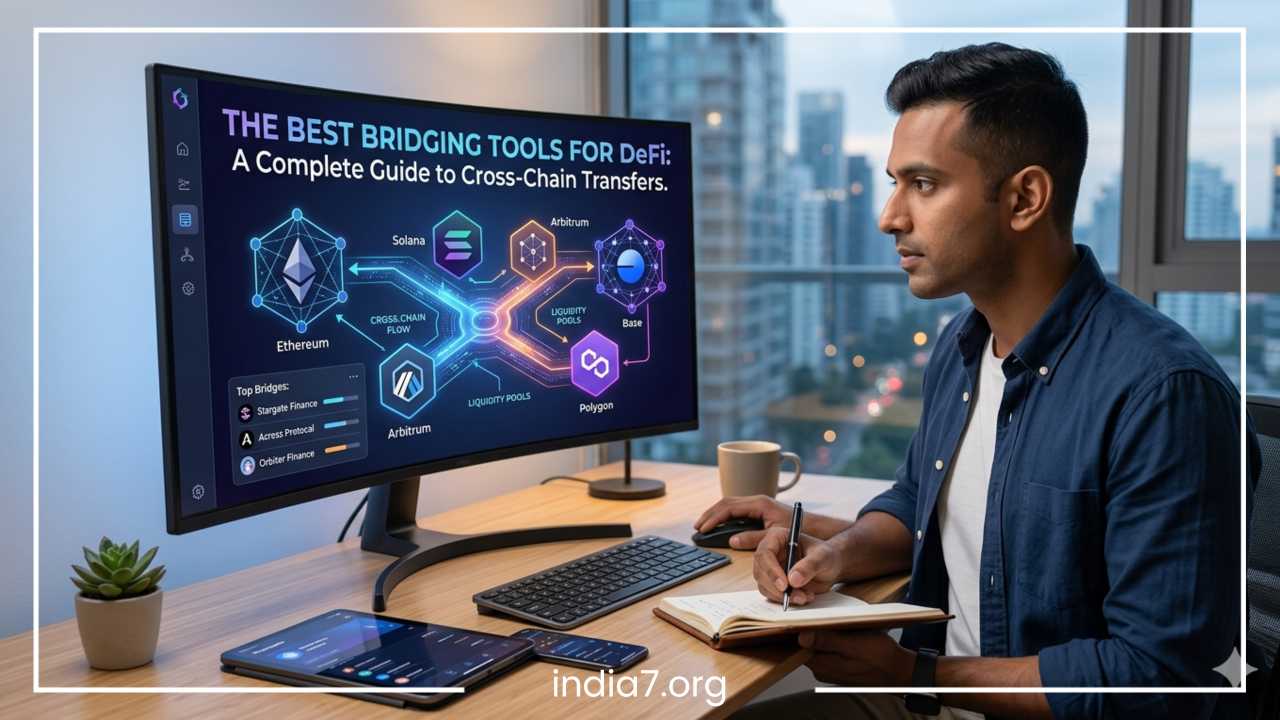
The Best Bridging Tools for DeFi: A Complete Guide to Cross-Chain Transfers
The decentralized finance (DeFi) landscape has undergone a radical transformation. What began as a localized movement on the Ethereum mainnet has blossomed into a sprawling, multi-chain civilization. Today, liquidity is no longer a monolithic block; it is distributed across an ever-growing array of Layer 1 blockchains like Solana, Avalanche, and Cardano, as well as Layer 2 scaling solutions like Arbitrum, Optimism, Base, and Polygon.
This expansion has brought about a renaissance of innovation, offering users lower fees, faster confirmation times, and unique financial primitives. However, it has also introduced a significant technical challenge: fragmentation. Blockchains, by their very nature, are isolated ledgers. An asset living on the Ethereum network cannot naturally “teleport” to the Solana network because the two systems do not share a common state or consensus mechanism.
Bridging tools serve as the vital connective tissue of this economy. They are the digital conduits that allow capital, data, and users to flow freely between these isolated islands. Without bridges, the multi-chain vision would fail, leaving users trapped in siloed ecosystems. This comprehensive guide explores the mechanics of bridging, the various models of interoperability, and the top tools currently defining the cross-chain experience.
Read: Business Credit Cards For The Money Minded
What Are Crypto Bridges?
At its simplest level, a blockchain bridge is a protocol that facilitates the transfer of information or assets between two distinct blockchain networks. While we often speak of “sending” tokens from one chain to another, the reality is more nuanced. Because assets cannot leave their native blockchain, bridges use various cryptographic and economic methods to create a functional equivalent of a transfer.
The Core Mechanics of Cross-Chain Transfers
To understand which bridge to use, one must first understand how they function under the hood. Most bridging operations follow one of three primary models:
1. Lock-and-Mint
This is the traditional foundational model for cross-chain movement. When a user wants to move 1 ETH from Ethereum to an alternative chain, they send that ETH to a specific smart contract on Ethereum, where it is “locked.” Once the bridge confirms the deposit, it “mints” a synthetic version of that ETH (often called a wrapped token, like wETH) on the destination chain. The value of the wrapped token is derived entirely from the collateral locked on the source chain.
2. Burn-and-Release
This model is used when moving assets back to their native home. To move that 1 wETH back to Ethereum, the user “burns” the wrapped token on the destination chain. This cryptographic proof of destruction is sent back to the source chain, which then “releases” the original native ETH from the vault to the user’s wallet.
3. Liquidity Pools
Unlike the minting models, some bridges maintain massive reserves of native assets on multiple chains. For example, a bridge might have a pool of 5,000 USDC on Ethereum and another 5,000 USDC on Arbitrum. When a user bridges USDC from Ethereum to Arbitrum, they are simply depositing into the Ethereum pool and receiving a payout from the Arbitrum pool. This avoids the risk of “wrapped” assets and ensures users receive native, liquid tokens.
Classification of Bridges
-
Native Bridges: These are official protocols built by the developers of a specific chain (e.g., the Arbitrum Bridge or the Polygon PoS Bridge). They are generally the most secure because they are integrated into the network’s core logic, but they are often limited to connecting that specific chain to Ethereum.
-
Third-Party Bridges: These are independent, often decentralized protocols designed to act as a “hub” for many different chains. Tools like Stargate or Across fall into this category. They prioritize speed and a broad reach.
-
Cross-Chain Messaging Protocols: Rather than just moving tokens, these protocols (like LayerZero or Wormhole) move arbitrary data. This allows for the creation of “omnichain” dApps that can execute functions across multiple chains simultaneously.
Read: A Thorough Information On Life Insurance & Its Benefits
Why DeFi Users Need Bridging Tools
The necessity for bridging arises from the diverse needs of the modern DeFi participant. Capital is fluid, and it naturally migrates toward the most efficient and profitable environments.
Lowering the Barrier to Entry
Ethereum’s success led to high demand, which in turn led to high gas fees. For many retail users, a $50 swap fee is prohibitive. Bridging allows these users to move their principal to Layer 2 networks or high-throughput Layer 1s where transaction costs are measured in pennies. This democratizes access to sophisticated financial tools that were previously only accessible to high-net-worth individuals.
Accessing New Protocols and Yields
The DeFi space moves at lightning speed. A new decentralized exchange might launch on Base with massive liquidity incentives, or a lending protocol on Avalanche might offer 15% APY on stablecoins while Ethereum yields remain at 3%. Bridges allow users to chase these opportunities in real-time, ensuring that capital is always utilized in its most productive capacity.
Arbitrage and Market Efficiency
Efficient markets require the ability for prices to equalize across different venues. If ETH is trading at $3,000 on one chain and $3,005 on another, arbitrageurs use bridges to move capital and close that gap. This cross-chain movement ensures that liquidity is deep and prices are consistent regardless of which chain a user prefers.
Gaming and the NFT Revolution
The rise of blockchain gaming and digital collectibles has shifted a significant amount of activity to specialized networks. Gamers might need to bridge assets to ImmutableX or Polygon to buy in-game items, while NFT collectors might move liquidity to Solana to participate in a specific mint.
Read: 5 Ways to Avoid Home Service Interruptions and Their Inconveniences
Key Features to Evaluate in a Bridge
As the number of bridging options has exploded, so too has the complexity of choosing the right one. A “good” bridge is a balance of several competing factors.
Security and Trust Assumptions
Security is the absolute priority. A bridge is only as strong as its weakest link. You must ask:
-
Who controls the funds? Is it a decentralized set of validators, or a small multisig controlled by the developers?
-
Has it been audited? Look for reports from reputable firms like Trail of Bits or OpenZeppelin.
-
Is there a bug bounty? Healthy protocols pay white-hat hackers to find vulnerabilities before they are exploited.
Supported Chains and Asset Depth
Not every bridge supports every chain. Some are specialized in the EVM ecosystem, while others provide the necessary “translation” to interact with non-EVM environments like Solana, Cosmos, or Sui. Furthermore, check the liquidity. If you are trying to move $1,000,000 and the bridge only has $500,000 in its destination pool, you will face massive slippage.
Transaction Costs and Gas Fees
The cost of bridging is usually three-fold:
-
Source Gas: The fee to send your assets to the bridge.
-
Protocol Fee: A small percentage (usually 0.03% to 0.1%) taken by the bridge service.
-
Destination Gas: The fee to send the assets to your wallet on the new chain (often bundled into the protocol fee).
Speed and Finality
In DeFi, time is often money. Some bridges can settle a transaction in 20 seconds, while others (particularly native bridges for optimistic rollups) can take up to seven days for withdrawals due to “fraud-proof” windows.
User Experience and Transparency
A high-quality bridge provides a clear interface. It should show you exactly how much you will receive after fees, provide a real-time status bar for the transaction, and offer a history of your transfers.
The Best Bridging Tools for DeFi
Based on volume, security, and user feedback, the following tools represent the current leaders in the cross-chain space.
1. Stargate Finance
Stargate Finance is the first bridge built on top of the LayerZero protocol. It has gained a massive following because it solves the “bridging trilemma”: it offers instant guaranteed finality, unified liquidity, and the use of native assets.
When you use Stargate to move USDC from Ethereum to Avalanche, you aren’t getting a “Stargate-wrapped USDC.” You are getting the actual, native USDC on Avalanche. This makes it incredibly popular for institutional users and DeFi protocols that want to integrate bridging directly into their apps. Its “Omnichain” approach means that it doesn’t rely on risky wrapped assets that could lose their peg if the bridge is compromised.
2. Across Protocol
Across has quickly become a favorite for retail users due to its “intent-based” architecture. Instead of waiting for slow on-chain confirmations, Across uses a network of “Relayers.” When you want to bridge, a Relayer sees your request and immediately fulfills it on the destination chain using their own capital.
The protocol then verifies the transaction on-chain and reimburses the Relayer. This design makes Across one of the fastest bridges in existence—often completing transfers in under a minute—and one of the cheapest, as it optimizes gas usage across Layer 2s.
3. Orbiter Finance
Orbiter Finance is a decentralized cross-rollup bridge specifically designed for the Ethereum Layer 2 ecosystem. It focuses on transferring assets like ETH and stablecoins between networks like Arbitrum, Optimism, zkSync, and Linea.
Orbiter is unique because it doesn’t use complex smart contracts on every chain. Instead, it uses a simple sender-receiver model managed by “Makers.” This significantly reduces the attack surface compared to bridges that hold hundreds of millions of dollars in a single smart contract. It is often the go-to choice for users moving small to medium amounts between rollups at ultra-low costs.
4. Synapse
Synapse is an extensible cross-chain communications protocol. It features a robust liquidity layer that supports a wide range of assets across nearly 20 different blockchains. Synapse is particularly well-known for its “bridging + swapping” feature. You can bridge ETH from Ethereum and have it arrive as AVAX on Avalanche in one click. This eliminates the need for users to visit a separate DEX on the destination chain to get the native gas token they need.
5. Hop Protocol
Hop Protocol was one of the first bridges to focus specifically on the rollup ecosystem. It works by using “hTokens” and a network of “Bonders” who front the liquidity for a small fee. While it has faced stiff competition from newer protocols, Hop remains a highly trusted and battle-tested piece of DeFi infrastructure, particularly for those moving large amounts of ETH between the main Ethereum L2s.
6. LayerZero
While often categorized as a bridge, LayerZero is actually an infrastructure layer. It allows different blockchains to talk to each other without a centralized intermediary. Developers use LayerZero to create OFTs (Omnichain Fungible Tokens).
Imagine a token that doesn’t need a bridge at all because its supply is natively managed across five different chains simultaneously. When you move an OFT, the protocol burns it on Chain A and mints it on Chain B. This is the “end-game” for bridging, where the friction of moving assets disappears entirely.
7. Wormhole
Wormhole is a generic message-passing protocol that connects high-value ecosystems like Ethereum, Solana, and Binance Smart Chain. It is famous for being the primary gateway to the Solana ecosystem.
Unlike many bridges that only handle EVM chains, Wormhole’s architecture allows it to bridge assets to completely different environments. It uses a network of “Guardians” (nodes) that monitor the state of supported chains. It is a critical tool for anyone participating in Solana DeFi or moving NFTs across disparate networks.
8. Portal Bridge
Portal is the primary user-facing interface built on top of the Wormhole protocol. It provides a simple, intuitive way for users to bridge tokens and NFTs. If you have assets on Ethereum and want to use a Solana-based lending market, Portal is likely the tool you will use. It supports a vast array of tokens and provides a high degree of transparency during the transfer process.
Native Bridges vs. Third-Party Bridges: A Detailed Comparison
Deciding whether to use an “official” native bridge or a third-party tool is a matter of weighing risk against convenience.
Native Bridges
Native bridges (like the Arbitrum Bridge) are built into the protocol’s canonical architecture.
-
Pros: They are generally the most secure. If you are moving a massive amount of capital (e.g., millions of dollars), the native bridge is the safest bet because its security is tied directly to the chain itself.
-
Cons: They are often slow. For example, moving assets from Arbitrum back to Ethereum via the native bridge takes seven days due to the “challenge period” inherent in optimistic rollups. Furthermore, they usually only connect two specific points.
Third-Party Bridges
Third-party bridges (like Across or Stargate) are built to bridge the gaps that native bridges leave behind.
-
Pros: They are incredibly fast (often minutes) and offer a “hub-and-spoke” model where you can move from Polygon to Avalanche directly without going through Ethereum. They also frequently have better user interfaces.
-
Cons: You are taking on “bridge risk.” If the third-party protocol is hacked, your assets could be lost, even if the underlying blockchains are perfectly fine.
| Feature | Native Bridges | Third-Party Bridges |
| Trust Source | The Blockchain itself | Protocol’s own validator set |
| Transfer Speed | Slow (up to 7 days) | Fast (seconds to minutes) |
| Asset Support | Limited to native pairs | Broad multi-chain support |
| Flexibility | Rigid | High (any-to-any transfers) |
Risks of Using Cross-Chain Bridges
It is impossible to discuss bridging without addressing the risks. Bridges are among the most complex pieces of software in the crypto world, and they hold vast amounts of value, making them prime targets for malicious actors.
Smart Contract Exploits
The most common risk is a bug in the bridge’s code. Because bridges often handle “minting” and “burning” logic, a single flaw can allow an attacker to mint infinite tokens on one side of the bridge while withdrawing the collateral on the other. This has happened several times in crypto history, leading to hundreds of millions of dollars in losses.
Validator and Multisig Compromise
Some bridges are secured by a small group of entities (validators). If an attacker gains control of the majority of these validators’ private keys, they can authorize fraudulent transfers. This is why decentralization is not just a philosophy in DeFi; it is a critical security requirement.
Liquidity and Slippage Risks
In times of extreme market volatility, bridges may experience “liquidity crunches.” If everyone is trying to move USDC from Chain A to Chain B at the same time, the bridge’s pool on Chain B might run dry. In this case, your transaction might get “stuck” until more liquidity is added, or you might receive significantly fewer tokens than expected due to slippage.
Phishing and UI Attacks
Always double-check the URL of the bridge you are using. Scammers often create pixel-perfect clones of popular bridges like Orbiter or Stargate. If you connect your wallet to a fake site, you may inadvertently give the attacker permission to drain your entire balance.
Practical Safety Tips for Bridging
To minimize your risk while moving assets, follow these “best practices” used by DeFi professionals:
-
Start Small: Before moving a large amount, always send a small “test” transaction. Verify that the funds arrive safely and that you understand the process.
-
Verify URLs: Bookmark the official websites of the bridges you use. Never click on bridge links from social media “sponsored” posts.
-
Monitor TVL: A bridge with high Total Value Locked (TVL) is generally (though not always) more trustworthy. It indicates that many other users and institutions have vetted the protocol.
-
Use Aggregators: Tools like Lifi or Bungee are “bridge aggregators.” They scan multiple bridges to find you the best price and the fastest route. They also often provide a layer of vetting for the bridges they include.
-
Revoke Permissions: After you are done bridging, use a tool like Revoke.cash to remove the bridge’s permission to spend your tokens. This protects you in the event that the bridge is hacked in the future.
How to Choose the Right Bridge for Your Specific Needs
There is no “one-size-fits-all” bridge. The right tool depends entirely on your current situation.
For the Absolute Beginner
If you are new to DeFi, prioritize a bridge with a simple, clean UI and high speed. Across Protocol is an excellent choice here. It manages the complexity for you and ensures that your funds arrive quickly so you aren’t left wondering where your money went.
For Stablecoin Whales
If you are moving hundreds of thousands of dollars in USDC, USDT, or DAI, Stargate Finance is usually the best option. Its deep liquidity pools ensure that you won’t lose money to slippage, and its use of native assets means you don’t have to worry about wrapped tokens de-pegging.
For the “Degenerate” Yield Farmer
If you are constantly hopping between new Layer 2s to catch the latest high-yield farm, Orbiter Finance is your best friend. It is incredibly cheap for small-to-medium ETH transfers and supports almost every rollup in the Ethereum ecosystem.
For Cross-Ecosystem Explorers
If you are moving between the worlds of Ethereum and Solana, Wormhole (via Portal) is the industry standard. It is the most robust link between the EVM and non-EVM worlds.
The Future of Cross-Chain DeFi: Chain Abstraction
The ultimate goal of the bridging industry is to make bridges “invisible.” We call this Chain Abstraction.
In the near future, you won’t need to manually select a bridge, wait for a transfer, and then go to a DEX to swap for gas. Instead, DeFi applications will handle all of this in the background. You will simply press a button that says “Deposit 100 USDC into this yield farm,” and the app will automatically figure out that your money is currently on a different chain, bridge it, swap it for the correct token, and complete the deposit in one seamless user experience.
We are already seeing the beginnings of this with Intent-Based Systems. In an intent-based world, you don’t specify the how (the bridge), you only specify the what (the end goal). Market makers then compete to fulfill your goal as quickly and cheaply as possible.
Furthermore, the rise of Zero-Knowledge (ZK) Bridges promises to solve the security problem. ZK-bridges use mathematical proofs to verify that a transaction happened on another chain, rather than relying on a group of human validators. This could potentially eliminate the risk of validator compromise entirely.
Final Thoughts
The multi-chain world is here to stay, and bridging tools are the essential infrastructure that makes it functional. Whether you are seeking lower fees on a Layer 2, chasing high yields on a new Layer 1, or exploring the vast world of NFTs, understanding how to bridge effectively is a fundamental skill for any DeFi participant.
By choosing reputable tools like Stargate, Across, or Orbiter, and following strict security protocols, you can navigate the complex web of blockchains with ease. As the technology moves toward chain abstraction and ZK-proofs, the barriers between networks will continue to dissolve, leading to a truly unified, global decentralized financial system. The future of DeFi is not found on any single chain; it is found in the seamless connections between them all.
Frequently Asked Questions About Cross-Chain Bridging
To help you navigate the complexities of moving assets, here are the most common questions users ask when searching for the best bridging tools in DeFi.
What is the safest bridge to move crypto between blockchains?
The “safest” bridge is generally considered to be a native bridge provided by the blockchain’s official development team (such as the Arbitrum Bridge or the Polygon PoS Bridge). These are secured by the same consensus mechanism as the network itself. However, for third-party tools, security is best measured by total value locked (TVL), the number of third-party audits, and the use of trustless infrastructure like ZK-proofs or optimistic settlement.
How long does it take to bridge tokens from Ethereum to Layer 2?
The time varies significantly depending on the tool. Third-party bridges like Across or Orbiter typically complete transfers in 30 seconds to 3 minutes. In contrast, using a native bridge to move assets back to Ethereum (withdrawal) can take up to 7 days due to the fraud-proof windows required by optimistic rollups.
Why are gas fees so high when bridging crypto?
Bridging involves executing smart contracts on both the source and destination chains. When you bridge from Ethereum, you must pay Ethereum’s mainnet gas fees to deposit your funds. Additionally, the bridge protocol usually charges a small fee to cover the destination chain’s gas and the cost of the relayer service. To save on fees, look for bridges that use intent-based routing or liquidity pools, which optimize gas usage.
Can I bridge NFTs between different blockchain networks?
Yes, but not all bridges support non-fungible tokens. Specialized tools like Wormhole (Portal) allow you to bridge NFTs between Ethereum, Solana, and other supported chains. Keep in mind that bridging an NFT usually involves locking the original and minting a “wrapped” version on the new chain, which may affect its visibility on certain marketplaces.
What happens if a bridge transaction gets stuck or fails?
If a transaction is stuck, it is usually due to a sudden spike in gas prices or a lack of liquidity on the destination chain. Most modern bridges provide a transaction hash and a dedicated tracker page where you can monitor progress. If a transfer fails, the bridge’s smart contract is designed to allow you to reclaim your funds on the source chain, though you may need to contact the protocol’s support team via their official Discord or help desk.
Is bridging the same as swapping on a decentralized exchange (DEX)?
Not exactly. A swap typically happens on a single blockchain (e.g., swapping ETH for USDC on Uniswap). A bridge moves the same asset (or a wrapped version of it) from one blockchain to another. However, many “cross-chain swap” tools now combine these steps, allowing you to swap ETH on Ethereum for SOL on Solana in a single integrated transaction.
How do I avoid bridge hacks and stay safe?
To protect your assets, follow three golden rules:
-
Verify the URL: Always access bridges through official documentation or verified links to avoid phishing sites.
-
Revoke Approvals: Use tools like Revoke.cash to cancel token permissions once your transfer is complete.
-
Check Audits: Only use bridges that have been audited by reputable firms like Trail of Bits, PeckShield, or OpenZeppelin.