Top Tourist Attractions in Paris: Best Places to Visit in the City of Light
Paris has long captivated travelers with its blend of grand architecture, world-renowned art, centuries of royal and revolutionary history, high fashion, and unforgettable cuisine. Few cities offer such a dense concentration of iconic monuments alongside intimate, neighborhood-level charm. Whether you are walking along the banks of the Seine at sunset, standing beneath the soaring vaults of a medieval cathedral, or lingering over espresso at a corner bistro, the French capital rewards curiosity at every turn.
With so many famous landmarks in Paris, planning an itinerary can feel overwhelming. This comprehensive guide explores the best places to visit in Paris, moving from celebrated monuments and premier museums to historic quarters, lush public gardens, and distinctive cultural experiences. By understanding what makes each destination special, you can build a balanced route that captures both the grand scale and the everyday magic of the city.
Iconic Landmarks and Must-Visit Attractions in Paris
Eiffel Tower
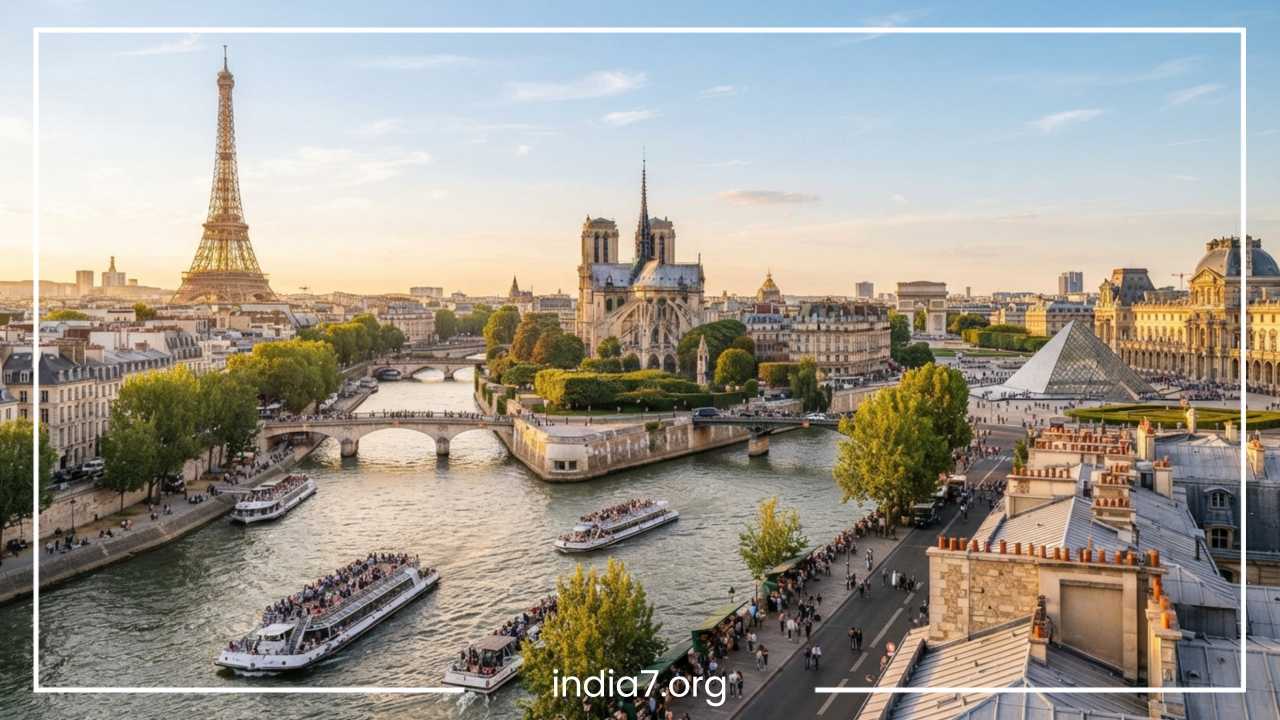
Rising above the Champ de Mars on the Left Bank of the Seine, the Eiffel Tower is the defining symbol of Paris and one of the most recognizable structures on earth. Constructed by Gustave Eiffel’s engineering firm for the 1889 Exposition Universelle, the wrought-iron lattice tower initially drew skepticism from Parisian artists before winning universal acclaim as a triumph of modern engineering. Standing 330 meters tall, it remains the tallest structure in the city.
Visitors can ascend via elevators or stairs to three distinct levels. The first floor features glass-floor panels that look straight down to the esplanade below, alongside historical exhibits detailing the tower’s construction. The second floor offers sweeping, detailed views of the city’s historic core, while the summit provides an unmatched panorama stretching across the entire Île-de-France region. Dining options range from casual buffets on the esplanade to refined French gastronomy at Le Jules Verne on the second floor and a champagne bar at the very top. For the best photographs, head across the river to the Place du Trocadéro at sunrise, or watch the tower sparkle for five minutes at the start of every hour after dusk.
Louvre Museum
Housed within the sprawling Louvre Palace on the Right Bank, the Louvre Museum is the largest art museum in the world and a cornerstone of global cultural heritage. Originally built as a twelfth-century fortress under King Philip II before evolving into a royal residence for French monarchs, the building became a public museum in 1793 during the French Revolution. Today, its monumental wings surround the Cour Napoléon, anchored by architect I. M. Pei’s striking glass and metal pyramid, which serves as the main entrance and floods the underground concourse with natural light.
Inside, the collection spans nearly ten millennia of human creativity across eight curatorial departments. Crowds naturally gravitate toward Leonardo da Vinci’s enigmatic Mona Lisa, the ancient Greek sculpture Venus de Milo, and the dramatic Winged Victory of Samothrace. Yet the museum’s true richness lies in its sheer breadth, encompassing Mesopotamian antiquities, Egyptian royal tombs, Italian Renaissance frescoes, and the lavishly decorated Napoleon III Apartments. Because seeing everything in a single visit is impossible, prioritize two or three wings in advance, book timed-entry tickets online, and consider entering through the quieter Carrousel du Louvre underground shopping arcade.
Notre-Dame Cathedral
Situated on the eastern half of the Île de la Cité, the Cathedral of Notre-Dame de Paris stands as a masterpiece of French Gothic architecture and the spiritual heart of the nation. Construction began in 1163 under Bishop Maurice de Sully and continued for nearly two centuries, resulting in a facade celebrated for its twin rectangular towers, intricate stone portals, and the Gallery of Kings. Innovative flying buttresses support the soaring nave, allowing vast expanses of stained glass—including three magnificent thirteenth-century rose windows—to illuminate the interior.
Following the devastating fire of April 2019 that destroyed its wooden roof and nineteenth-century spire, Notre-Dame underwent an extraordinary, meticulous restoration led by master artisans, stonemasons, and timber framers using traditional medieval techniques. Visitors today can admire the cleaned, luminous limestone interiors, the restored spire rising once again above the island, and the treasury housing sacred relics. Walking around the exterior gardens along the Seine also reveals the dramatic structural elegance of the apse and flying buttresses up close.
Arc de Triomphe
Commanding the center of Place Charles de Gaulle, where twelve grand avenues converge in a star-shaped intersection, the Arc de Triomphe honors those who fought and died for France during the French Revolutionary and Napoleonic Wars. Commissioned by Napoleon Bonaparte in 1806 after his victory at Austerlitz, the monument was inspired by the Roman Arch of Titus and stands 50 meters high. Its facade is adorned with dramatic high-relief sculptures, including François Rude’s famous Departure of the Volunteers of 1792 (commonly known as La Marseillaise), while the inner walls are engraved with the names of hundreds of generals and major battles.
Beneath the vault lies the Tomb of the Unknown Soldier, added after World War I and marked by an eternal flame rekindled every evening at 6:30 PM. Climbing the 284 steps to the panoramic terrace rewards visitors with one of the finest vistas in Paris, looking directly down the straight axis of the Champs-Élysées toward the Louvre, as well as toward the modern skyscrapers of La Défense. Always use the underground pedestrian tunnels to reach the monument safely.
Champs-Élysées
Stretching nearly two kilometers between the Place de la Concorde and the Arc de Triomphe, the Avenue des Champs-Élysées is the most celebrated boulevard in Paris. Originally laid out in the seventeenth century as an extension of the Tuileries gardens by landscape architect André Le Nôtre, it transformed over the centuries into a grand promenade lined with chestnut trees, theaters, and Belle Époque architecture.
The lower section of the avenue runs through manicured parklands housing historic pavilions, while the upper section buzzes with commercial energy. Here, flagship luxury boutiques, international fashion retailers, historic cinemas, and iconic cafes sit side by side. Strolling the wide sidewalks allows travelers to experience the ceremonial heart of Parisian public life, as the avenue serves as the route for the annual Bastille Day military parade and the final stage of the Tour de France.
Palace of Versailles
Located roughly 20 kilometers southwest of central Paris, the Palace of Versailles is an essential day trip that illustrates the absolute power and artistic ambition of the French monarchy. What began as a modest royal hunting lodge under Louis XIII was transformed by his son, Louis XIV, into an opulent seat of government and courtly life. For over a century, until the outbreak of the French Revolution in 1789, Versailles set the standard for European royal courts.
Inside the main chateau, the State Apartments showcase gilded ceilings, marble paneling, and royal portraits, culminating in the breathtaking Hall of Mirrors—a 73-meter gallery lined with 357 mirrors reflecting light from arched windows overlooking the grounds. Beyond the palace walls, André Le Nôtre designed formal French gardens featuring geometric parterres, tree-lined alleys, classical statues, and monumental fountains that perform musical water shows on weekends. Visitors can also explore the Grand Trianon, the Petit Trianon, and Marie Antoinette’s rustic pastoral hamlet at the far end of the estate.
Sainte-Chapelle
Tucked within the former royal palace complex on the Île de la Cité, Sainte-Chapelle is a jewel box of High Gothic architecture. Commissioned by King Louis IX in the mid-thirteenth century to house his collection of Passion relics—including what was believed to be Christ’s Crown of Thorns—the chapel was completed in an astonishing seven years.
While the lower chapel served palace staff and features rich painted columns and a vaulted ceiling studded with gold fleur-de-lis, the upper chapel is the true marvel. By shifting structural weight to slender exterior buttresses, medieval architects replaced solid stone walls with fifteen towering stained-glass windows reaching 15 meters high. More than 1,100 individual glass panels depict biblical narratives from Genesis to the Apocalypse in brilliant hues of ruby red and cobalt blue. Visiting on a sunny morning allows natural light to transform the interior into a glowing kaleidoscope of color.
Panthéon
Rising atop Montagne Sainte-Geneviève in the heart of the Latin Quarter, the Panthéon is a towering Neoclassical monument dedicated to the greatest minds and heroes of French history. Originally commissioned by King Louis XV as a church honoring Saint Genevieve, the patron saint of Paris, the building was designed by Jacques-Germain Soufflot with a grand Corinthian portico inspired by the Roman Pantheon and a majestic triple-layered dome.
During the French Revolution, the National Constituent Assembly secularized the building and converted it into a mausoleum for distinguished French citizens, inscribing the famous dedication above its entrance: Aux grands hommes, la patrie reconnaissante (“To great men, the grateful homeland”). Inside the vast, light-filled nave hangs Foucault’s Pendulum, demonstrating the rotation of the Earth. Below, the vaulted crypt holds the tombs of Voltaire, Jean-Jacques Rousseau, Victor Hugo, Émile Zola, Marie Curie, and Josephine Baker.
Place de la Concorde
Serving as the monumental hinge between the Tuileries Garden and the Champs-Élysées, Place de la Concorde is the largest public square in Paris and a dramatic stage for French history. Designed in the mid-eighteenth century as Place Louis XV, the octagonal plaza gained grim notoriety during the French Revolution when it was renamed Place de la Révolution and became the site of the guillotine, where King Louis XVI, Marie Antoinette, and thousands of others were executed.
Following the Reign of Terror, the square was given its current name as a symbol of national reconciliation. At its center stands the 3,300-year-old Luxor Obelisk, a pink granite monolith covered in hieroglyphics gifted to France by the ruler of Egypt in the 1830s. Flanking the obelisk are two ornate maritime fountains modeled after those in Rome’s St. Peter’s Square, surrounded by eight stone statues representing major French cities.
Best Museums and Art Galleries in Paris
Musée d’Orsay
Occupying a converted Beaux-Arts railway station built for the 1900 World’s Fair on the Left Bank of the Seine, the Musée d’Orsay bridges the chronological gap between the ancient collections of the Louvre and the modern works of the Centre Pompidou. Its soaring, barrel-vaulted glass and iron roof floods the central nave with natural daylight, creating an airy setting for sculptures and decorative arts.
The museum is renowned worldwide for housing the finest collection of Impressionist and Post-Impressionist masterpieces on earth. On the upper gallery levels, visitors come face-to-face with Claude Monet’s atmospheric water landscapes, Pierre-Auguste Renoir’s vibrant Bal du moulin de la Galette, Edgar Degas’s graceful ballet dancers, Paul Cézanne’s structured still lifes, and Vincent van Gogh’s expressive Starry Night Over the Rhône and self-portraits. Stepping behind the giant transparent station clocks on the fifth floor also provides a unique framed view across the river toward Montmartre.
Centre Pompidou
Situated in the Beaubourg area near Le Marais, the Centre Pompidou is Europe’s premier institution for modern and contemporary art. Designed by architects Renzo Piano and Richard Rogers and opened in 1977, the building shocked traditionalists with its radical “inside-out” high-tech architecture. Structural steel trusses, escalators, and color-coded mechanical pipes—blue for air conditioning, green for water, yellow for electricity, and red for vertical circulation—are placed entirely on the exterior facade, freeing up vast, uninterrupted gallery spaces inside.
Inside, the Musée National d’Art Moderne showcases foundational twentieth- and twenty-first-century works by Pablo Picasso, Henri Matisse, Wassily Kandinsky, Frida Kahlo, and Andy Warhol. Beyond its permanent galleries and rotating contemporary exhibitions, the complex houses a major public library, performance spaces, and a rooftop terrace offering sweeping views over Parisian rooftops.
Musée Rodin
Set inside the elegant eighteenth-century Hôtel Biron, where sculptor Auguste Rodin lived and worked during the final years of his life, the Musée Rodin offers an intimate, atmospheric look at the father of modern sculpture. Upon his death, Rodin bequeathed his entire collection of sculptures, plaster casts, drawings, and personal art collection—including paintings by Van Gogh and Monet—to the French state on the condition that his home become a museum.
While the mansion’s sunlit rooms display delicate marble carvings such as The Kiss and The Cathedral, the surrounding three-hectare sculpture garden is equally captivating. Strolling along rose-lined paths and manicured lawns, visitors encounter bronze casts of Rodin’s most monumental works in the open air, including The Thinker, The Burghers of Calais, and the towering, intricate Gates of Hell.
Musée de l’Orangerie
Tucked into the southwestern corner of the Tuileries Garden overlooking the Seine, the Musée de l’Orangerie offers a serene, focused counterpoint to Paris’s massive encyclopedic museums. Originally built in 1852 to shelter the garden’s citrus trees during winter, the building was transformed in the 1920s according to the direct architectural specifications of Claude Monet.
Its centerpiece consists of two sun-drenched, oval-shaped rooms specifically engineered to house eight massive panels of Monet’s Water Lilies (Nymphéas), which the artist painted in his Giverny garden and donated to France as a monument to peace after World War I. The curved walls immerse viewers in a continuous 360-degree panorama of shimmering reflections, weeping willows, and blooming lilies. On the lower level, the Jean Walter and Paul Guillaume Collection presents intimate works by Cézanne, Matisse, Modigliani, Picasso, and Rousseau.
Beautiful Neighbourhoods and Charming Streets in Paris
Montmartre
Perched on a steep hill in the 18th arrondissement, Montmartre retains the distinct character of the independent village it remained until its annexation by Paris in 1860. During the late nineteenth and early twentieth centuries, low rents and rural charm attracted a vanguard of artists, writers, and composers—including Pablo Picasso, Henri de Toulouse-Lautrec, Vincent van Gogh, and Pierre-Auguste Renoir—who turned its studios and cabarets into the birthplace of modern art.
Exploring Montmartre means wandering down winding cobblestone lanes, climbing steep stone staircases, and discovering hidden vineyards like the Clos Montmartre. At the Place du Tertre, portrait artists and caricaturists still set up their easels daily, surrounded by lively outdoor cafes. While the main thoroughfares draw crowds, quiet corners such as Rue de l’Abreuvoir, the pink-walled Maison Rose, and the Place Dalida preserve a timeless, bohemian ambiance.
Le Marais
Spanning parts of the 3rd and 4th arrondissements on the Right Bank, Le Marais is one of Paris’s oldest and most architecturally preserved districts. Because it escaped Baron Haussmann’s nineteenth-century urban renovations, the neighborhood retains a labyrinth of narrow medieval streets alongside grand seventeenth-century aristocratic mansions known as hôtels particuliers, many of which now house museums like the Musée Carnavalet and the Musée Picasso.
At the neighborhood’s heart lies the Place des Vosges, the oldest planned square in Paris, framed by uniform red-brick pavilions, vaulted arcades, and manicured lawns. Today, Le Marais is celebrated for its cultural diversity and vibrant energy, encompassing the historic Jewish quarter along Rue des Rosiers, trendy independent fashion boutiques, contemporary art galleries, artisanal bakeries, and lively sidewalk bistros.
Latin Quarter
Located on the Left Bank in the 5th and parts of the 6th arrondissements, the Latin Quarter derives its name from the Middle Ages, when Latin was the universal language of scholarship spoken by students and professors attending the historic Sorbonne University. That intellectual and literary spirit continues to define the district today.
The neighborhood is a lively warren of narrow pedestrian streets, historic churches like Saint-Étienne-du-Mont, and ancient Roman ruins such as the Arènes de Lutèce. Book lovers flock to independent bookshops, most notably the legendary English-language bookstore Shakespeare and Company facing the Seine. Bustling avenues like Boulevard Saint-Michel and pedestrian-only Rue Mouffetard offer bustling street markets, creperies, and traditional bistros frequented by students, academics, and travelers alike.
Saint-Germain-des-Prés
Stretching west from the Latin Quarter along the Left Bank, Saint-Germain-des-Prés is synonymous with Parisian elegance, intellectual history, and classic cafe culture. Named after its sixth-century abbey—the oldest church in Paris—the neighborhood became the epicenter of postwar existentialism and jazz in the 1940s and 1950s. Writers and philosophers such as Jean-Paul Sartre, Simone de Beauvoir, Albert Camus, and Ernest Hemingway regularly gathered at neighboring institutions Café de Flore and Les Deux Magots to debate literature and politics.
While those historic brasseries still welcome patrons to their wicker terrace chairs, the surrounding streets showcase refined boutiques, antique dealers, publishing houses, and prestigious art galleries along Rue de Seine and Rue Bonaparte. Stopping by a local chocolatier or pastry shop before browsing the neighborhood’s quiet courtyards offers an authentic taste of Left Bank sophistication.
Parks, Gardens and Scenic Places in Paris
Jardin du Luxembourg
Created in 1612 by Queen Marie de’ Medici to evoke the Boboli Gardens of her native Florence, the Jardin du Luxembourg is the beloved backyard of the Left Bank. Spanning 25 hectares around the Luxembourg Palace—which today houses the French Senate—the park seamlessly blends formal French geometric terraces with English-style wooded groves.
Visitors can relax on the iconic dark-green movable metal chairs scattered around the central octagonal Grand Bassin, where children still push vintage wooden sailboats across the water using long sticks. Throughout the grounds, over a hundred statues, the romantic Italianate Medici Fountain, orchards of heritage apple and pear trees, tennis courts, and a traditional puppet theater create a tranquil daily rhythm favored by reading students, joggers, and families.
Tuileries Garden
Stretching between the Louvre Museum and the Place de la Concorde, the Tuileries Garden is the oldest and most central public park in Paris. Originally laid out in 1564 for Queen Catherine de’ Medici’s Tuileries Palace, the grounds were redesigned a century later by André Le Nôtre into a classical formal garden featuring symmetrical gravel promenades, manicured lawns, and reflecting pools.
Open to the public since the seventeenth century, the garden functions as an open-air sculpture gallery displaying works by Auguste Rodin, Aristide Maillol, Henry Moore, and Louise Bourgeois. Cafes tucked beneath chestnut trees invite visitors to rest their feet after touring the Louvre, while seasonal summer funfairs add festive energy along the northern terrace.
Parc des Buttes-Chaumont
Tucked into the 19th arrondissement in northeastern Paris, the Parc des Buttes-Chaumont offers a dramatic, romantic departure from the city’s flat, formal gardens. Built on the site of former gypsum and limestone quarries and opened in 1867 during Napoleon III’s reign, the park was engineered as an undulating English-style landscape complete with steep cliffs, waterfalls, winding footpaths, and an artificial lake.
Rising 30 meters from the center of the lake is the rocky Île de la Belvédère, topped by the Temple de la Sibylle, a miniature Corinthian pavilion inspired by the Temple of Vesta in Tivoli, Italy. Connected to the main park by a dramatic suspension bridge and a brick footbridge, the island summit provides sweeping, uncrowded views toward Montmartre and Sacré-Cœur.
Seine River
Flowing gracefully through the heart of the city, the Seine River divides Paris into the Right Bank (Rive Droite) and Left Bank (Rive Gauche) and serves as the geographical and historical spine of the capital. Its stone embankments—designated a UNESCO World Heritage site—are lined with green metal stalls operated by the bouquinistes, traditional booksellers offering vintage prints, secondhand novels, and classic posters.
Spanning the water are 37 bridges, each with its own architectural story, from the medieval stone arches of the Pont Neuf (ironically the oldest standing bridge in Paris) to the gilded Beaux-Arts extravagance of the Pont Alexandre III. Taking a sightseeing boat cruise or an evening dinner cruise along the Seine provides effortless, unobstructed perspectives of the Eiffel Tower, Notre-Dame, the Louvre, and the Musée d’Orsay illuminated against the night sky.
Unique Experiences and Other Attractions in Paris
Basilica of Sacré-Cœur
Crowning the summit of the Montmartre hill, the Romano-Byzantine Basilica of Sacré-Cœur is one of the most distinctive landmarks on the Parisian skyline. Conceived in the aftermath of the Franco-Prussian War and the Paris Commune, construction began in 1875 and was completed in 1914. Its luminous white travertine stone actually bleaches whiter over time when exposed to rainwater, ensuring the basilica gleams even on overcast days.
Inside the hushed sanctuary, visitors can admire one of the largest mosaics in the world—depicting Christ in Majesty across the apse ceiling—alongside one of the world’s heaviest church bells, the Savoyarde. Outside, the terraced steps descending toward Square Louise-Michel form a natural amphitheater where street musicians perform and locals gather to watch the sunset over a nearly unobstructed 360-degree panorama of Paris.
Palais Garnier
Commissioned by Emperor Napoleon III and designed by architect Charles Garnier, the Palais Garnier is an opulent temple to the performing arts and a masterpiece of Second Empire Beaux-Arts architecture. Opened in 1875, the opera house—famous as the setting for Gaston Leroux’s novel The Phantom of the Opera—dazzles visitors with its polychrome marble facade, gilded bronze statues, and grand interiors.
The centerpiece of the building is the sweeping Grand Staircase, crafted from white, red, and green marble and designed as a theatrical stage where nineteenth-century society could see and be seen. Equally breathtaking is the Grand Foyer, whose gilded ceilings and chandeliers rival the Hall of Mirrors at Versailles, and the red-velvet auditorium crowned by Marc Chagall’s vibrant, modern painted ceiling. Visitors can tour the building by day or attend a ballet or opera performance by the Paris Opera company.
Catacombs of Paris
Twenty meters beneath the bustling streets of southern Paris lies one of the city’s most haunting and unusual historical sites: the Catacombs of Paris. In the late eighteenth century, severe overcrowding in Parisian cemeteries caused public health crises, prompting authorities to transfer human remains into abandoned subterranean limestone quarries that had supplied stone for Paris’s monuments for centuries.
Today, a 1.5-kilometer walking route winds through cool, dimly lit stone tunnels lined with the meticulously arranged skulls and femurs of more than six million former Parisians. Stone plaques engraved with poetic inscriptions and historical dates mark the walls of this subterranean ossuary, offering a sobering, unforgettable meditation on mortality and urban history. Because capacity underground is strictly limited, timed-entry reservations are essential.
Disneyland Paris
Located roughly 32 kilometers east of central Paris in Marne-la-Vallée and easily accessible via the RER A suburban train, Disneyland Paris is Europe’s most visited theme park resort and a favorite excursion for families and Disney enthusiasts. Divided into two distinct parks—Disneyland Park and Walt Disney Studios Park—alongside the Disney Village dining and entertainment district, the resort combines classic storytelling with European flair.
At the center of Disneyland Park stands the fairy-tale Sleeping Beauty Castle, surrounded by five themed lands featuring classic attractions, character encounters, parades, and nighttime fireworks and drone displays. Neighboring Walt Disney Studios Park focuses on cinema, animation, and immersive worlds inspired by Pixar and Marvel, making it an engaging full-day adventure away from traditional sightseeing.
Tips for Exploring the Top Tourist Attractions in Paris
Choose the right season: Spring (April to June) and autumn (September to October) bring mild temperatures, blooming gardens, and manageable crowds compared to the peak summer months of July and August.
Master public transportation: The Paris Metro and RER train networks connect every major neighborhood quickly and affordably. Walking between nearby sights along the Seine, however, often reveals architectural details you would otherwise miss.
Book timed tickets in advance: Top Paris sightseeing attractions—including the Eiffel Tower, Louvre Museum, Palace of Versailles, Sainte-Chapelle, and the Catacombs—enforce strict timed-entry slots that frequently sell out days or weeks ahead.
Group sights by neighborhood: Organize your itinerary geographically rather than zigzagging across the city. Pairing the Louvre with the Tuileries Garden and Place de la Concorde, or combining Notre-Dame with Sainte-Chapelle and the Latin Quarter, maximizes your time.
Pace your museum visits: Major institutions like the Louvre and Musée d’Orsay are vast. Schedule morning visits when galleries are quietest, and alternate indoor museum hours with walks through parks or historic quarters to avoid fatigue.
Experience the Best of Paris
Few destinations rival the sheer variety of Paris, where world-changing historical monuments stand steps away from intimate neighborhood bakeries, tranquil gardens, and groundbreaking art galleries. From ascending the iron latticework of the Eiffel Tower and standing beneath the stained glass of Sainte-Chapelle to wandering the cobblestone lanes of Montmartre or cruising past illuminated bridges on the Seine, every corner of the capital offers a distinct story.
While the city’s famous landmarks provide an essential introduction, the true magic of Paris reveals itself when you leave room for spontaneous discovery. Take time to linger in a quiet square, follow an intriguing side street in Le Marais, and savor the effortless rhythm that makes Paris an enduring inspiration for travelers from around the world.
Frequently Asked Questions About Visiting Paris
What are the top tourist attractions in Paris for first-time visitors?
First-time visitors should prioritize the Eiffel Tower, the Louvre Museum, Notre-Dame Cathedral, the Arc de Triomphe, and a Seine River cruise. Pairing these iconic landmarks with a walk through Montmartre and a half-day trip to the Palace of Versailles covers the essential historical, architectural, and artistic highlights of the city.
How many days do you need to see the main attractions in Paris?
Four to five days is the ideal duration to explore the main attractions in Paris at a comfortable pace. Three days allows you to see major landmarks and two top museums, while a fourth or fifth day gives you time to wander historic neighborhoods like Le Marais and the Latin Quarter or take a day trip to Versailles.
Which Paris attractions require advance tickets and reservations?
Timed-entry tickets booked well in advance are essential for the Eiffel Tower, the Louvre Museum, the Palace of Versailles, Sainte-Chapelle, the Musée d’Orsay, and the Catacombs of Paris. Even visitors holding a Paris Museum Pass must reserve specific entry time slots online for most major monuments and museums.
What is the best time of year to visit Paris for sightseeing and good weather?
The best times to visit Paris are spring (April to June) and autumn (September to October). During these shoulder seasons, temperatures are mild, gardens are vibrant, and crowds at popular tourist spots are significantly smaller than during the peak summer months of July and August.
What are the best free things to do and see in Paris?
Paris offers numerous free cultural experiences, including admiring the exterior of the Eiffel Tower, strolling down the Champs-Élysées, relaxing in the Jardin du Luxembourg and Tuileries Garden, and exploring the streets of Montmartre. Many national museums—such as the Louvre, Musée d’Orsay, and Centre Pompidou—also offer free admission on the first Sunday of every month.
What is the best way to get around Paris to visit tourist attractions?
The Paris Metro and RER commuter trains are the fastest, most affordable ways to travel between distant landmarks. Because central Paris is compact and scenic, walking between clustered sights—such as the Louvre, Tuileries Garden, and Place de la Concorde—is often the most rewarding way to explore.
What are the best family-friendly attractions in Paris with kids?
Families traveling with children enjoy climbing the Eiffel Tower, sailing toy wooden boats in the Jardin du Luxembourg, exploring the interactive exhibits at the Cité des Sciences et de l’Industrie, and taking a daytime sightseeing boat along the Seine. Just outside the city, Disneyland Paris offers a full day of themed entertainment for all ages.
How can you visit the Louvre Museum and Eiffel Tower without waiting in long lines?
Book official skip-the-line timed tickets online as soon as your travel dates are confirmed, and choose the earliest morning time slot or a late evening session. At the Louvre, entering through the underground Carrousel du Louvre or Porte des Lions entrances typically involves much shorter security queues than the main glass pyramid.
What are the best neighborhoods to stay in Paris near major tourist attractions?
Le Marais (3rd and 4th arrondissements) and Saint-Germain-des-Prés (6th arrondissement) are ideal bases due to their central locations, walkable streets, and proximity to the Seine. The Latin Quarter (5th arrondissement) offers lively dining and easy access to Notre-Dame and the Panthéon, while the 7th arrondissement places you steps from the Eiffel Tower and Musée d’Orsay.
Is the Paris Museum Pass worth it for sightseeing?
The Paris Museum Pass is worth purchasing if you plan to visit at least two to three paid museums or monuments per day, such as the Louvre, Musée d’Orsay, Sainte-Chapelle, Arc de Triomphe, Panthéon, and Palace of Versailles. For travelers who prefer leisurely neighborhood walks over heavy museum schedules, buying individual tickets is usually more economical.