Is Toasted Bread Healthier Than Untoasted?
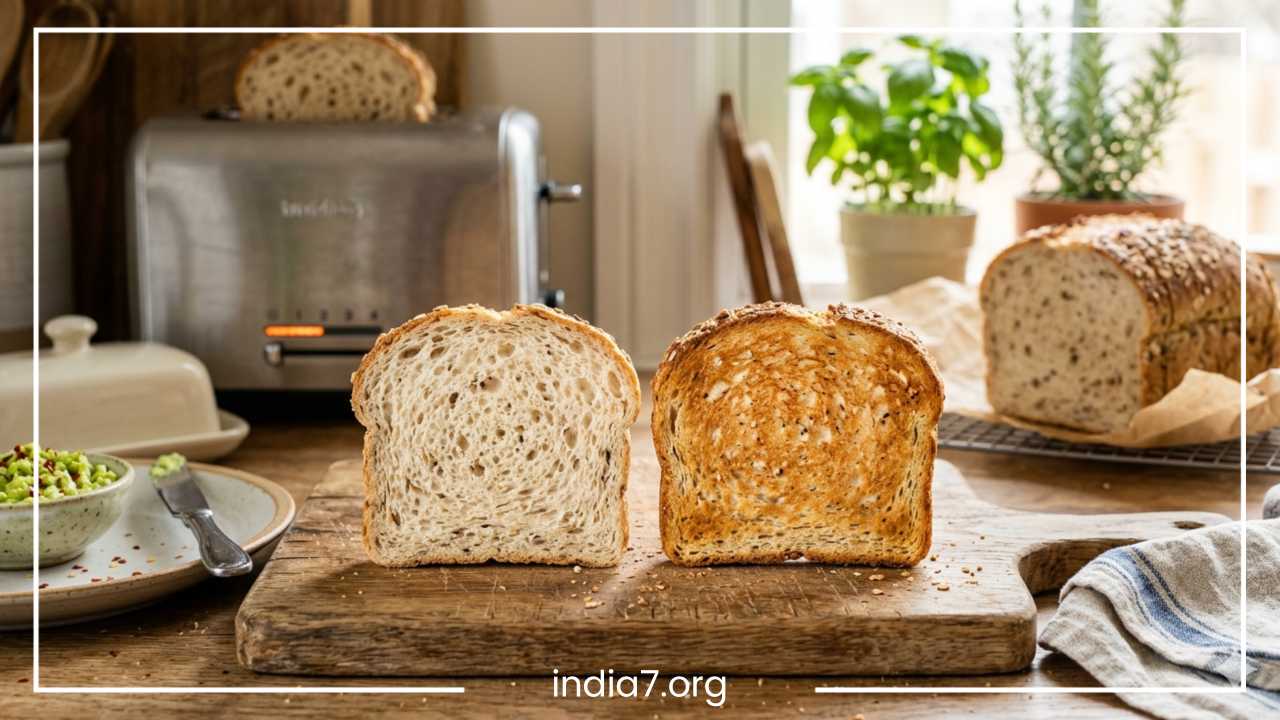
Is Toasted Bread Healthier Than Untoasted? The Truth Explained
For many, the scent of browning bread is the ultimate olfactory alarm clock. Whether it is a thick slice of sourdough or a simple piece of whole wheat, toasting is a culinary ritual performed in millions of kitchens every morning. Yet, beneath the crispy exterior and the warm aroma lies a perennial debate: Is toasting merely a matter of texture and taste, or does the heat actually transform the nutritional profile of the bread?
Common kitchen lore often suggests that toast has fewer calories or that it is inherently “lighter” for the body to process. Some claim it is the secret to managing blood sugar, while others warn of chemical byproducts formed in the toaster. To understand the truth, we must look past the butter and jam and examine the molecular shifts that occur when bread meets heat. This article explores the science of toasting, comparing the nutritional, digestive, and health impacts of toasted versus untoasted bread to determine which truly deserves a place on your plate.
Read: Green Tea for Weight Loss: Fact or Fiction?
What Happens When Bread Is Toasted?
Toasting is more than just drying out a piece of bread; it is a complex chemical process known as the Maillard reaction. Named after the French chemist Louis-Camille Maillard, this reaction occurs when reducing sugars and amino acids are heated together. It is the same process responsible for the sear on a crust of bread and the deep flavor of roasted coffee.
The Maillard Reaction
When the surface of the bread reaches temperatures around 140°C to 165°C, the chemical rearrangement begins. This creates hundreds of different flavor compounds and the characteristic brown color (melanoidins). While this enhances the sensory experience, it also slightly alters the chemical structure of the bread’s surface proteins and carbohydrates.
Read: Green Tea: Unveiling the Elixir of Health and Taste
Moisture Loss and Physical Changes
The most immediate change during toasting is the evaporation of water. Bread typically has a high moisture content to maintain its soft, springy crumb. The intense heat of a toaster draws this moisture out, causing the bread to become lighter in weight and significantly more brittle. This loss of water is what creates the “crunch,” but it is important to note that losing water weight is not the same as losing caloric density.
Structural Transformation
As the bread toasts, the starch molecules undergo a process of retrogradation and dehydration. The starch granules, which were softened during the initial baking of the loaf, become more rigid. This shift in the physical matrix of the bread can influence how our digestive enzymes interact with the slice, potentially slowing down the speed at which the body breaks down the starches into glucose.
Read: Exercise for Weight Loss: Burn Fat & Get Fit
Nutritional Comparison: Toasted vs Untoasted Bread
To determine if toast is “healthier,” we must look at the macro and micronutrient stability under heat. While the bread looks and feels different, the core nutritional building blocks remain largely stable.
Calories: The Great Myth
One of the most persistent myths in the fitness world is that toasting bread “burns off” calories. This is scientifically inaccurate. While the bread weighs less after toasting due to water loss, the caloric content—derived from carbohydrates, proteins, and fats—remains almost identical. If a slice of bread contains 80 calories when fresh, it will contain approximately 80 calories when toasted. The only way calories are removed is if the bread is toasted to the point of carbonization (burning), which renders it inedible.
Macronutrients
-
Carbohydrates: These are the primary component of bread. Toasting does not significantly reduce the total carb count, though it may slightly alter the “availability” of those carbs.
-
Protein: The gluten and other proteins in bread are relatively heat-stable. While the Maillard reaction involves amino acids, the amount lost is negligible in the context of a daily diet.
-
Fat: Most breads are low in fat unless they contain added oils or seeds. These fats are generally unaffected by the short duration of toasting.
Vitamins and Minerals
This is where untoasted bread may have a slight edge. Many B-vitamins, such as thiamin (B1), riboflavin (B2), and folate, are heat-sensitive. While the interior of the toast remains somewhat protected, the surface—where the heat is most intense—may see a reduction in these micronutrients. However, since most commercial breads are fortified with stable minerals like iron, the overall nutritional impact of this loss is minor for the average person with a varied diet.
Fiber
Fiber is a structural carbohydrate that is incredibly resilient. Whether you eat your bread soft or crunchy, the fiber content remains the same. Fiber is essential for digestive health and satiety, and toasting does nothing to diminish these benefits.
| Component | Untoasted Bread | Toasted Bread |
| Calories | Baseline | Unchanged (minus water weight) |
| Fiber | High (if whole grain) | Unchanged |
| Sugars | Baseline | Slightly reduced via Maillard reaction |
| B-Vitamins | 100% of original | 80-90% of original |
| Glycemic Index | Higher | Slightly Lower |
Glycemic Index and Blood Sugar Impact
For individuals managing diabetes or those focused on steady energy levels, the Glycemic Index (GI) is a crucial metric. The GI measures how quickly a carbohydrate-containing food raises blood glucose levels.
Lowering the GI
Interestingly, research suggests that toasting bread can lower its Glycemic Index. This happens because the heat changes the starch structure, making it slightly more resistant to the enzymes in our saliva and small intestine. When starch is harder to break down, glucose is released into the bloodstream more slowly.
Freezing and Toasting
A notable study found that the combination of freezing bread and then toasting it resulted in the lowest blood sugar response. Freezing creates “resistant starch,” which acts more like fiber in the body. When that frozen bread is subsequently toasted, the structural changes are compounded, making it a potentially better choice for insulin sensitivity than a fresh, soft slice.
For a general audience, this means that toast might provide a more sustained release of energy, helping to avoid the “spike and crash” often associated with refined white breads.
Digestibility: Is Toast Easier on the Stomach?
There is a reason why toast is a staple of many recovery diets often recommended for recovery from stomach flu or nausea.
Ease of Digestion
Toasted bread is often easier for the stomach to process for two reasons:
-
Dextrinization: During toasting, the starches undergo a partial breakdown into dextrins. Dextrins are a shorter chain of glucose units and are considered a “pre-digested” form of starch, requiring less effort from the digestive system.
-
Texture and Salivation: The dry, crunchy texture of toast requires more thorough chewing. This mechanical breakdown, combined with increased saliva production, prepares the food more effectively for the stomach.
When to Choose Untoasted
While toast is excellent for those with mild indigestion or nausea, over-toasting can have the opposite effect. Extremely hard, dry toast can be abrasive to a sensitive throat or esophagus. Furthermore, for individuals with specific conditions like acid reflux, the dryness of toast may sometimes trigger discomfort if not paired with a hydrating topping.
Weight Loss and Dieting Myths
When it comes to weight loss, the distinction between toasted and untoasted bread is largely psychological and behavioral rather than metabolic.
The Illusion of Lightness
Because toast is lighter and takes up less volume (due to moisture loss), people sometimes assume they can eat more of it. This is a common pitfall. To avoid this, weight loss advice generally suggests counting slices rather than weighing the bread after it pops out of the toaster.
Satiety and Chewing
There is an argument that toast may aid weight loss because it takes longer to eat. The crunch forces you to slow down and chew more thoroughly. Research in the field of “mindful eating” suggests that the more sensory feedback we get from our food (crunch, warmth, aroma), the more likely our brains are to register fullness. In this sense, a piece of crunchy whole-grain toast may feel more satisfying than a soft, doughy slice that can be swallowed in seconds.
The Topping Trap
The “healthiness” of toast is often determined by what is put on top of it. Untoasted bread is often used for sandwiches, whereas toast is a canvas for spreads. If toasting your bread leads you to use more butter or sugary preserves to counteract the dryness, the “health benefit” of toasting is quickly negated by the added calories and fats.
The Downside of Toasting: Acrylamide Formation
While toasting has its benefits, there is one significant health concern that arises when bread is overexposed to heat: Acrylamide.
What is Acrylamide?
Acrylamide is a chemical compound that can form in some foods—naturally—during high-temperature cooking processes like frying, roasting, and baking. It forms from the reaction between sugars and an amino acid called asparagine.
The Health Risk
Studies in laboratory animals have shown that high levels of acrylamide exposure can increase the risk of several types of cancer. While the evidence in humans is still being studied, many health organizations suggest that we should minimize our intake of acrylamide as a precautionary measure.
Safety Tips for Toasting
The concentration of acrylamide increases as the bread gets darker.
-
Go for Gold: Aim for a “golden yellow” or light brown color rather than a dark brown or black.
-
Don’t Burn It: If you accidentally burn your toast, scrape off the black charred parts or discard the slice entirely. The black areas contain the highest concentrations of acrylamide.
-
Storage Matters: Do not store bread in the refrigerator if you plan to toast it, as this can increase the levels of reducing sugars in the bread, which leads to more acrylamide formation during the toasting process.
Does Bread Type Matter More Than Toasting?
Focusing solely on the toasted vs. untoasted debate can sometimes distract from a more important factor: the quality of the bread itself. The nutritional difference between toasted white bread and toasted whole-grain bread is far more significant than the difference between raw and toasted slices of the same loaf.
White Bread
Refined white bread is stripped of its bran and germ during processing, removing much of the fiber and natural nutrients. Even when toasted, white bread remains a high-glycemic food that can lead to rapid energy fluctuations.
Whole Grain and Multigrain
Whole-grain bread contains the entire grain kernel. This means more fiber, more protein, and a denser mineral profile. When you toast whole-grain bread, the fiber remains intact, and the already lower GI is further reduced, making it an excellent choice for long-term health and weight management.
Sourdough
Sourdough bread undergoes a fermentation process that breaks down much of the gluten and phytic acid (which can inhibit mineral absorption). Toasting sourdough is highly recommended for those with mild sensitivities or digestive issues, as it combines the benefits of fermentation with the “pre-digested” nature of toasted starch.
Cultural and Practical Reasons for Toasting
Beyond nutrition, toasting serves practical purposes that have made it a global phenomenon.
Palatability and Shelf Life
Toasting is the perfect way to revive bread that is a few days old. As bread sits, the starch undergoes “retrogradation,” causing it to turn stale and firm. Heat reverses this process temporarily, softening the interior while crisping the exterior, effectively extending the window of time in which a loaf is enjoyable.
Sensory Appeal
The Maillard reaction creates complex flavor profiles that are simply not present in fresh bread. For many, the psychological satisfaction of eating a warm, flavorful meal contributes to a better overall relationship with food, which is a vital component of sustainable health.
Expert Opinions and Research Insights
Most nutritionists and dietitians agree that for the general population, the difference between toasted and untoasted bread is marginal. However, they emphasize the “context of the meal.”
Research consistently shows that:
-
Toasting doesn’t make bread “diet food.” It is not a shortcut to calorie reduction.
-
Toasting is a tool for blood sugar management. Especially for those with concerns about insulin, the small reduction in GI is a worthwhile benefit.
-
Toasting increases food safety. While bread is generally safe to eat raw, toasting can kill off surface molds or bacteria that might just be starting to develop on an older loaf (though heavily molded bread should always be discarded).
Final Verdict: Is Toasted Bread Healthier?
So, is toasted bread healthier than untoasted? The answer is a nuanced “slightly, but with conditions.”
Toasted bread has a slight edge when it comes to digestibility and blood sugar regulation. The chemical changes during the Maillard reaction and the physical dehydration make it easier on the stomach and slower to impact glucose levels. For someone looking to maintain steady energy or someone recovering from an illness, toast is the superior choice.
However, untoasted bread is technically superior in its vitamin profile, as it hasn’t been subjected to the heat that can degrade sensitive B-vitamins. Furthermore, untoasted bread carries zero risk of acrylamide formation, which is a factor for those who tend to prefer their toast on the darker side.
The Bottom Line: The healthiness of your bread depends heavily on the type of grain you choose and less so on how you toast it. A lightly toasted slice of whole-grain or sourdough bread represents the “sweet spot” of nutrition, digestibility, and safety.
Practical Tips for Healthier Toast
If you want to make the most of your bread-toasting habits, follow these simple guidelines:
1. Focus on the Color
Always aim for a golden brown hue. This provides the flavor and GI benefits of toasting without the high acrylamide risks associated with burnt bread. If your toaster is inconsistent, start on a lower setting and add time incrementally.
2. Choose the Right Foundation
Opt for breads with visible grains, seeds, or those labeled “100% whole grain.” These provide the fiber necessary to keep you full and support heart health.
3. Pair with Nutrient-Dense Toppings
Since toasting can be drying, use it as a base for healthy fats and proteins:
-
Mashed Avocado: Provides healthy monounsaturated fats and additional fiber.
-
Nut Butters: (Peanut, almond, or cashew) adds protein and helps slow the absorption of carbohydrates further.
-
Hummus: A great way to add fiber and a savory flavor.
-
Sliced Fruit: Like bananas or berries, to add natural sweetness and antioxidants without refined sugar.
4. Watch Your Portions
Because toast feels “lighter,” it is easy to eat more slices without thinking. Treat toasted bread the same way you would fresh bread: stick to a consistent serving size to keep your caloric intake in check.
By understanding the science behind the toaster, you can transform a simple kitchen staple into a functional part of a healthy, balanced diet. Whether you prefer it soft or crunchy, the most important factor is the quality of the loaf and the mindfulness with which you enjoy it.