How to Create a Business Bank Account

How to Create a Business Bank Account: A Comprehensive Guide
Opening a business bank account is one of the most critical milestones in the journey of an entrepreneur. Whether you are a freelancer taking on your first major contract or a founder of a rapidly scaling startup, the separation of personal and professional finances is not just a matter of convenience—it is a fundamental requirement for long-term success.
Many new business owners delay this process, often relying on their personal accounts during the early stages of their venture. However, this “co-mingling” of funds can lead to significant legal, financial, and administrative headaches down the line. A dedicated business account provides the structural foundation your company needs to operate with transparency, protect your personal assets, and project a professional image to the world.
This guide is designed to walk you through every nuance of the process. We will explore the different types of accounts available, the specific documentation required for various business structures, and a step-by-step roadmap to getting your account approved. By the end of this article, you will have a clear understanding of how to navigate the banking landscape and choose a financial partner that supports your business goals.
Read: Ways of Debt Settlement You Have Never Heard Of
What Is a Business Bank Account?
At its core, a business bank account is a financial account intended solely for business-related transactions. While it functions similarly to a personal account—allowing you to deposit money, make withdrawals, and transfer funds—it is governed by different sets of regulations and often comes with features tailored to the needs of an organization rather than an individual.
Definition and Key Differences
The primary difference between personal and business banking lies in the entity that owns the account. In a personal account, you as an individual are the owner. In a business account, the business entity itself (even if you are the sole owner) is typically the account holder. This distinction is vital for tax reporting and legal liability.
Types of Business Accounts
Depending on your needs, you may require one or more of the following:
-
Business Checking/Current Account: This is the workhorse of your financial operations. It is used for daily transactions, such as paying vendors, receiving payments from customers, and managing payroll. These accounts usually offer high transaction limits and come with debit cards and checkbooks.
-
Business Savings Account: Once your business begins generating a profit, a savings account allows you to set aside funds for future taxes, emergency reserves, or planned capital expenditures. These accounts typically earn interest, though they may have limits on the number of monthly withdrawals.
-
Merchant Accounts: If your business intends to accept credit or debit card payments from customers, you will likely need a merchant account. This acts as a holding pen for funds processed through card transactions before they are settled into your main business checking account.
Key Features
Business accounts often offer higher transaction limits than personal accounts to accommodate the volume of a growing company. Furthermore, they provide multi-user access, allowing you to grant specific permissions to your accountant or office manager without giving them full control over the funds. Integration with accounting software like QuickBooks or Xero is another standard feature that saves hours of manual data entry.
Read: Proper Personal Finance – Why Is It Necessary
Why You Need a Business Bank Account
The decision to open a business account should not be based solely on when it becomes “convenient.” In many cases, it is a legal and operational necessity.
Legal Protection and the Corporate Veil
For those operating as an LLC or a Corporation, a business bank account is essential for maintaining “limited liability.” This legal concept protects your personal assets (like your home or car) from business debts and lawsuits. If you mix personal and business funds, a court may “pierce the corporate veil,” arguing that the business is not a separate entity from the individual. This could leave your personal wealth vulnerable.
Tax Benefits and Compliance
Come tax season, having a separate account is a lifesaver. It allows you to track deductible business expenses accurately without sifting through personal grocery receipts. In the event of a tax audit, a clean, dedicated business bank statement is the most powerful evidence you can provide to prove the legitimacy of your business transactions.
Professionalism and Credibility
Imagine a client needs to pay an invoice, and you ask them to write a check to your personal name rather than your company name. It sends a message of amateurism. A business account allows you to accept payments made to your business name, which builds trust with clients, vendors, and partners.
Access to Capital
When the time comes to apply for a business loan or a line of credit, banks will look at your business banking history. They want to see consistent cash flow and professional management of funds. Without a dedicated account, establishing the “creditworthiness” of your business becomes nearly impossible.
Read: Auto Insurance – All You Need To Know About It
Types of Business Structures and Their Impact
The type of business you have registered will dictate the complexity of the account opening process and the specific documents the bank will request.
Sole Proprietorship
In a sole proprietorship, there is no legal distinction between the owner and the business. While some banks allow sole proprietors to use personal accounts for business, it is highly discouraged. If you operate under a “Doing Business As” (DBA) name, you will need a business account to accept checks made out to that name. Documentation requirements for sole proprietors are usually the simplest.
Partnership
Partnerships involve two or more people owning the business together. Because multiple individuals have a stake in the finances, a formal business account is mandatory to ensure transparency and prevent disputes. The bank will typically require a written partnership agreement outlining who has the authority to sign checks and manage the account.
LLC (Limited Liability Company)
An LLC is a hybrid structure that provides the liability protection of a corporation with the tax flexibility of a partnership. Because the LLC is a separate legal entity, it must have its own bank account. Using a personal account for an LLC is one of the fastest ways to lose your liability protection.
Corporation
Corporations (C-Corps and S-Corps) are the most formal business structures. They are owned by shareholders and managed by a board of directors. The documentation requirements for corporations are the most stringent, often requiring articles of incorporation and corporate bylaws.
Requirements to Open a Business Bank Account
While every bank has its own internal policies, most require a standard set of documents to comply with “Know Your Customer” (KYC) and anti-money laundering regulations.
Basic Documents
-
Business Registration Certificate: This is the official document issued by your local or state government confirming that your business is legally registered.
-
Tax Identification Number: In the United States, this is the Employer Identification Number (EIN). In other regions, it may be a PAN, TIN, or GST number. Even if you don’t have employees, an EIN is often required for business banking.
-
Identity Proof: You (and any other significant owners/partners) will need to provide valid government-issued photo identification, such as a passport or driver’s license.
-
Address Proof: You must provide proof of the business’s physical location. This can be a utility bill, a lease agreement, or a property tax statement.
Additional Documents
-
Partnership Deed or Articles of Incorporation: These documents outline the structure and governing rules of your business.
-
Business License: Depending on your industry (e.g., catering, construction, or legal services), you may need to show a professional or local business license.
-
GST/VAT Registration: If your business is registered for value-added or sales taxes, the bank will require these certificates.
Minimum Deposit Requirements
Most banks require an initial deposit to activate the account. This can range from a nominal $25 to several thousand dollars for premium business accounts. It is important to check these requirements beforehand to ensure you have the necessary liquid capital available.
How to Choose the Right Bank
Choosing a bank is a long-term decision. You aren’t just looking for a place to park your cash; you are looking for a partner that understands your industry and can grow with you.
Fees and Charges
This is often the most significant factor for small businesses. Be sure to look at:
-
Monthly Maintenance Fees: Many banks charge a monthly fee unless you maintain a minimum balance.
-
Transaction Fees: Some accounts allow a set number of free transactions per month, then charge for each deposit or withdrawal thereafter.
-
ATM Fees: Consider whether the bank has a large, fee-free ATM network.
-
International Fees: If you deal with overseas suppliers, wire transfer fees and currency exchange rates will be crucial.
Online Banking and Integrations
In the modern era, you should not have to visit a branch for every task. Evaluate the bank’s mobile app and online portal. Does it allow for mobile check deposits? Can it integrate directly with your accounting software? These features can save you dozens of hours of administrative work every month.
Traditional Banks vs. Digital Banks
Traditional Banks (like Chase, HSBC, or Barclays) offer physical branches, personal relationship managers, and a wide range of lending products. They are often better for businesses that deal with a lot of physical cash.
Digital Banks/Neobanks (like Mercury, Novo, or Revolut Business) often have lower fees, faster online applications, and better tech integrations. They are excellent for online businesses, freelancers, and tech startups but may lack some of the complex lending capabilities of older institutions.
Step-by-Step Process to Open a Business Bank Account
Once you have selected a bank and organized your paperwork, the actual process usually follows a standard sequence.
Step 1: Register Your Business
You cannot open a business account for a business that does not legally exist. Ensure you have registered your business name and structure with the appropriate government authorities and received your tax ID.
Step 2: Gather Required Documents
Refer to the checklist provided earlier. Having everything in a digital folder (for online applications) or a physical folder (for in-branch visits) will prevent the frustration of being turned away for a missing document.
Step 3: Choose Your Account Type
Decide if you need just a checking account or if you should also open a savings or merchant account simultaneously. Many banks offer “bundles” that reduce fees if you open multiple accounts.
Step 4: Fill Out the Application
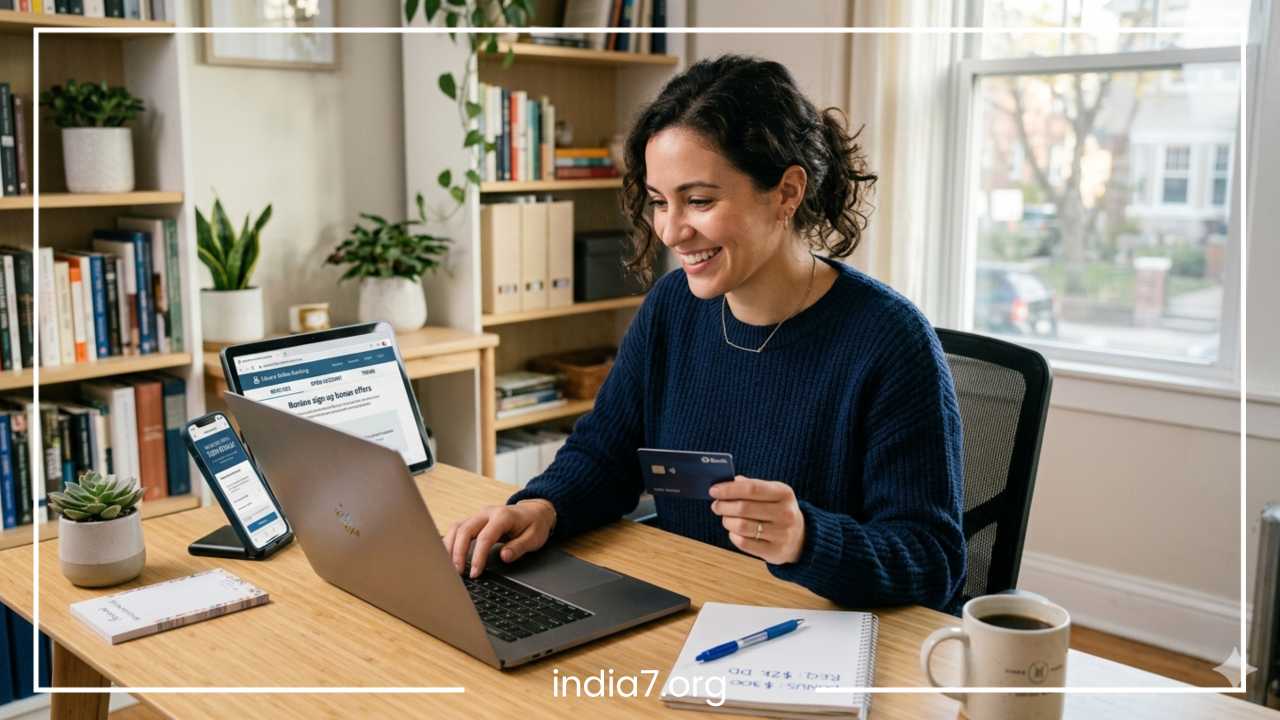
If you are applying online, this will involve entering your business details and personal information for all beneficial owners. If you are applying in person, you will sit with a business banking representative who will guide you through the forms.
Step 5: Submit Documents
Upload or hand over your registration, tax ID, and identification documents. The bank will review these to ensure they are valid and that your business does not operate in a high-risk industry prohibited by their policy.
Step 6: Complete Verification (KYC)
The bank will perform a “Know Your Customer” check. This may involve a credit check on the business owners and a verification of the business’s existence. For online banks, this might involve a “liveness check” where you take a photo of yourself or a video call.
Step 7: Make the Initial Deposit
Once approved, you will need to fund the account. You can usually do this via a transfer from a personal account, a check, or a wire transfer.
Step 8: Activate Your Tools
Order your business debit cards, set up your online banking credentials, and connect your accounting software. Make sure to download the mobile app so you can monitor transactions in real-time.
Timeframes and Delays
Online banks can often open an account within 24 to 48 hours. Traditional banks may take anywhere from a few days to two weeks, especially if your business structure is complex (like a multi-layered corporation) or if you require an in-person appointment. Common delays include expired IDs, mismatched addresses on documents, or missing signatures from partners.
Online vs. Offline Account Opening
The “best” way to open an account depends on your business type and your personal preference for service.
Pros of Online Opening
-
Speed: You can apply from your desk at any time of day.
-
Convenience: No need to travel to a branch or wait for an appointment.
-
Lower Fees: Online-only banks often have lower overheads and pass those savings to you in the form of zero monthly fees.
Pros of Offline Opening
-
Expert Guidance: You can ask questions in real-time and get immediate feedback on your application.
-
Relationship Building: Meeting a banker in person can be helpful if you plan to apply for a large loan or mortgage in the future.
-
Handling Cash: If your business is retail or hospitality and deals with physical cash, you will need a local branch for deposits anyway.
Common Mistakes to Avoid
Even seasoned entrepreneurs make mistakes when setting up their banking. Here are the pitfalls to watch for:
-
Mixing Finances: Using your business card for a personal dinner or your personal card for a business software subscription “just this once” creates a trail of confusion for your accountant and risks your legal protection.
-
Ignoring the Fine Print: Some accounts look free until you realize they charge $15 for every incoming wire transfer or $2 for every ATM withdrawal. Calculate your expected transaction volume and match it to the fee schedule.
-
Incomplete Documentation: Ensure the name on your registration matches the name on your tax ID exactly. Small discrepancies can lead to immediate rejection.
-
Not Understanding “Beneficial Ownership”: Banks are required to know who owns the business. If you have partners with more than a 25% stake, they will likely need to provide their information and ID as well.
Costs and Fees Explained
Understanding the cost of your account is essential for managing your overhead.
-
Monthly Maintenance Fees: These usually range from $10 to $50. Many banks waive this if you keep a minimum balance (e.g., $5,000).
-
Transaction Charges: A bank might allow 200 free transactions and then charge $0.50 per transaction thereafter. This includes both incoming and outgoing payments.
-
Wire Transfer Fees: Domestic wires often cost $20–$30, while international wires can exceed $50 per transaction plus a percentage of the currency exchange.
-
Cash Deposit Fees: Some banks charge a fee if you deposit more than a certain amount of physical cash (e.g., $10,000) in a single month.
Tips to Manage Your Business Bank Account Effectively
Once your account is open, the goal is to keep it healthy and useful.
Automate Bookkeeping
Connect your bank feed to an accounting platform. This allows you to categorize expenses daily rather than waiting until the end of the year. This real-time view of your finances helps you make better business decisions.
Monitor Cash Flow Regularly
Check your balance at least once a week. Look for unauthorized charges, ensure client payments have cleared, and verify that your upcoming bills are covered. Regular monitoring helps you catch fraud early.
Use Separate Accounts for Taxes
A smart strategy is to open a second business savings account. Every time a client pays you, transfer a percentage (usually 25-30%) into this tax account. This ensures you never spend the government’s money and aren’t caught off guard during tax season.
Enable Security Features
Always use Two-Factor Authentication (2FA) for your online banking. If your bank offers it, set up alerts for any transaction over a certain dollar amount. This acts as an early warning system for potential security breaches.
Final Thoughts
Creating a business bank account is more than just a box to tick on your “to-do” list; it is a declaration that your venture is a serious, professional entity. By taking the time to gather the right documents, compare banking institutions, and set up your account correctly from day one, you are protecting yourself legally and setting the stage for financial growth.
The process might seem daunting due to the paperwork involved, but it is a one-time effort that pays dividends in the form of clear bookkeeping, tax compliance, and a professional reputation. Don’t wait until tax season or until you need a loan to get started. Choose a bank that aligns with your vision, gather your documents, and take that step today. Your future self—and your accountant—will thank you.
Frequently Asked Questions (FAQ)
To help you navigate the complexities of business finance, we have compiled answers to the most common questions entrepreneurs search for when setting up their financial infrastructure.
How do I open a business bank account for a small business with no money?
Opening a business account with no initial capital is possible, but it requires careful bank selection. Many digital-first banks and neobanks allow you to open an account with a zero minimum opening deposit. To do this, look for “no-fee business checking” or “digital business accounts.” While the account itself may be free to open, ensure you have your business registration and EIN ready, as these are still required regardless of your starting balance.
Can I open a business bank account online without visiting a branch?
Yes, most modern financial institutions and online-only banks allow for a 100% digital application process. You will need to upload digital copies of your government-issued ID, articles of incorporation, and tax identification numbers. The bank will use electronic verification and “liveness” tests (such as a selfie or a short video) to confirm your identity. Traditional “brick-and-mortar” banks also offer online applications now, though they may occasionally require a follow-up phone call or a one-time visit for complex business structures.
What is the best business bank account for freelancers and sole proprietors?
For freelancers, the best account is typically one that has no monthly maintenance fees and no minimum balance requirements. Since freelance income can fluctuate, you want to avoid “low balance” penalties. Many freelancers prefer neobanks that offer built-in invoicing tools and automated tax withholding features. If you are a sole proprietor using a “Doing Business As” (DBA) name, ensure the bank specifically supports DBA accounts so you can accept checks written to your brand name.
How long does it take to get a business bank account approved?
The approval timeline varies significantly by the type of institution. Online banks can often approve an account within 24 to 48 hours if all documentation is clear. Traditional banks usually take 3 to 7 business days. If your business is in a “high-risk” industry (such as cannabis, gambling, or adult entertainment) or if you have a complex international ownership structure, the manual underwriting process can take several weeks.
Do I need an EIN to open a business bank account as a sole proprietor?
While some banks allow sole proprietors to use their Social Security Number (SSN), it is highly recommended—and often required—to obtain an Employer Identification Number (EIN) from the tax authorities. Using an EIN provides an extra layer of privacy by keeping your SSN off of business documents and is usually a prerequisite for opening a “true” business account rather than a secondary personal account.
Can a non-resident open a business bank account in another country?
Opening a business account as a non-resident is possible but involves stricter compliance and “Know Your Business” (KYB) checks. Most banks will require the business to be registered in the country where the bank operates and may require a local physical address or a local representative. Some digital platforms specialize in “borderless” business accounts for international founders, allowing you to hold multiple currencies and receive local payments without a physical presence.
What happens to my business bank account if I change my business structure?
If you transition from a sole proprietorship to an LLC or a Corporation, you generally cannot simply rename your existing account. Because the legal entity and the tax ID (EIN) have changed, banks usually require you to close the old account and open a new one under the new entity. It is vital to time this transition carefully to ensure that outstanding checks and automatic payments are migrated to the new account without disruption.