NFT Domain Names to Buy
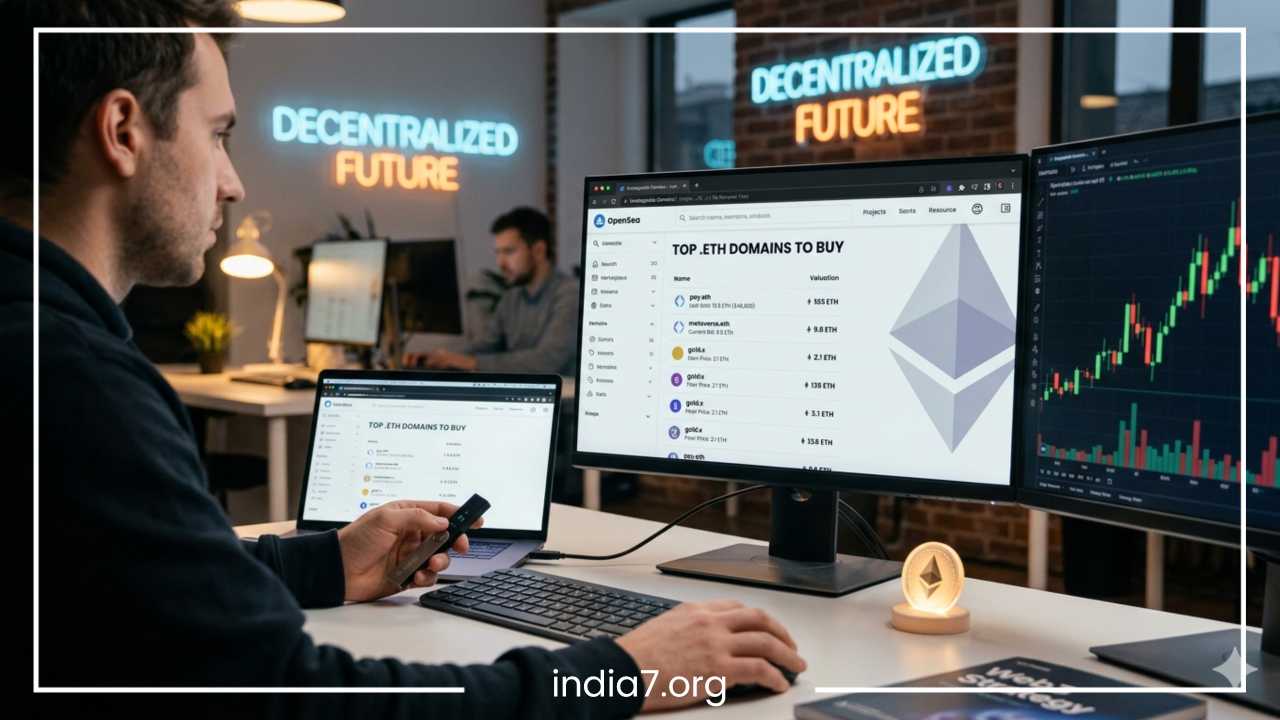
NFT Domain Names to Buy: The Ultimate Guide to Best Web3 Domains for Investment
The digital landscape is undergoing its most significant transformation since the invention of the World Wide Web. For decades, we have operated under a model where our online identities—our usernames, our website addresses, and our digital footprints—are essentially “rented” from centralized authorities. Whether it is a social media handle on a corporate platform or a .com domain registered through a traditional provider, the user never truly owns the asset.
The rise of Web3 has introduced a revolutionary alternative: NFT Domain Names. These are not merely web addresses; they are programmable, decentralized, and sovereign digital assets. As the world moves toward a future defined by decentralized finance (DeFi), the metaverse, and digital ownership, NFT domains have emerged as a high-potential investment class. This article explores the mechanics, benefits, and strategies for investing in the best Web3 domains available today.
In the early days of the internet, savvy investors realized that “digital real estate” in the form of .com addresses would become incredibly valuable. Fast forward to the present, and we are witnessing a “Domain Gold Rush 2.0.” NFT domain names are unique digital assets secured by blockchain technology. Unlike traditional domains that exist on centralized servers managed by organizations like ICANN, NFT domains are non-fungible tokens that live directly in your private cryptocurrency wallet.
Read: The Guest Posting Guide for Beginners
This innovation is trending because it addresses the core philosophy of Web3: user sovereignty. In a decentralized ecosystem, you need a single, readable identity that represents your financial accounts, your social profile, and your website. The growing demand for digital identity and true ownership is driving prices for premium names into the hundreds of thousands of dollars. For forward-thinking investors, this represents a ground-floor opportunity to acquire assets that could define the next era of human interaction.
Read: How “Julie & Julia” Reveals Content Marketing Secrets
What Are NFT Domain Names?
To understand why NFT domains are valuable, one must first understand what they are at a technical and functional level. At its core, an NFT domain name is a decentralized alternative to the traditional Domain Name System (DNS).
Definition and Structure
A standard domain (like .org or .net) is a pointer to an IP address, managed by a registrar who can revoke your access at any time if fees aren’t paid or terms are violated. An NFT domain, however, is a smart contract suite deployed on a blockchain—most commonly Ethereum, Polygon, or Solana. When you buy one, the record of your ownership is immutable; it cannot be deleted, altered, or seized by any central authority.
Key Differences from Traditional Domains
-
Asset Type: Traditional domains are service contracts; NFT domains are property.
-
Storage: They are stored in a non-custodial crypto wallet (like MetaMask), meaning only the person with the private keys can move or sell the domain.
-
No Central Registry: There is no “GoDaddy” for the blockchain that can censor your content or “turn off” your domain.
-
Transferability: Because they are NFTs, they can be traded on any NFT marketplace, such as OpenSea or Rarible, with the same ease as digital art.
Popular Extensions
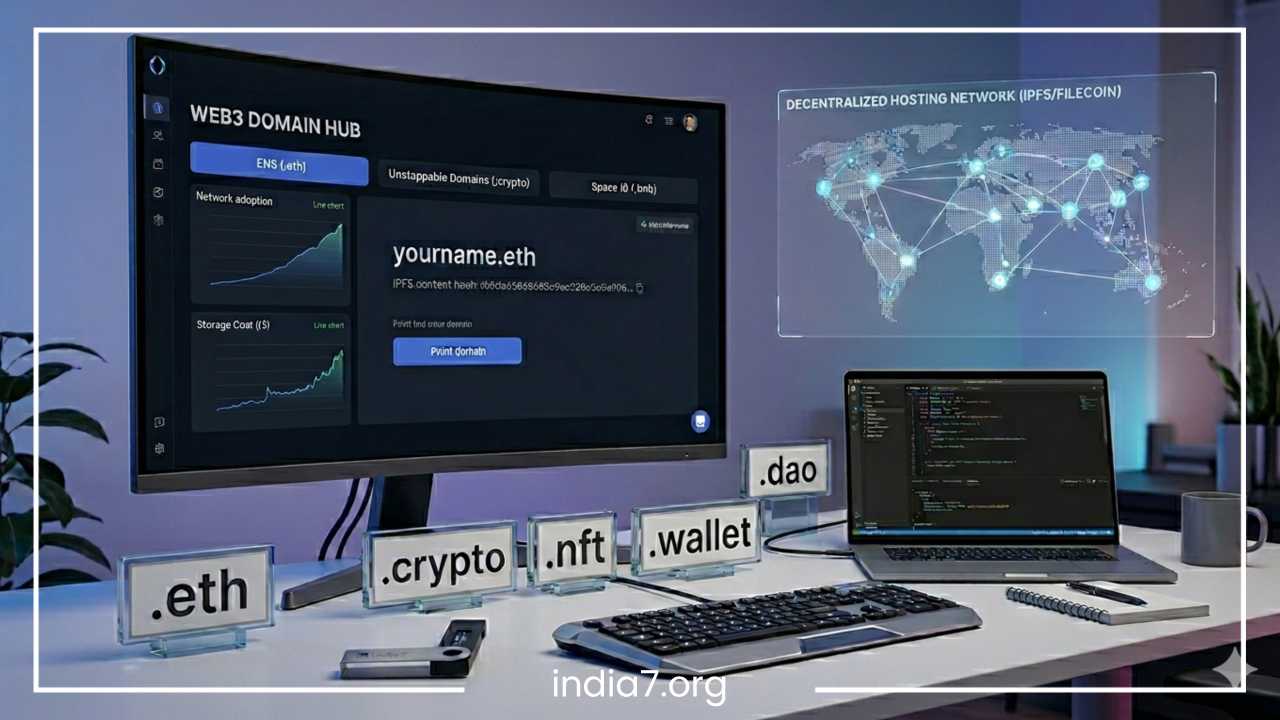
The market is currently fragmented across several key extensions, each with its own community and utility:
-
.eth: The flagship extension of the Ethereum Name Service (ENS).
-
.crypto: A versatile, multi-chain extension favored by Unstoppable Domains.
-
.nft: A niche extension specifically targeted at creators and artists.
-
.x, .wallet, .bitcoin: Specialized extensions used for branding and specific utility.
Read: The Secret to Getting Your Subscribers Hooked on Your Blog
How NFT Domains Work
The magic of NFT domains lies in their simplicity for the user, despite the complex blockchain technology running in the background.
The Resolution Mechanism
In the traditional internet, when you type a URL, a DNS server “resolves” that name into an IP address. In Web3, an NFT domain resolves a name into a cryptocurrency wallet address. Traditionally, sending crypto involves sharing a 42-character hexadecimal string (e.g., 0x71C…34f1). This is cumbersome and dangerous, as a single typo can result in a total loss of funds.
An NFT domain acts as a human-readable proxy. By linking your domain (e.g., johndoe.eth) to your wallet, anyone can send you Ethereum, Bitcoin, or stablecoins by simply typing your name. The smart contract on the blockchain automatically routes the funds to the correct long-form address.
Smart Contracts and Utility
Because these domains are built on smart contracts, they are “programmable.” This means a single domain can point to multiple things simultaneously:
-
Multiple Wallet Addresses: One name for all your different coins.
-
Decentralized Websites: By linking the domain to an IPFS (InterPlanetary File System) hash, you can host a website that is virtually impossible to take down.
-
Metadata: You can attach a profile picture (Avatar NFT), an email address, a Twitter handle, and a bio to your domain, making it a “Web3 Passport.”
Benefits of NFT Domain Names
The value proposition for NFT domains is multifaceted, offering utility that traditional domains simply cannot provide.
True Ownership and No Renewals
One of the most significant advantages, particularly with providers like Unstoppable Domains, is the one-time purchase model. For many extensions, once you buy the domain, it is yours forever. There are no annual renewal fees. This removes the “subscription” model of the old web and replaces it with a “property” model. Even with ENS (.eth), which does require renewals, the “ownership” is still more robust than traditional domains because the user holds the keys.
Censorship Resistance
Traditional domains are subject to the laws and whims of the jurisdiction in which the registrar operates. If a government wants a .com website taken down, they can often force the registrar to do so. NFT domains are decentralized. Since the record is spread across thousands of global nodes, no single entity has the “off switch.” This makes them the ultimate tool for free speech and uncensored commerce.
Simplified User Experience (UX)
The biggest barrier to crypto adoption is complexity. NFT domains simplify the experience by turning “banking” into “socializing.” Paying someone via their domain name feels more like Venmo or PayPal than a complex financial transaction. This utility alone drives massive demand as more people enter the crypto space.
Branding and Identity
In the metaverse and decentralized social media (like Lens Protocol or Farcaster), your NFT domain is your universal username. It is the name that appears above your avatar in a digital world and the name attached to your posts. Owning a premium, short, or prestigious name is a status symbol, much like a vanity license plate or a premium social media handle.
Risks and Challenges
No investment is without risk, and the NFT domain market is particularly speculative.
-
Market Volatility: The value of these domains is highly correlated with the broader crypto market. In a “crypto winter,” the floor prices for domains can drop significantly, and finding a buyer may take months or even years.
-
Adoption Hurdles: Currently, mainstream browsers like Chrome and Safari do not natively resolve NFT domains without a plugin or specific DNS settings (though Brave and Opera have made strides). Until native resolution is universal, the “website” utility remains limited.
-
Liquidity Issues: Unlike Bitcoin, which you can sell instantly, an NFT domain is a unique asset. You must wait for a specific buyer who wants your specific name. This makes it an illiquid investment.
-
Trademark Infringement: Just because you can mint “google.eth” doesn’t mean you should. Marketplaces like OpenSea often delist trademark-infringing names, and as the space matures, legal challenges from big brands are inevitable.
-
Regulatory Uncertainty: As digital assets, these domains could eventually fall under new regulatory frameworks that might impact how they are traded or taxed.
Best NFT Domain Extensions to Buy
When investing, the “extension” (the part after the dot) is as important as the name itself. Here is a breakdown of the leaders in the space.
.ETH (Ethereum Name Service)
ENS is the undisputed leader in the Web3 naming space. It has the highest number of integrations, the most active secondary market, and the largest community.
-
Pros: Highly liquid, widely recognized, supported by almost every wallet.
-
Cons: Requires annual renewal fees in ETH; gas fees can be high during network congestion.
.CRYPTO (Unstoppable Domains)
This is the most popular “generic” extension for those who want a cross-chain identity. It is easy to remember and clearly communicates its purpose.
-
Pros: No renewal fees; high brand recognition; works across many blockchains.
-
Cons: Not as deeply integrated into the Ethereum ecosystem as ENS.
.NFT (Unstoppable Domains)
This is the go-to extension for artists, photographers, and collectors. It is highly specific and excellent for personal branding within the creator economy.
-
Pros: Clear niche; great for “naming” a digital gallery.
-
Cons: Less “general purpose” than .eth or .crypto.
Other Emerging Extensions
-
.x: This is one of the shortest and most “premium” feeling extensions. It is highly brandable for tech startups.
-
.wallet: Ideal for users who primarily use their domain for peer-to-peer payments.
-
.dao: Targeted at decentralized autonomous organizations. This is a “utility” play for groups managing collective funds.
-
.metaverse: A purely speculative extension betting on the long-term growth of virtual worlds.
Top NFT Domain Marketplaces
Knowing where to buy and sell is crucial for any investor.
-
OpenSea: This is the “Amazon” of the NFT world. It handles the vast majority of secondary sales for both ENS and Unstoppable Domains. It offers robust filtering tools to see recent sales, floor prices, and expiration dates.
-
Unstoppable Domains (Primary): The best place to buy “virgin” (unregistered) domains for extensions like .crypto, .nft, and .x. They often run promotions and have a very slick UI.
-
ENS App: The primary portal for registering .eth domains. It is the most cost-effective way to mint a name if it hasn’t been taken yet.
-
Rarible: A decentralized marketplace that often has lower fees than OpenSea and a dedicated community of domain flippers.
-
Looking Glass (ENS Vision): A specialized marketplace and toolset specifically designed for ENS collectors. It provides advanced data on “clubs” (like the 999 Club for 3-digit numbers).
NFT Domain Names to Buy (Main Investment Section)
This is the core of the investment strategy. Not every name is a winner; in fact, 99% of registered domains will likely end up worthless. To find the 1% that will appreciate, you must look for scarcity and utility.
1. Short & One-Word Domains
In the world of domains, short is king.
-
3-Letter (3L) and 4-Letter (4L) Domains: These are considered “blue-chip” assets. There are a finite number of combinations, and they are easy to remember.
-
Generic Nouns: Words like “pay,” “sex,” “art,” “gold,” “shop,” and “home” are incredibly valuable because they represent entire industries.
-
Examples: sex.crypto, pay.eth, art.nft, cloud.x.
2. Trending Keywords
Web3 is driven by narrative. Buying domains related to the “next big thing” can lead to massive returns if you get in early.
-
AI (Artificial Intelligence): This is currently the hottest sector. Domains like ai.eth, gpt.crypto, neural.x, or bot.wallet are in high demand.
-
DeFi (Decentralized Finance): Words like yield, swap, lend, stake, and bank.
-
Metaverse: Words like land, build, world, vr, and avatar.
3. Brandable and Catchy Names
Sometimes a domain doesn’t have an dictionary definition but “sounds” like a premium brand. These are harder to pick but can be very lucrative.
-
Think of abstract but “cool” words: Vortex, Zenith, Nexus, Flux, Axiom.
-
Examples: nexus.eth, flux.crypto.
4. Industry-Specific Domains
Look for sectors that are prime for blockchain disruption.
-
Real Estate: property.eth, rent.crypto, deed.x.
-
Gaming: gamer.eth, play.nft, quest.wallet, skin.crypto.
-
Luxury: vogue.eth, watch.nft, diamond.crypto.
5. Geo-Based Domains
Just as “hotels.com” is valuable, “paris.eth” or “tokyo.crypto” are high-value assets. Local businesses will eventually want to brand themselves as the “Web3 hub” of their city.
-
City + Crypto: dubai-crypto.eth, nycnft.crypto.
-
Global Cities: london.eth, seoul.crypto, miami.x.
How to Choose a Good NFT Domain
Before you hit the “buy” button, put every domain through this checklist:
-
Is it memorable? If you have to repeat the name three times for someone to understand it, it’s not a good domain.
-
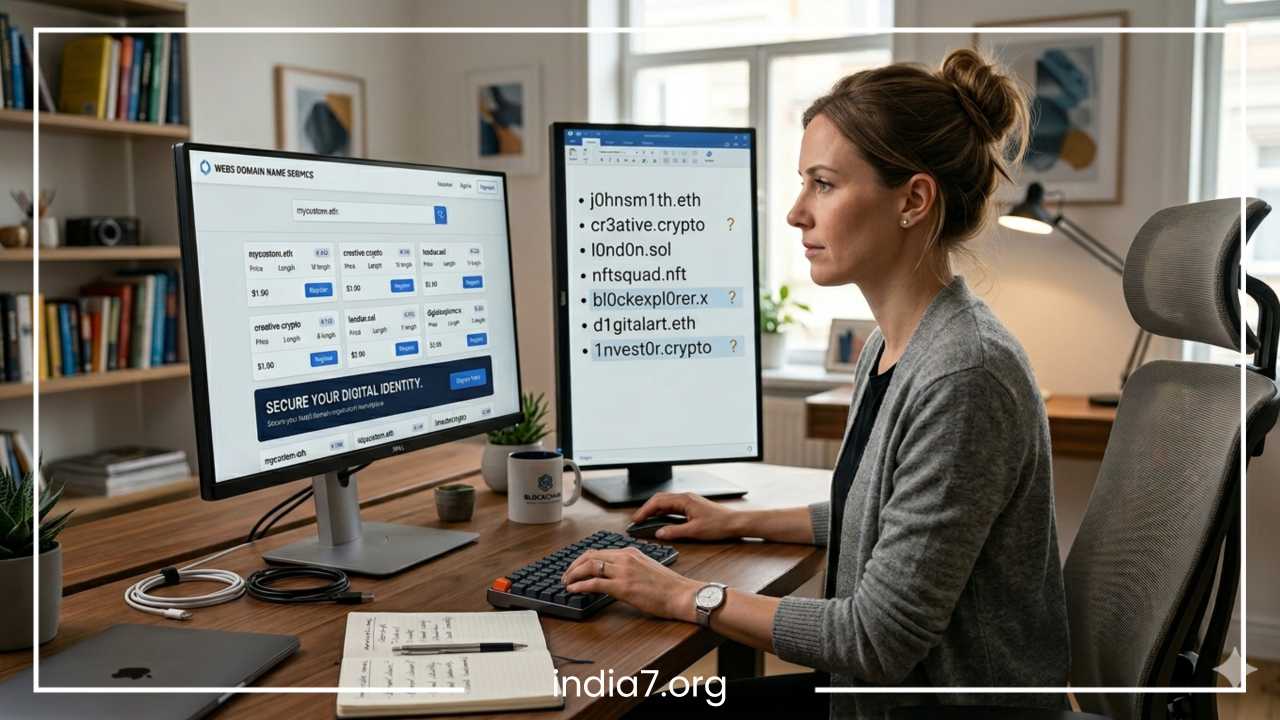
Does it have “radio test” value? If someone hears the name on a podcast, will they know how to spell it? Avoid “0” (zero) vs “O” (the letter) confusion.
-
Avoid Hyphens and Numbers: Unless it’s a specific “number club” domain (like 123.eth), numbers and hyphens generally decrease the value and make the name harder to type.
-
Look for Multi-Chain Appeal: Does the name make sense across different platforms, or is it too specific to one dead-end technology?
-
Check the History: Use tools like “Etherscan” to see if the domain was used for scams in the past, as this could lead to it being blacklisted by certain front-ends.
NFT Domain Investment Strategies
Investment is not just about what you buy, but how you manage it.
The “Land Grab” (Buy and Hold)
This is a long-term strategy. You buy premium, generic keywords and you hold them for 5–10 years. You are betting that a major corporation will eventually need that domain for their Web3 transition and will pay six or seven figures to acquire it.
Flipping (The “Day Trader” Approach)
Flipping involves buying domains that are currently undervalued or “undiscovered” and selling them within weeks or months. This requires staying on top of daily trends on Twitter and Discord. For example, if a new “dog coin” starts trending, flippers might register related domains to sell to the “whales” of that community.
Building and Leasing
A more advanced strategy is to actually build a decentralized website on the domain. A domain with active traffic is worth significantly more than an empty one. There is also the emerging concept of “leasing” domains, where you allow someone else to use the name for their wallet or site in exchange for a monthly fee in crypto.
Diversification
Never put your entire portfolio into one extension or one category. A smart portfolio might look like this:
-
40% .eth Blue-Chips (Short numbers or dictionary words).
-
30% .crypto Generic Keywords (Industry-specific).
-
20% AI/Trending Keywords (High risk, high reward).
-
10% Speculative extensions (Like .x or .metaverse).
Future of NFT Domains
The future of NFT domains is inextricably linked to the concept of Self-Sovereign Identity (SSI). In the near future, your .eth or .crypto name won’t just be for payments. It will be:
-
Your Login: Instead of “Login with Google,” you will “Login with Ethereum” using your domain. This gives you control over what data you share with apps.
-
Your Credit Score: On-chain activity linked to your domain could serve as a decentralized credit score for undercollateralized loans.
-
Your Reputation: Your domain will hold “Soulbound Tokens” (non-transferable NFTs) that prove your education, your job history, and your community contributions.
As major tech companies and financial institutions continue to file patents for blockchain integration, the demand for these “on-chain” identities will only grow. We are moving toward a world where the distinction between “online” and “offline” identity disappears, and NFT domains will be the glue that holds it all together.
Final Thoughts
The opportunity in NFT domain names is reminiscent of the early days of the .com boom, but with a critical difference: this time, the users—not the corporations—own the infrastructure. By securing a premium NFT domain today, you are not just speculating on a digital asset; you are claiming a piece of the future internet.
However, success in this market requires a blend of creativity, technical understanding, and extreme patience. While the potential for “100x” returns exists, so does the risk of holding an unsellable asset. Focus on quality over quantity, stick to memorable and useful names, and always keep an eye on the evolving utility of the Web3 ecosystem. The digital real estate of tomorrow is being claimed today—make sure you have your stake in the ground.