NFT Domain Naming Tips
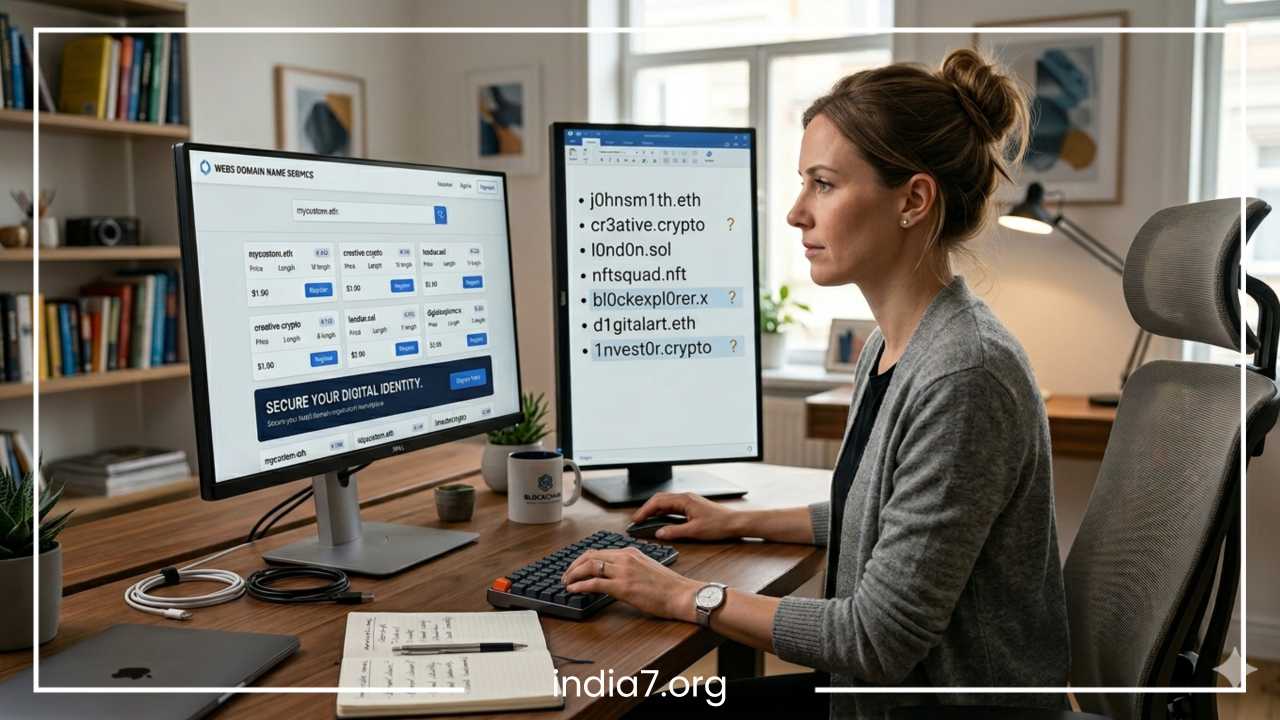
NFT Domain Naming Tips: How to Choose the Perfect Web3 Name
The internet is undergoing a foundational shift. We are moving from the era of Web2—characterized by centralized platforms, rented identities, and data silos—to Web3, an era defined by true ownership, decentralization, and interoperability. At the heart of this transition lies a new way to identify ourselves and our assets: the NFT domain.
Choosing an NFT domain is no longer just about picking a URL for a website. It is about claiming a piece of digital real estate that serves as your bank account address, your username across decentralized applications, and your permanent on-chain identity. This guide provides a comprehensive deep dive into the art and science of selecting the perfect NFT domain name.
Read: 5 Ideas for an Engaging Video Blog Post
What is NFT Domains
To understand how to name an NFT domain, one must first understand what it actually is. Unlike traditional domains (like .com or .org) which are managed by the Internet Corporation for Assigned Names and Numbers (ICANN) and “leased” through registrars like GoDaddy, NFT domains are smart contracts deployed on a blockchain.
What are NFT Domains?
An NFT domain is a non-fungible token that lives in your digital wallet. When you “buy” one, you aren’t paying a yearly subscription to a centralized middleman; you are minting an asset that you own entirely. These domains translate complex, hexadecimal machine code (like a wallet address: 0x123…) into human-readable text (like yourname.eth).
How They Differ from Traditional DNS
Traditional Domain Name System (DNS) domains are part of a hierarchical, centralized system. If a registrar decides you have violated their terms, they can seize your domain. With NFT domains (often referred to as the Decentralized Name System or dDNS), the domain is an asset in your private wallet. It cannot be taken away from you, censored, or deleted by a third party. Furthermore, while traditional domains primarily point to IP addresses for websites, NFT domains can point to wallets, decentralized websites (IPFS), and social profiles simultaneously.
Why They Are Gaining Popularity
The surge in popularity stems from the need for a unified digital identity. As users interact with Decentralized Finance (DeFi) protocols, NFT marketplaces, and Metaverses, having a single, recognizable name makes the experience more “human.” It replaces the anxiety of copy-pasting long wallet strings with the ease of typing a simple name.
Read: Start a Blog for Free: Blogger 101
What Makes a Good NFT Domain Name?
A “good” name in the Web3 space is one that balances technical utility with social signaling. Because these names are often displayed in leaderboards, chat rooms, and transaction histories, they carry significant weight.
Memorability and Simplicity
The gold standard for any domain is the “radio test.” If you told someone your domain name over the radio, would they know exactly how to spell it? Simple, common words are always more valuable than complex jargon. Avoid intentional misspellings (e.g., “Krypto” instead of “Crypto”) unless they are part of a very strong, established brand.
Brandability
A brandable name feels like a destination. It has a certain rhythm or “phonetic aesthetic.” Think of names like Amazon or Google; they don’t necessarily describe what they do, but they are easy to turn into a project identity. In Web3, brandable names are often abstract nouns or short, punchy verbs.
Length Considerations
In the world of NFT domains, shorter is almost always better. Three-letter and four-letter domains are considered “blue-chip” assets because they are scarce and easy to type on mobile devices. However, as the space matures, “dictionary words” (single English words) are becoming the most coveted assets due to their inherent authority.
Avoiding Confusion
Hyphens and numbers generally detract from a domain’s value and usability. A domain like best-crypto-wallet-1.nft is difficult to communicate and looks like spam. Stick to alphabetic characters whenever possible to maintain a professional and trustworthy image.
Read: What a Local Blogger Group Can Do for Your Blog
Understanding Use Cases Before Naming
Before you register a name, you must identify your primary objective. The “perfect” name for a flipper is very different from the “perfect” name for a personal portfolio.
Personal Identity
If you want a domain for your personal wallet, your name or a consistent handle is best. JohnDoe.eth or JaneCrypto.x provides a professional anchor for your Web3 activities. This is your “passport” for the decentralized web.
Business and Brand Domains
Businesses should prioritize their trademarked names or a name that describes their service. If a company is moving into Web3, securing BrandName.eth or BrandName.crypto is essential for brand protection and ensuring customers are sending funds to the correct entity.
Investment and Flipping
Investors look for “liquid” names—names that have a broad appeal to many potential buyers. This includes generic categories (e.g., pizza.eth, travel.nft), common first names, or major cities. The goal here is to own a “category killer” that someone else will eventually need.
Community and DAO Names
For Decentralized Autonomous Organizations (DAOs), names should reflect a collective identity. They often use plural nouns or words that evoke a sense of belonging, such as Builders.eth or AlphaSquad.nft.
Keyword Strategy for NFT Domains
Keywords play a different role in Web3 than they do in traditional SEO. While they might help with searchability in marketplaces like OpenSea, their primary value is in signaling and categorization.
Niche-Relevant Keywords
Using keywords like “DeFi,” “Meta,” “Build,” or “Vault” can immediately tell the world what your wallet or project is about. If you are a developer, having “Dev” in your domain (e.g., AlexDev.eth) acts as a digital badge of your profession.
Short vs. Long-Tail Names
-
Short-tail: “Music.eth” — High value, high competition, broad appeal.
-
Long-tail: “JazzMusicCollector.eth” — Lower value, but highly specific and functional for a niche user.
Trend-Based vs. Evergreen
Be wary of naming your domain after a passing fad. While “FidgetSpinner.eth” might have been a hot commodity years ago, it lacks the staying power of “Health.eth.” Evergreen keywords—those related to human needs, emotions, or established industries—always hold their value longer than hype-based terms.
Branding Tips for Web3 Names
Branding in Web3 is about more than just a logo; it is about the “vibe” and the community trust you build around a name.
Creating a Unique Identity
Avoid “copycat” naming. If a successful project is called “Bored Ape,” naming your domain “Bored Elephant” makes you look like a derivative. Aim for original combinations of words that evoke a specific feeling or aesthetic.
Emotional Appeal and Storytelling
The best names tell a story. A domain like Horizon.eth suggests growth, future-thinking, and exploration. A domain like Fortress.crypto suggests security and stability. Choose words that align with the emotional resonance you want your brand to have.
Future-Proofing
Ask yourself: “Will this name still make sense in ten years?” Avoid adding specific dates or version numbers to your domain. You want a name that can grow and pivot as the technology evolves.
Cross-Platform Availability
Before finalizing your NFT domain, check if the matching handles are available on Twitter (X), Warpcast, Lens, and Discord. A unified identity across both Web2 and Web3 social layers is a powerful tool for building authority.
Choosing the Right NFT Domain Extension
Not all extensions are created equal. The extension (the part after the dot) often dictates which blockchain the domain lives on and which applications support it.
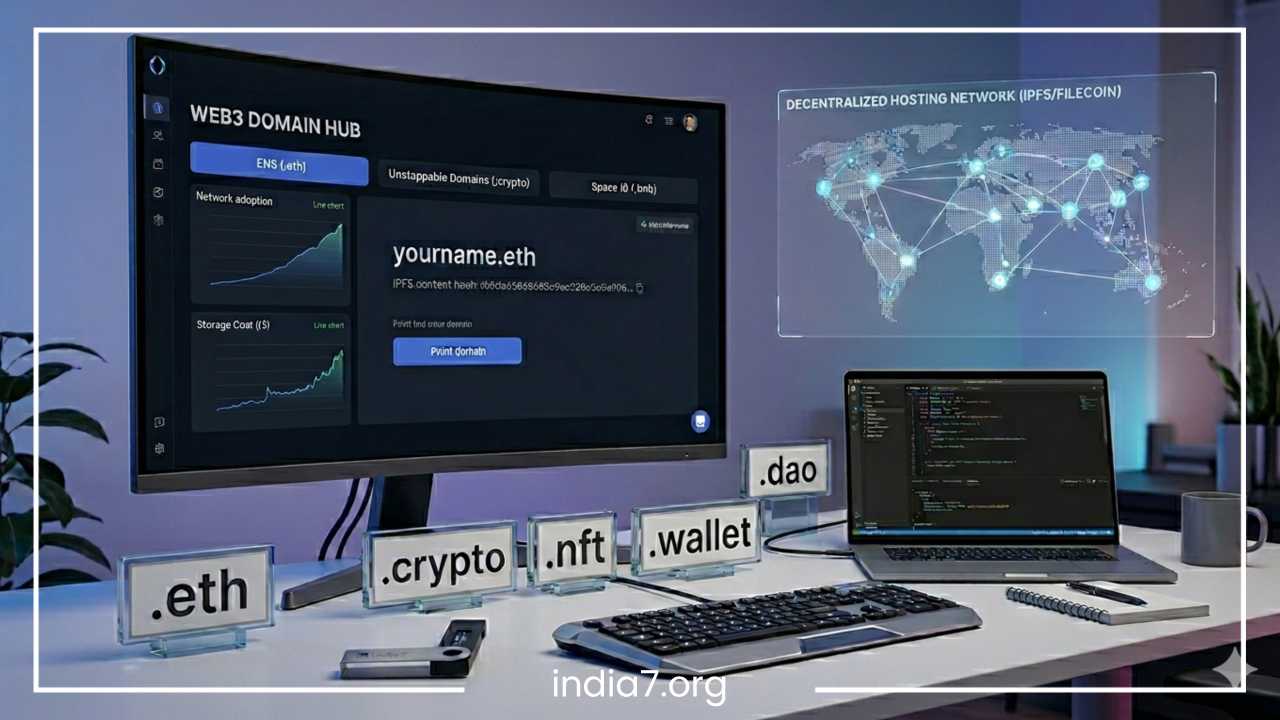
Popular Extensions
-
.eth (Ethereum Name Service): The industry standard. It has the highest volume, the most integrations, and is widely considered the most “prestigious.”
-
.crypto, .nft, .x (Unstoppable Domains): These live primarily on Polygon. They are popular because they have no renewal fees (pay once, own forever) and offer a wide variety of extensions.
-
.sol (Bonfida): The primary naming service for the Solana ecosystem.
-
.bit (Dotbit): A cross-chain naming system that focuses on multi-chain interoperability.
Extension Credibility
Generally, .eth is seen as the “dot com” of the crypto world. If you are looking for investment value or a “serious” professional identity, .eth is usually the safest bet. However, if you are building specifically on Solana or Polygon, using their native extensions can show your commitment to those specific communities.
SEO and Discoverability Considerations
A common question is whether NFT domains help with Google search rankings. Currently, the answer is complex.
Do NFT Domains Affect SEO?
Traditional search engines are only just beginning to index decentralized websites (like those hosted on IPFS). While an NFT domain won’t automatically boost your rank on Google today, it is highly searchable within Web3 ecosystems. Marketplaces, block explorers, and dApp browsers all use these names as primary search keys.
Naming for Search vs. Branding
If you want to be discovered within a marketplace like OpenSea or ENS.vision, using high-volume keywords (like “Gold,” “Club,” or “DAO”) can help. However, for a primary identity, branding should always take precedence over keyword stuffing.
Legal and Trademark Considerations
The “Wild West” era of Web3 is slowly ending, and legal realities are catching up.
Avoiding Trademarked Names
Registering Google.eth or Nike.nft is a recipe for trouble. While the decentralized nature of the blockchain makes it difficult for a company to “delete” your domain, they can still take legal action against you for trademark infringement, especially if you try to sell the domain back to them (cybersquatting).
Domain Disputes
In the traditional world, the UDRP (Uniform Domain-Name Dispute-Resolution Policy) handles disputes. In Web3, there is no central authority to appeal to. However, major marketplaces may delist your domain if it violates trademarks, making it nearly impossible to sell. Always aim for original or generic names to stay legally safe.
Investment Tips: Naming for Resale Value
If your goal is to flip domains for profit, you need to think like a digital real estate developer.
What Makes a Domain Valuable?
-
Scarcity: There are only 1,000 “3-digit” numbers (000-999). This scarcity creates a floor price.
-
Utility: Names that represent a massive industry (e.g., insurance.eth) have high ceiling values.
-
Language: Common English nouns and verbs are the most liquid.
The “999” and “10k” Clubs
In the ENS ecosystem, the “999 Club” (all 3-digit numbers) and the “10k Club” (all 4-digit numbers) became legendary investment classes. These are valued because they are culturally significant and cross-linguistic—a number means the same thing in every country.
Market Demand
Monitor what “clubs” are trending. Sometimes it is 3-letter combinations (e.g., abc.eth), sometimes it is first names, and sometimes it is emoji-based domains. However, be careful not to buy into a trend that has already peaked.
Common Mistakes to Avoid
Naming is easy; naming well is hard. Avoid these common pitfalls:
-
Overcomplication: Using double letters where they don’t belong (e.g., cryptoookings.eth) or mixing numbers and letters randomly.
-
Trend-Chasing: Buying domains related to a meme that will be forgotten in a week.
-
Ignoring Renewals: If you own an .eth domain, you must pay renewal fees. Many people lose “perfect” names because they forget to extend their registration.
-
Buying “Junk” Bulk: It is better to own one great domain than 100 mediocre ones that no one wants to buy.
-
Spelling Errors: Always triple-check the spelling before you hit “Register.” Once it’s on the blockchain, you can’t “edit” the spelling of that specific NFT.
Tools and Resources for Finding NFT Domain Names
You don’t have to brainstorm in a vacuum. Use the following tools to find and validate your ideas:
-
ENS.vision: An excellent tool for searching .eth names, tracking floor prices for different “clubs,” and seeing what is currently trending.
-
Unstoppable Domains Search: Great for checking availability across multiple extensions like .x, .crypto, and .bitcoin.
-
Lean Domain Search: A traditional tool that adds prefixes and suffixes to keywords. This is great for finding brandable variations.
-
Dune Analytics: Use this to look at the data behind domain registrations to see which sectors of the market are growing.
-
ChatGPT/AI Tools: You can use AI to generate lists of synonyms or creative portmanteaus based on your niche.
Step-by-Step Process to Create the Perfect NFT Domain
If you are ready to register, follow this structured workflow:
Step 1: Define Your Goal
Are you building a personal brand, a business, or an investment portfolio? Write this down.
Step 2: Brainstorm
Generate at least 50 ideas. Don’t self-censor at this stage. Use a mix of dictionary words, compound words (e.g., BitFlow), and abstract names.
Step 3: The Filter
Run your list through the “Good Name” criteria: Is it short? Is it easy to spell? Does it pass the radio test? Narrow your list down to 5 candidates.
Step 4: Check Availability
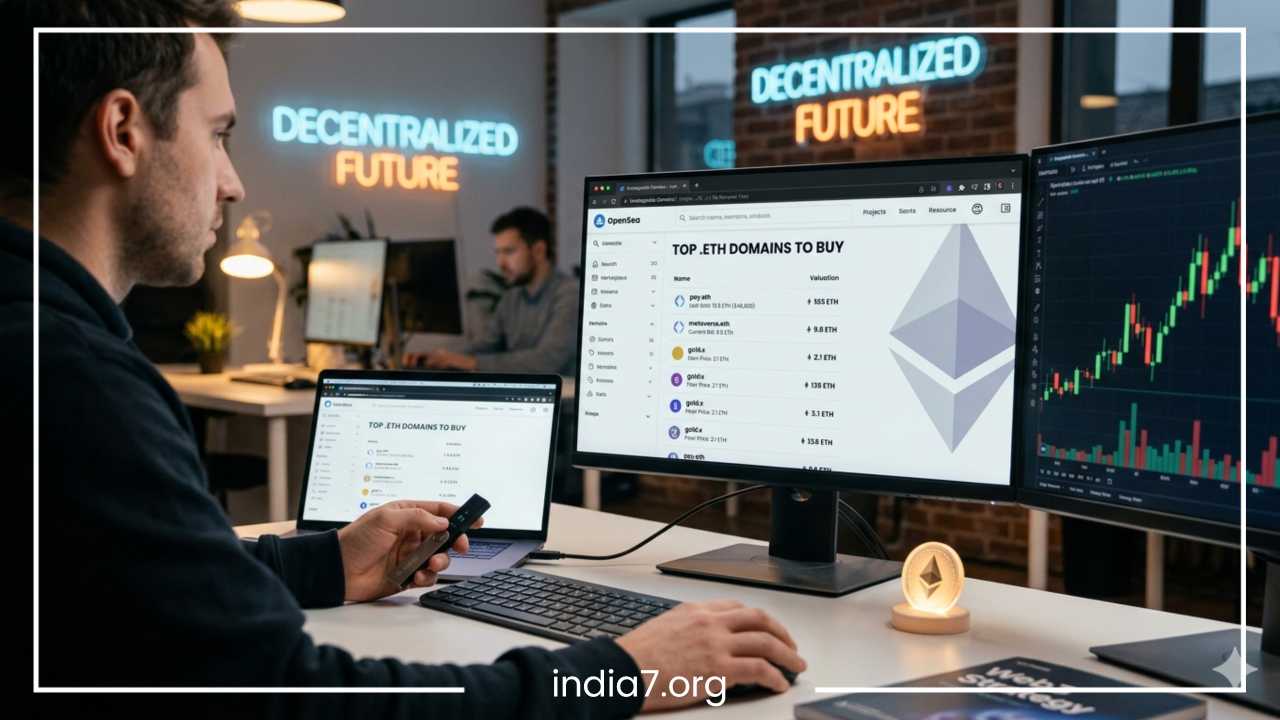
Check if these are available on your preferred extension (.eth, .sol, etc.). If they are taken, see if they are for sale on a secondary market like OpenSea.
Step 5: Social Validation
Check if the names are available as usernames on social media platforms.
Step 6: Final Selection Checklist
-
Does it have a positive or neutral connotation?
-
Is it free of trademarks?
-
Can I afford the registration/gas fees?
-
Am I proud to have this name represent me?
Real Examples of Good NFT Domain Names
Looking at successful names can provide a blueprint for your own naming strategy.
Strong Examples
-
Paradigm.eth: An institutional, powerful word that suggests a shift in thinking. Perfect for a VC firm.
-
Visa.eth: Short, globally recognized, and authoritative (even if not owned by the company, the “name” itself is a high-value asset).
-
Gem.xyz: Short, evocative, and easy to remember.
-
001.eth: The ultimate scarcity play.
Weak Examples
-
Best-crypto-deals-daily-247.nft: Too long, uses hyphens, and feels like a scam site from 2005.
-
Xyz123_Alpha.eth: The underscore and random numbers make it impossible to remember and unprofessional to look at.
-
DogecoinToTheMoonFast.crypto: Tied to a specific meme and a specific moment in time; lacks evergreen appeal.
Future Trends in NFT Domain Naming
The way we use and name domains is constantly evolving.
AI and Automation
We are seeing the rise of AI-curated domain portfolios, where algorithms identify undervalued linguistic patterns and register them. Additionally, AI “naming assistants” are helping users find creative combinations that humans might overlook.
Integration with Digital Identity
In the future, your NFT domain will likely be your “everything” handle. It will be tied to your credit score (on-chain), your social reputation, and your gaming achievements. This means names will likely shift toward being more “human-centric” and less “keyword-centric.”
The Metaverse Influence
As 3D virtual worlds grow, we may see “spatial domains.” Just as we have names for websites, we might have names for specific virtual coordinates or “neighborhoods” in the Metaverse.
Universal Resolvers
The holy grail of Web3 naming is a domain that works perfectly on every single blockchain. While we aren’t there yet, naming conventions are moving toward “chain-agnostic” words that don’t tie the user to a specific ecosystem.
Final Thoughts
Choosing an NFT domain is a unique blend of creative branding, legal awareness, and investment strategy. Whether you are looking for a simple .eth name to represent your digital self or a high-value .crypto asset for your business, the principles remain the same: prioritize simplicity, aim for longevity, and ensure your name tells the story you want the world to hear.
The decentralized web is still in its early chapters. The names registered today will become the landmarks of the future digital landscape. By taking a strategic, thoughtful approach to your naming process, you aren’t just buying an NFT—you are securing your place in the evolution of the internet. Think long-term, stay original, and choose a name that you will be proud to own for years to come.