Best Phone Camera Lens Attachments
Best Phone Camera Lens Attachments | Top Picks
Smartphone photography has evolved from a tool for casual snapshots into a legitimate medium for artistic and professional visual storytelling. Modern mobile devices pack incredible processing power, multi-pixel sensors, and sophisticated computational algorithms that can mimic the depth of field and color science of dedicated cameras. However, software can only do so much to bend the laws of physics. Built-in smartphone cameras are physically constrained by the slim profiles of the devices themselves, creating distinct hardware limitations.
These hardware constraints become obvious when attempting specific photographic disciplines. Digital zoom rapidly degrades image quality, turning distant subjects into blocky, pixelated artifacts. Ultra-wide-angle lenses on standard mobile devices frequently suffer from severe barrel distortion, stretching characters and architectural elements at the edges of the frame into unnatural shapes. Furthermore, standard smartphone lenses lack the physical optics required to capture ultra-crisp, high-magnification close-ups, or to control light manually without heavily modifying exposure times through artificial boosting, which introduces grain and visual noise.
This is where premium phone camera lens attachments offer a transformative hardware upgrade. Rather than relying on synthetic pixels or digital crops, external lens attachments place precision-engineered glass directly over the native sensor of a phone. This shifts the heavy lifting from computational algorithms back to genuine optics, unlocking capabilities like true optical compression, expansive distortion-free vistas, cinematic anamorphic flares, and specialized lighting control.
This guide breaks down the core mechanics of external optical attachments, categorizes the distinct lens options available for mobile creators, outlines the vital purchasing factors to maximize image sharpness, and reviews the absolute top picks on the market today to fit any creative style, device configuration, or budget.
What Are Phone Camera Lens Attachments?
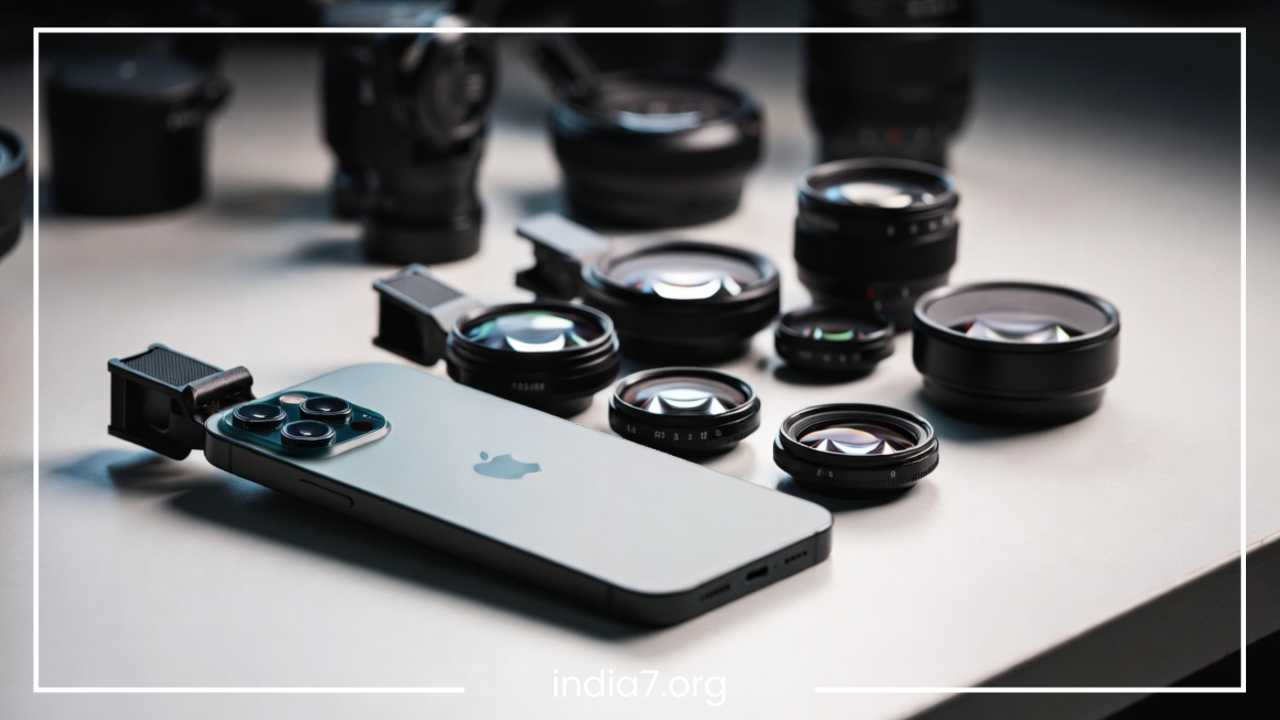
Phone camera lens attachments are secondary optical systems designed to sit flush against the built-in lenses of a smartphone. They function similarly to how interchangeable lenses operate on mirrorless or DSLR bodies. By modifying the path of incoming light before it hits the internal primary lens, these attachments alter the native focal length, magnification level, or aspect ratio of the host device.
The security and performance of an external lens rely heavily on how it fastens to a mobile device. Manufacturers generally utilize one of three primary mounting systems:
-
Universal Clip Systems: These springs or screw-tightened clips clamp onto the top edge of a phone, suspending the secondary lens over the primary camera sensor. They offer universal compatibility but require careful manual centering to avoid blurred edges.
-
Bayonet-Style Dedicated Cases: High-end brands build structural cases with integrated twist-lock bayonet mounts located directly over the phone camera modules. This aligns the external glass precisely with the phone sensor down to the millimeter, maximizing edge-to-edge optical sharpness.
-
Magnetic Mounting Plates: These designs utilize specialized structural alignment rings or MagSafe-adjacent magnetic fields to pull the lens mount securely into position, allowing fast transitions between bare-phone usage and kitted-out configurations.
Modern high-end lens attachments are thoroughly cross-compatible with both iOS and Android platforms, provided you have the appropriate mount or device-specific mounting case.
While flagship smartphones now come equipped with multi-lens arrays (often featuring dedicated native telephoto or ultra-wide modules), external lenses remain highly relevant. Built-in secondary sensors, particularly native macro and high-multiplier telephoto units, frequently feature much smaller sensor dimensions and narrower maximum apertures compared to the phone primary wide-angle sensor.
By mounting a premium external lens over your device’s largest, highest-resolution primary sensor, you can capture specialty wide, telephoto, or macro shots with superior low-light sensitivity, finer dynamic range, and richer natural color data than the phone native auxiliary lenses could ever produce.
Types of Phone Camera Lens Attachments
Selecting the proper add-on lens requires an understanding of how different optical configurations manipulate fields of view and focal distances. Each variant addresses a unique artistic or technical requirement.
Wide-Angle Lenses
Wide-angle attachments lower the effective focal length of your primary phone camera, typically widening the field of view by roughly 0.6x to 0.75x. These systems allow photographers to capture significantly more architectural elements or natural scenery within a single frame without needing to step backward.
They are the standard choice for sweeping landscapes, dense real estate interior photography, and large group shots where physical space is compressed. The primary design challenge with wide-angle glass is minimizing edge distortion. While cheap glass curves linear elements like buildings or horizons uncomfortably near the borders, premium multi-element wide lenses deliver flat, edge-to-edge clarity with uniform brightness.
Macro Lenses
Macro attachments are engineered specifically for extreme close-up photography, opening up structural details entirely invisible to the naked eye. Standard mobile cameras lose focus if placed within a few inches of an object. A dedicated macro lens reduces the minimum focus distance down to a tight range of less than one inch to three inches from the front element.
These systems offer sharp magnification factors, typically ranging from 10x to 25x. They are used extensively for capturing the intricate anatomy of insects, individual petals on flora, fine textile weaves, electronic components, and product textures. Because the depth of field becomes razor-thin at these distances, maintaining a precise, steady focus plane is critical.
Telephoto and Zoom Lenses
Telephoto attachments bring distant subjects physically closer to the camera sensor by lengthening the focal path, offering authentic optical zoom factors usually rated at 2x to 4x. This optical compression naturally pulls the background closer to the foreground subject, producing a soft, pleasing background blur that looks distinctly professional.
Unlike the software-driven portrait modes found on modern mobile devices, which digitally map and blur outlines through code, telephoto lenses generate genuine optical bokeh. These units excel at capturing candid street portraits, distant wildlife, and outdoor sporting events where moving closer to the action is not an option.
Fisheye Lenses
Fisheye attachments provide an ultra-wide, hemispherical view that typically spans 180 to 200 degrees across the frame. Rather than correcting for curvature, these lenses purposefully embrace barrel distortion, curving straight lines dramatically around a central point to create a stylized, circular aesthetic.
This ultra-exaggerated perspective is highly popular across extreme sports culture, skateboarding videography, and stylized music videos. It injects an aggressive, dynamic kinetic energy into tight, action-heavy sequences and street scenes.
Anamorphic Lenses
Anamorphic glass is built primarily for mobile filmmakers and videographers seeking a classic Hollywood aesthetic. Instead of capturing standard square or rectangular frames, anamorphic elements optically squeeze a wider horizontal field of view onto a standard sensor layout. The compressed footage is later digitally “desqueezed” in post-production or via specialty capture applications.
The result is an ultra-wide, widescreen cinematic aspect ratio, complete with elongated horizontal lens flares and oval-shaped background bokeh. This setup allows indie documentarians and commercial content creators to film cinematic projects entirely on a mobile device.
Specialty Filters
While not traditional multi-element glass lenses, screw-on filter attachments modify light exposure and atmospheric reflections directly at the front of your optics loop. Neutral Density (ND) filters function as sunglasses for your phone camera sensor, blocking precise increments of light to allow slower shutter speeds or wide apertures under harsh noon sunlight. Circular Polarizing (CPL) filters selectively isolate scattered light waves, filtering out unwanted surface glare from water, glass windows, or metallic sheets while deepening sky contrast.
Key Factors to Consider Before Buying
Investing in mobile optics requires balancing raw optical glass performance against mechanical integration and budget. Before committing to a specific ecosystem, pay close attention to these parameters.
Compatibility and Alignment
An external lens is only as good as its positioning. If the center point of the attachment glass sits even a fraction of a millimeter off-center from the phone primary internal lens, the resulting image will exhibit severe blurring, chromatic aberration, or heavy vignetting along one side. Ensure that the mounting system you select explicitly supports the specific camera lens layout of your mobile device, taking into account any raised camera bumps or multi-lens configurations.
Lens Quality: Glass vs. Plastic
The structural material of the lens elements dictates clarity and long-term durability. Budget-tier attachments utilize injection-molded optical plastics. Plastic lenses degrade quickly, pick up micro-scratches easily during cleaning, and introduce soft, muddy details. Premium systems utilize multi-element, precision-ground HD optical glass housed inside rugged anodized aluminum barrels. High-grade glass maintains edge-to-edge crispness and handles tough environmental conditions without shifting optical performance.
Mounting System Security
Consider how quickly you need to deploy your camera gear. Universal clip-on mounts provide excellent flexibility if you swap between multiple household devices or upgraded hardware frequently, but they can slip or lose alignment if bumped. Dedicated bayonet cases provide rock-solid stability and perfect alignment instantly every time, though they force you to purchase a new mounting case whenever you upgrade or switch your physical phone.
Distortion and Edge Sharpness
Cheap auxiliary lenses generally offer acceptable sharpness directly in the dead center of the frame, but they suffer from progressive soft-focus degradation, color bleeding, and warping as you look toward the outer corners. High-quality lens manufacturers combat this by packing multiple corrective glass elements into a single barrel, ensuring straight lines remain perfectly straight and details stay sharp across all four corners.
Best Phone Camera Lens Attachments
| Category | Recommended Kit / Lens | Mount Style | Primary Material | Ideal User |
| Best Overall Kit | Moment T-Series Starter Kit | Bayonet Case | Multi-Element HD Glass | Advanced Hobbyists & Professional Mobile Creators |
| Best for Beginners | Xenvo Pro Lens Kit | Universal Clip-On | Premium Optical Glass | Casual Photographers & New Bloggers |
| Best Professional | ShiftCam LensUltra Professional Kit | Magnetic & Bayonet | Fluorite Glass Optics | Professional Filmmakers & Commercial Creators |
| Best for Macro | Neewer LS-26 Pro 105mm Macro | 17mm Thread / Clip | Multi-Coated HD Glass | Nature Enthusiasts & Product Photographers |
| Best for Wide-Angle | Sandmarc 18mm Wide Angle | Bayonet Case & Clip | Multi-Coated Premium Glass | Landscape, Travel, & Architectural Photographers |
| Best Budget Option | Apexel 10-in-1 Smartphone Kit | Universal Clip-On | Optical Lens Glass | Casual Users & Creative Experiments |
Best Overall Kit: Moment T-Series Starter Kit
The Moment T-Series ecosystem stands out as a highly reliable benchmark for premium mobile photography. Built on a legacy of high-performance glass, the T-series features a expanded optical interface designed specifically to accommodate the larger modern sensors and wider primary apertures found on top-tier devices.
-
What makes it good: The lenses feature clean, multi-element designs utilizing premium cinema-grade glass. By moving to a wider mount, Moment successfully eliminates the dark vignetting corners that often plague older attachment systems on newer phones. The structural barrels are machined from aerospace-grade metal for long-term field use.
-
Pros: Outstanding edge-to-edge clarity; incredibly secure proprietary bayonet mounting case system; comprehensive line of matching 67mm filter adapters.
-
Cons: Expensive entry cost; requires purchasing a separate, model-specific phone case to mount the lenses safely.
-
Ideal User: Serious mobile photographers and independent journalists looking for a modular, long-term camera rig that rivals entry-level mirrorless kits.
Best for Beginners: Xenvo Pro Lens Kit
The Xenvo Pro Lens Kit offers an accessible entry point into mobile optics, avoiding the premium price tag of case-dependent ecosystems while delivering noticeably cleaner image results than generic plastic lens sets.
-
What makes it good: This kit bundles a solid 0.45x wide-angle lens alongside a powerful 15x macro lens, utilizing an adjustable, heavy-duty universal clip system that clamps securely onto almost any single or multi-camera smartphone.
-
Pros: Highly affordable price point; clip includes an integrated rubber pad to prevent phone scratches; comes packaged with a compact, clip-on rechargeable LED fill light for low-light macro work.
-
Cons: Clip alignment can require manual adjustment when setting up on thick multi-lens modules; slight soft focus can appear at the far outer edges of wide shots.
-
Ideal User: Casual travelers, hobbyists, and everyday social media users wanting to try wide perspectives and close-up details without committing to an expensive ecosystem.
Best for Professionals / Content Creators: ShiftCam LensUltra Professional Kit
The ShiftCam LensUltra system sets a premium technical standard by introducing specialized fluorite glass coatings into consumer mobile optics. This material reduces chromatic aberration and color dispersion to absolute minimums.
-
What makes it good: Designed with cinematic production and professional creators in mind, this comprehensive kit features ultra-sharp telephoto, wide, and specialized anamorphic options. The build utilizes premium glass compositions that maintain extreme contrast and sharpness even when shooting directly into bright backlight sources.
-
Pros: Elite fluorite optical construction with virtually zero color fringing; rich, cinematic anamorphic horizontal flares; highly robust mounting options.
-
Cons: Top-tier premium pricing; heavy structural weight requires a solid grip or stabilizer mount.
-
Ideal User: Commercial content creators, independent filmmakers, and mobile videographers who need top-tier optical performance for professional productions.
Best for Macro Photography: Neewer LS-26 Pro 105mm Macro Lens
The Neewer LS-26 Pro breaks away from standard macro designs by extending the working focal length out to an impressive 105mm equivalent, changing how close-up photography handles physical distance.
-
What makes it good: Traditional macro lenses require you to position the physical glass less than an inch from your subject, which often blocks natural light or scares away live insects. This 105mm configuration allows you to back up significantly while maintaining a high 3.4x optical magnification ratio, yielding crisp focus and beautiful background separation.
-
Pros: Extended working distance protects your light source and subjects; rugged rust-proof black oxidized aluminum housing; universal 17mm thread mount layout.
-
Cons: Long physical barrel profile; requires a steady hand or tripod setup to keep the narrow focus plane locked in.
-
Ideal User: Insect lovers, fine jewelry photographers, and nature documentarians seeking extreme detail without obstructing their subjects.
Best for Wide-Angle Shots: Sandmarc 18mm Wide Angle Lens
The Sandmarc 18mm Wide Angle lens focuses purely on delivering an expansive view with near-zero linear distortion, making it an excellent tool for architectural lines and expansive landscapes.
-
What makes it good: Sandmarc uses multi-coated glass elements to preserve the precise resolution of your phone’s native sensor while broadening the field of view by 0.56x. The linear tracking stays remarkably true, ensuring building edges and horizon lines remain flat rather than bending into a fisheye look.
-
Pros: Minimal edge-warping distortion; box includes both a dedicated thin mounting case and a versatile universal clip option; premium multi-layer anti-reflective coatings.
-
Cons: Ecosystem options are slightly more limited compared to competitors; case profile is minimalist.
-
Ideal User: Real estate agents, travel vloggers, and landscape photographers who need wide, clean frames without distorted lines.
Best Budget Option: Apexel 10-in-1 Smartphone Lens Kit
For sheer creative variety and experimentation at a minimal financial investment, the Apexel 10-in-1 Kit packs a massive assortment of creative optical effects into a single portable pouch.
-
What makes it good: Rather than focusing on professional, high-end optical corrections, this bundle functions as a creative toolkit. It features wide-angle, macro, telephoto, and fisheye lenses, along with playful specialty filters like starbursts, polarizers, and kaleidoscope elements.
-
Pros: Unbeatable price-to-variety ratio; universal clip fits nearly all consumer mobile platforms; compact carrying case keeps pieces organized.
-
Cons: Built using simpler optical glass, leading to noticeable edge softness; lightweight plastic lens housings require gentle handling.
-
Ideal User: Younger creators, students, and casual phone users who want to experiment with fun optical styles without spending a fortune.
Real-World Use Cases
External mobile lenses are versatile creative tools that solve distinct production issues across a wide variety of environments.
-
Travel Photography: Instead of lugging a heavy camera backpack full of bulky glass bodies through airport security and mountain trails, a traveler can slip an entire multi-lens kit inside a single jacket pocket. Swapping onto an 18mm wide lens captures a sudden mountain vista, while switching to a telephoto lets you isolate distant architectural highlights easily.
-
Instagram and TikTok Content Creation: Stand out in crowded social media feeds by avoiding the standard look of default phone lenses. A premium wide-angle allows for comfortable close-range vlogging while showcasing more of the background environment. Meanwhile, a fisheye lens instantly injects dynamic, energetic street aesthetics into lifestyle clips.
-
YouTube Vlogging and Independent Filmmaking: Utilizing an anamorphic lens gives mobile creators access to widescreen cinematic video directly on their current phone. This allows indie filmmakers to capture professional tracking shots, low-angle sequences, and real anamorphic light flares without needing expensive movie camera rigs.
-
Product Photography for Small Businesses: E-commerce stores and artisanal creators need clean, close-up images of their inventory. A dedicated 10x or 15x macro lens reveals fine fabric weaves, intricate jewelry engravings, or cosmetic textures with professional clarity, instantly elevating online store branding.
-
Nature and Wildlife Shots: Capturing wild animals or timid birds with a standard phone camera usually results in a pixelated mess from digital zoom. An optical telephoto lens closes the physical gap cleanly, compressing backgrounds and pulling distant wildlife details into focus while preserving the sensor’s native resolution.
Tips for Getting the Best Results
Operating an external optical system on a phone requires adhering to proper camera hygiene and technical principles to maximize image sharpness.
-
Thoroughly Clean the Native Lens First: Any fingerprint smudge, oil film, or dust particle resting on your phone’s internal glass will be amplified by the external attachment lens. Always wipe down your phone’s camera glass with a clean microfiber cloth before locking the secondary mount into place.
-
Verify Absolute Visual Alignment: Take a moment to peer directly down the front element of your attached lens before shooting. The inner native camera lens should sit exactly in the dead center of the attachment optics loop. If using a clip-on mount, tighten the alignment screw slowly to prevent the clip from shifting out of place during active movement.
-
Manage Ambient Lighting Safely: External attachments add multiple layers of glass to the optical path, which can increase the risk of internal reflections and ghosting flares when shooting directly toward bright light sources. Position yourself at a slight angle relative to harsh sun rays or streetlamps, or use a small lens hood to block stray light from hitting the front element.
-
Utilize Physical Stabilizers and Tripods: High-magnification setups, such as telephoto options and extreme close-up macro glass, multiply the visual impact of tiny hand tremors. To prevent motion blur, mount your phone to a stable tripod or solid surface, and fire the shutter using a remote Bluetooth clicker or a brief built-in timer delay.
-
Shoot in RAW Format with Manual Apps: Take full control of your enhanced optics by using advanced camera apps that support RAW image capture. RAW files preserve uncompressed data directly from the sensor, giving you maximum flexibility to adjust exposure highlights, clean up shadows, and fine-tune colors during post-processing.
Common Mistakes to Avoid
Even with premium gear, simple mistakes can quickly ruin a photo session or lead to soft, disappointing images.
-
Buying Ultra-Cheap Plastic Sets: Do not expect professional clarity from multi-lens kits priced similarly to a cup of coffee. Cheap plastic elements degrade sharpness, cause heavy color bleeding, and warp edges so severely that the center of your photo is left fuzzy.
-
Stacking Digital Zoom on Top of Optical Glass: Avoid using your phone’s digital pinch-to-zoom feature while an external lens is attached. Combining digital pixel cropping with external optics quickly introduces muddy artifacts, destroying the native clarity provided by the high-quality glass attachment.
-
Ignoring Proper Phone Case Thickness: Standard protective cases often prevent external lenses from sitting perfectly flush against the phone’s native camera glass. This tiny physical gap creates soft focus and dark, circular vignetting around the borders. Always use a dedicated mounting case or remove your everyday phone case entirely before using universal clip systems.
-
Forcing Compatibility on the Wrong Native Camera: Modern smartphones house multiple independent camera modules behind their rear glass. Ensure you are mounting your external lens directly over the primary camera sensor that your photography app is actively utilizing, rather than accidentally covering a passive depth sensor or an unused auxiliary lens.
Final Thoughts
Phone camera lens attachments offer a powerful, compact bridge between standard mobile shooting and the dedicated world of interchangeable mirrorless cameras. By augmenting your smartphone’s high-resolution primary sensor with premium multi-element glass, you can transcend the physics-based limitations of slim hardware designs without losing the on-the-go portability of a mobile device.
When selecting an optical system, carefully consider your specific creative goals rather than chasing the lowest price tag or the largest bundle of accessories. A single, precision-ground macro or wide-angle lens housed in a secure bayonet alignment system will consistently deliver cleaner, more impressive imagery than a cheap, loose-fitting kit packed with dozens of plastic parts.
Ultimately, these high-quality lens attachments serve as excellent tools to expand your visual vocabulary and experiment with fresh perspectives. They give you the flexibility to capture unique scenes safely, but the core fundamentals of composition, timing, and lighting remain entirely in your hands. Use the upgraded optics to handle the physics, and focus your energy on finding the story inside the frame.
Frequently Asked Questions
Are phone camera lens attachments worth it for mobile photography?
Yes, premium phone camera lens attachments are absolutely worth it if you want to push your mobile photography beyond the physical limitations of a slim device profile. While modern computational software can falsify background blur or artificially brighten low-light environments, it cannot recreate the genuine optical clarity, sharp corner definition, and true hardware compression that a high-quality glass lens provides.
Investing in a dedicated lens system allows you to capture images that look like they were taken with a mirrorless camera, all while utilizing the native resolution of your phone’s strongest primary image sensor.
How do I choose the best phone lens kit for travel photography?
Choosing the ideal travel setup requires balancing structural portability against optical quality. Look for a modular ecosystem that offers a high-performance wide-angle lens (around 18mm equivalent) for expansive landscapes and architectural shots, paired with a telephoto or specialized macro lens for isolating distant subjects or fine cultural details.
For rigorous outdoor travel, select lenses constructed with anodized aluminum housings and multi-element HD glass. If you prefer to move fast without packing heavy accessories, a dedicated bayonet mounting case ensures your lenses align instantly down to the millimeter without the risk of slipping off while you are on the move.
Do clip-on camera lenses work on multi-lens smartphones?
Universal clip-on lenses work beautifully on multi-camera devices, provided you align the attachment directly over the specific primary lens that your camera app is actively using. Because modern flagship phones feature multiple distinct glass modules on the back, placing a universal clip haphazardly will block your view or result in a black screen.
To ensure optimal alignment, open your camera app, place your finger over the main wide lens to identify it, and then slide the clip-on mount directly over that specific module. For seamless multi-lens use, choosing a dedicated lens-mounting case built precisely for your exact phone model eliminates the hassle of manual alignment.
Why do cheap phone camera lenses cause blurry edges and distortion?
Cheap, low-cost lens kits are typically manufactured using injection-molded optical plastics rather than precision-ground glass. Plastic elements are highly susceptible to light refraction issues, which causes straight lines to bend unnaturally near the borders of your image and leads to severe soft focus outside of the dead center point.
Furthermore, budget attachments often lack the advanced anti-reflective multi-coatings required to stop internal light bouncing. This results in heavy chromatic aberration, visible color fringing around high-contrast edges, and distracting glare when shooting under direct sunlight.
What is the difference between optical zoom lenses vs digital zoom on phones?
The fundamental difference lies in how image data is captured by the sensor:
| Feature | External Optical Zoom Lens | Built-In Digital Zoom |
| Image Resolution | Preserves 100% of the sensor’s native megapixels | Lossy; crops the image and stretches remaining pixels |
| Visual Quality | Sharp, detailed, and clean across the entire frame | Muddy, pixelated, and prone to digital artifacts |
| Depth of Field | Generates true optical background blur (bokeh) | Flattens the image layer artificially |
| Low-Light Capability | Utilizes the maximum light-gathering power of the main sensor | Amplifies visual noise, grain, and motion blur |
Can I use external phone lenses with a thick protective case?
Standard heavy-duty, rugged protective cases usually prevent external lenses from sitting perfectly flush against the native camera glass. Even a tiny physical gap of one millimeter between the two layers of glass will introduce heavy circular vignetting, dark shadowed corners, and an inability to lock focus properly.
If you are using a universal clip-on system, you will need to remove your thick everyday case entirely before shooting. Alternatively, investing in an integrated photography case from an established lens manufacturer allows you to keep your device fully protected while utilizing a built-in bayonet mount for flawless optical positioning.